
Nvidia doubles compute for entry-level edge robotics with Jetson Orin Nano 2
SiliconANGLE Kyt Dotson
Nvidia says its new Jetson Orin Nano 2 doubles compute for entry-level robots. That could let drones and other small machines think on-board instead of leaning on the cloud.
Based on reporting by SiliconANGLE, Kyt Dotson — read the original for the full story.
Summary, retelling and take written by AI under human oversight; images are AI-generated illustrations. How we work · Report an error
Nvidia has rolled out Jetson Orin Nano 2, a robotics computer aimed at edge devices that need to run AI without depending on remote servers. The pitch is straightforward: smaller, more efficient frontier models now do enough work to justify hardware built for them, and Nvidia wants to supply that hardware.
The company says the new module doubles compute over the previous generation. It delivers 78 trillion operations per second of AI compute, comes with 8 gigabytes of memory, and uses an eight-core CPU. Nvidia also says it runs 40% less power than its predecessor in 15-watt mode, which matters a lot when the device has to fit into something small and move around all day.
Deepu Talla, Nvidia’s vice president of robotics and edge AI, framed the moment as a shift in what edge devices can do. He said today’s small and medium frontier models have reached the accuracy of last year’s largest frontier models, opening the door to real-time intelligence outside the data center. In practice, that means vision systems can process locally instead of sending everything over wireless links and waiting for the cloud to answer back.
That local processing is the whole point for projects like drones and lightweight robots. Nvidia says the form factor, efficiency and processing power make the Orin Nano 2 a fit for that kind of work, and partners including Cognex, Doosan Bobcat, Matic Robotics and Wing are already building around it. Wing is especially interested in using the platform for aerial drone delivery, where it wants better real-time perception for navigation, avoidance and other reasoning tasks.
Nvidia says the module and developer kit will be generally available in the first half of 2027. Until then, the message is clear: the edge is getting smarter, and the cloud is being asked to stay in the background for once.
My take — AI-written commentary, not fact-checked reporting
This is the part of AI that actually matters: not grand demos, but machines that can react without phoning home every second. Nvidia keeps winning because it sells the picks and shovels for the next wave, while everyone else is still busy naming their chatbot like it’s a moon shot. The real story here is autonomy getting less theatrical and more useful.
Read more about this at: SiliconANGLE
Related stories
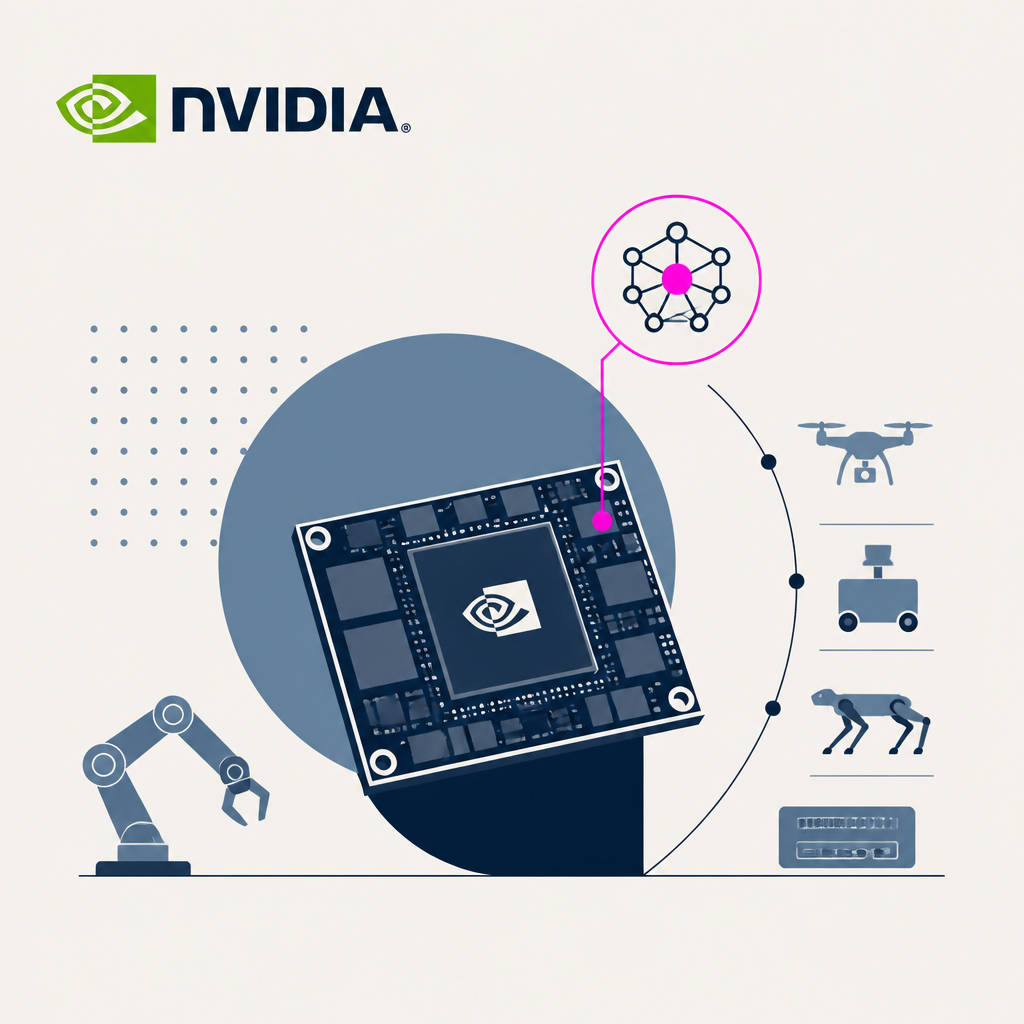 Powerful Compute So Compact, It’s Clutch — Build AI Anywhere With NVIDIA Jetson
NVIDIA · 2 months ago ·
49
NVIDIA Introduces New Jetson Thor Computers to Advance Mainstream Robotics and Edge AI
NVIDIA · 3 months ago ·
33
Powerful Compute So Compact, It’s Clutch — Build AI Anywhere With NVIDIA Jetson
NVIDIA · 2 months ago ·
49
NVIDIA Introduces New Jetson Thor Computers to Advance Mainstream Robotics and Edge AI
NVIDIA · 3 months ago ·
33
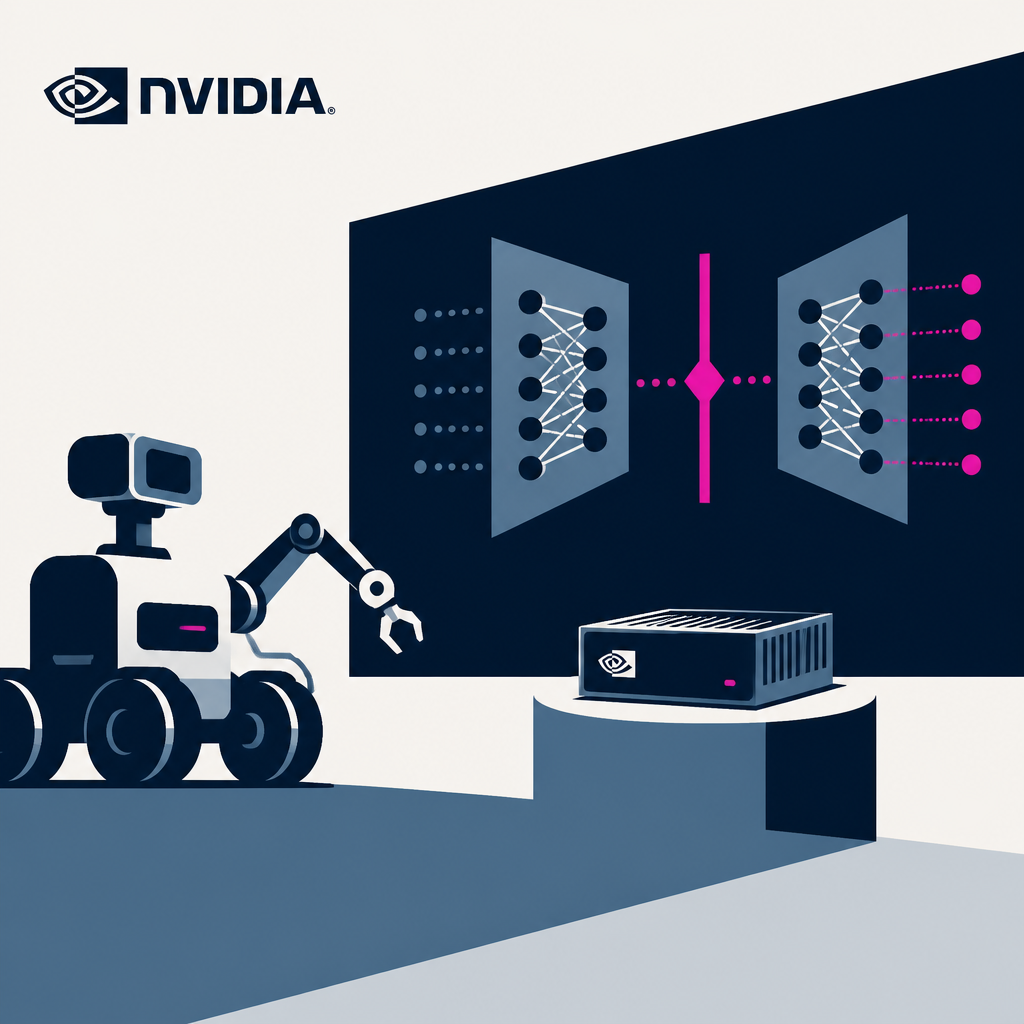 NVIDIA Releases Cosmos 3 Edge: A 4B-Parameter Open World Model That Reasons and Generates Robot Actions On-Device
MarkTechPost · 2 months ago ·
8
NVIDIA Releases Cosmos 3 Edge: A 4B-Parameter Open World Model That Reasons and Generates Robot Actions On-Device
MarkTechPost · 2 months ago ·
8