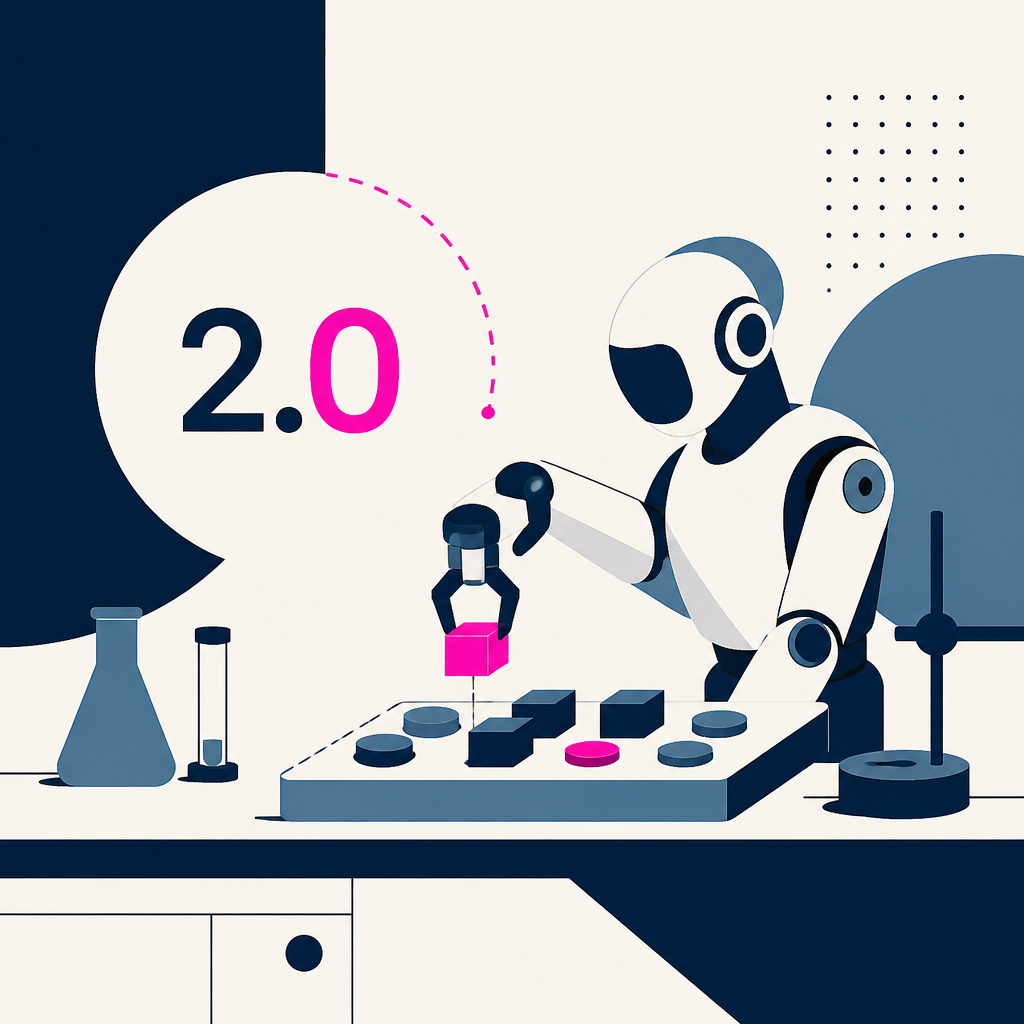
TaskShell 2.0 is presented as a task management approach focused on being agent-first for more agentic productivity. The only concrete detail provided is the “2.0” version label. This indicates a new iteration of the concept, but the article text here does not include further specifics.
Instinct’s private-access AI personal assistant has drawn privacy and security criticism from testers after it was found to access user devices and email and operate under terms that broadly grant the company ongoing rights to user materials and device-captured inputs. The Terms of Service include a “perpetual and irrevocable” license covering user materials, including for training the AI models. The backlash is prompting users to question whether this level of autonomy is acceptable and to push for fixes like data-deletion controls and clearer consent for actions taken on their behalf.
NVIDIA announced that its Vera Rubin NVL72-based rack-scale system, NVIDIA Groq 3 LPX, is now in full production and is being adopted by multiple AI infrastructure partners for agentic inference. In an Artificial Analysis benchmark with Gemma 4 31B on 100,000-token contexts, it delivered 3,400 output tokens per second, about 4x faster than the nearest alternative platform. The update changes the inference stack by pairing long-context context processing on Rubin GPUs with LPX’s lower-latency token decode acceleration, and by extending NVIDIA’s Vera Rubin network fabric to enable larger, lower-cost agent workloads at scale.
Import AI reports that AI’s impact on discovery is uneven across fields and highlights new methods for synthetic environment generation (SPADE) and hardware-aware GPU kernel optimization (Hawkeye). SPADE, trained from three Qwen3 backbones, reaches a suite average of 58.3 at the 30B-A3B scale. As a result, researchers get more effective ways to create training data and tune models for specific accelerators, alongside ongoing discussion about AI’s wider implications.
Mossy launches as a Mac desktop plant that wilts the longer you skip breaks while an AI creates break tasks from a sentence and runs them with a timer.
AI harnesses are being positioned as the software layer that turns language models into multi-step agents by providing tools, rules, state/memory, and an execution loop. One harness-effect study found Claude Opus 4.5 scored 45.9% on SWE-bench Pro inside a standardized scaffold and 55.4% with Claude Code. The result is that agent performance and cost increasingly depend on the harness (and its setup and security), creating a new competitive layer and locking in workflows and permissions beyond the base model.
Every AI story that matters,
in your inbox by 8am.
TLDRocket reads all relevant sources, removes duplicate coverage, and summarises the
day in two minutes. Follow companies and topics for alerts, or get the
briefing in Slack. Free, no spam, unsubscribe anytime.
Reading TLDRocket needs no cookies, and the readership counts we rely on come from
our own cookieless analytics. Google Analytics is the exception: it sets cookies and
reports to Google, so it stays switched off until you allow it. You can change your
mind any time from “Cookie settings” in the footer.
Strictly necessary
Session security and form protection (tldrocket-session,
XSRF-TOKEN, 2 hours). The site cannot work without them,
so they need no consent.
Always on
Google Analytics 4 (_ga,
_ga_<id>, up to 2 years). Measures which
stories and sections readers use. Google acts as a third-party processor and may
store the data outside the EU. No advertising, no profiling, no data sold.