AgentHands, a CHI 2026 research prototype, generates spatially grounded hand gestures in XR by mapping LLM responses to synchronized 3D co-speech motion tied to word timestamps and headset scene understanding. The prototype was evaluated in a within-subjects study with N = 12 participants versus a speech-only baseline, showing significant gains in spatial grounding (p < 0.05). As a result, XR instructions become easier to locate, follow, and notice for spatial and safety cues, with reduced cognitive load from embodied, timed gestures.
Perplexity brought its Computer agent to desktop as Portable Computer, running locally in a sandbox on supported Nvidia hardware. It requires at least 24GB of GPU VRAM, with a DGX Spark desktop costing $4,800 or an RTX 3090 priced at well over $1,500. Portable Computer now executes local file edits, shell commands, and PDF processing, but can route incomplete steps to Perplexity cloud models with user approval to keep execution controlled.
IBM released Granite 4.2 language and speech models aimed at enterprise “agentic” workflows with native step-by-step reasoning and tool use. Granite 4.2 is offered in 3B, 8B, and 30B parameter sizes, and its speech add-on Granite Speech 5.0 Turbo CTC runs at about 12,600 RTFx on a single H100 GPU. IBM says the updated training approach and inference optimizations improve agents’ planning, error checking, and faster high-volume transcription while expanding deployment options under an Apache 2.0 license.
Cisco expanded its Secure AI Factory with Nvidia to rack-scale deployments, aiming to let enterprises operate production-ready AI across their infrastructure. The update adds rack-to-fabric liquid cooling beyond 200 kilowatts per rack for reasoning, agentic AI, and trillion-parameter training. It introduces Nvidia Spectrum-X switch silicon with Cisco OS integration and adopts reference architectures plus shared management tooling, changing the offering from rack-level setup toward an end-to-end AI-factory operations stack.
The article argues that “AI agents” are becoming something people use on mobile, while the author also questions the work-life balance costs of constantly talking to them instead of sleeping or focusing. It cites Flux TTS responding in as low as 80ms for live, interrupt-friendly conversation. As a result, the piece shifts from a personal complaint about mobile agent use to pointing readers toward multiple agent and AI product updates and tools.
Enterprises are adopting AI agents faster than their organizations are understanding and formalizing the rules needed to control them. 86% of 508 respondents said they use agents embedded in applications, while only 13% said sovereign AI concepts are widely or very widely understood across their organizations. As a result, companies are pushing for “sovereign” architectures—often air-gapped or offline deployments with tightly controlled access and responsibility—to manage security, privacy, observability, and guardrails for agents.
MotherDuck acquired Tower, the startup that was already supplying the execution and runtime layer behind MotherDuck’s AI-built data pipelines. The deal was announced on Tuesday and marks MotherDuck’s first acquisition in 4 years. Tower’s Python pipeline runtime will be folded into MotherDuck, enabling features like Flights and migration paths for Tower customers.
Ollobot says its AI companion robot OlloNi SS1 is built to provide continuous, emotionally attentive presence in homes rather than the short, voice-command interactions of earlier companion robots. The article cites a 5-meter voice capture range and adds features like fall detection, autonomous home mobility, and over-the-air updates. This shifts the category toward on-device, connected systems that personalize over time and aim to prevent loneliness through ongoing companionship.
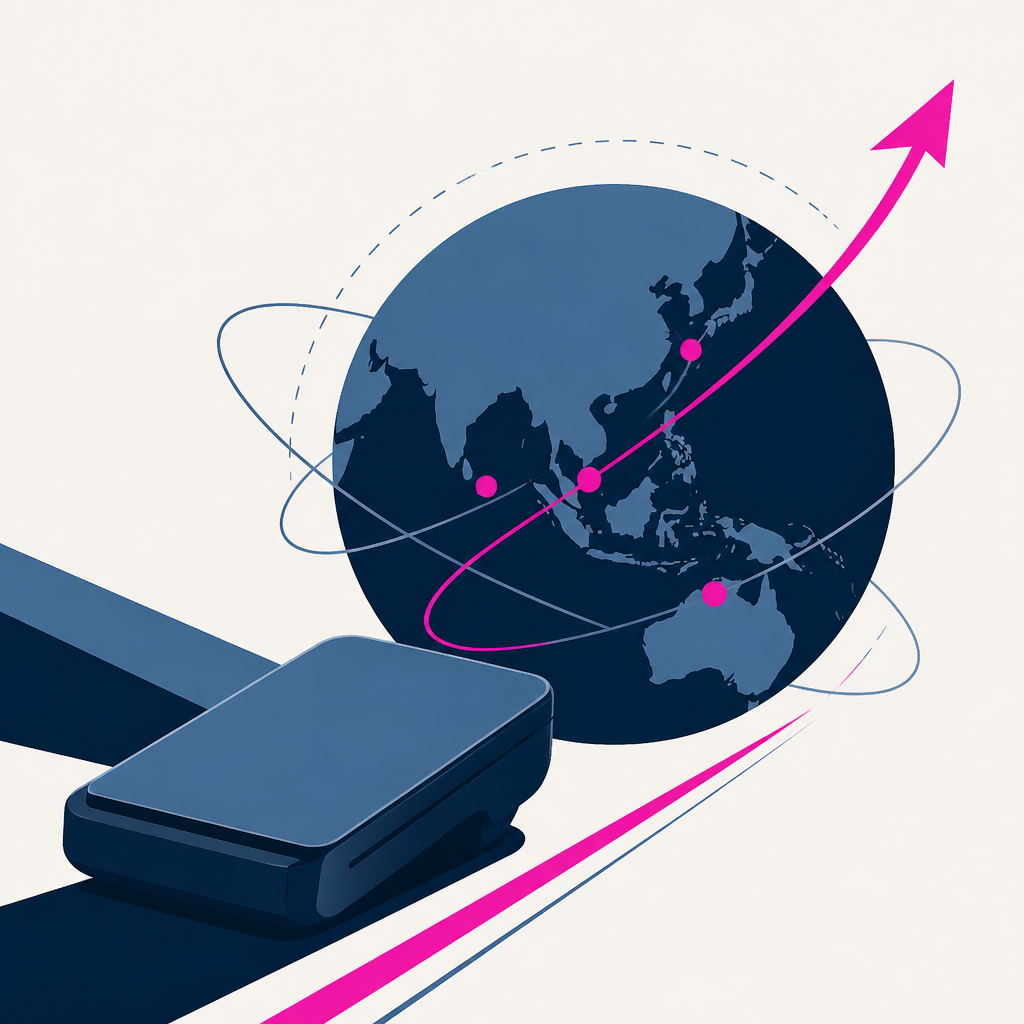
Stripe’s Southeast Asia, Greater China and South Korea managing director Sarita Singh says Asia-based firms are expanding cross-border faster and sometimes without fully defining their business. The top 100 AI companies on Stripe took a median of 11.5 months to exceed $1 million in annualized revenue, about four months ahead of the fastest-growing SaaS firms. Stripe’s response is more cross-border payment partnerships and support for agentic commerce, aiming to help businesses avoid rebuilding payment tech stacks later.
Every AI story that matters,
in your inbox by 8am.
TLDRocket reads all relevant sources, removes duplicate coverage, and summarises the
day in two minutes. Follow companies and topics for alerts, or get the
briefing in Slack. Free, no spam, unsubscribe anytime.
Reading TLDRocket needs no cookies, and the readership counts we rely on come from
our own cookieless analytics. Google Analytics is the exception: it sets cookies and
reports to Google, so it stays switched off until you allow it. You can change your
mind any time from “Cookie settings” in the footer.
Strictly necessary
Session security and form protection (tldrocket-session,
XSRF-TOKEN, 2 hours). The site cannot work without them,
so they need no consent.
Always on
Google Analytics 4 (_ga,
_ga_<id>, up to 2 years). Measures which
stories and sections readers use. Google acts as a third-party processor and may
store the data outside the EU. No advertising, no profiling, no data sold.