
Sakana AI Wins Contract for Survey and Proof-of-Concept of AI Functions Needed for Comprehensive Analysis Work from the Ministry of Defense
Sakana AI

Sakana AI signed a Defense Ministry contract to test AI for intelligence analysis. It’s another step from battlefield command tools toward the quieter, messier work of policy-making.
Based on reporting by Sakana AI — read the original for the full story.
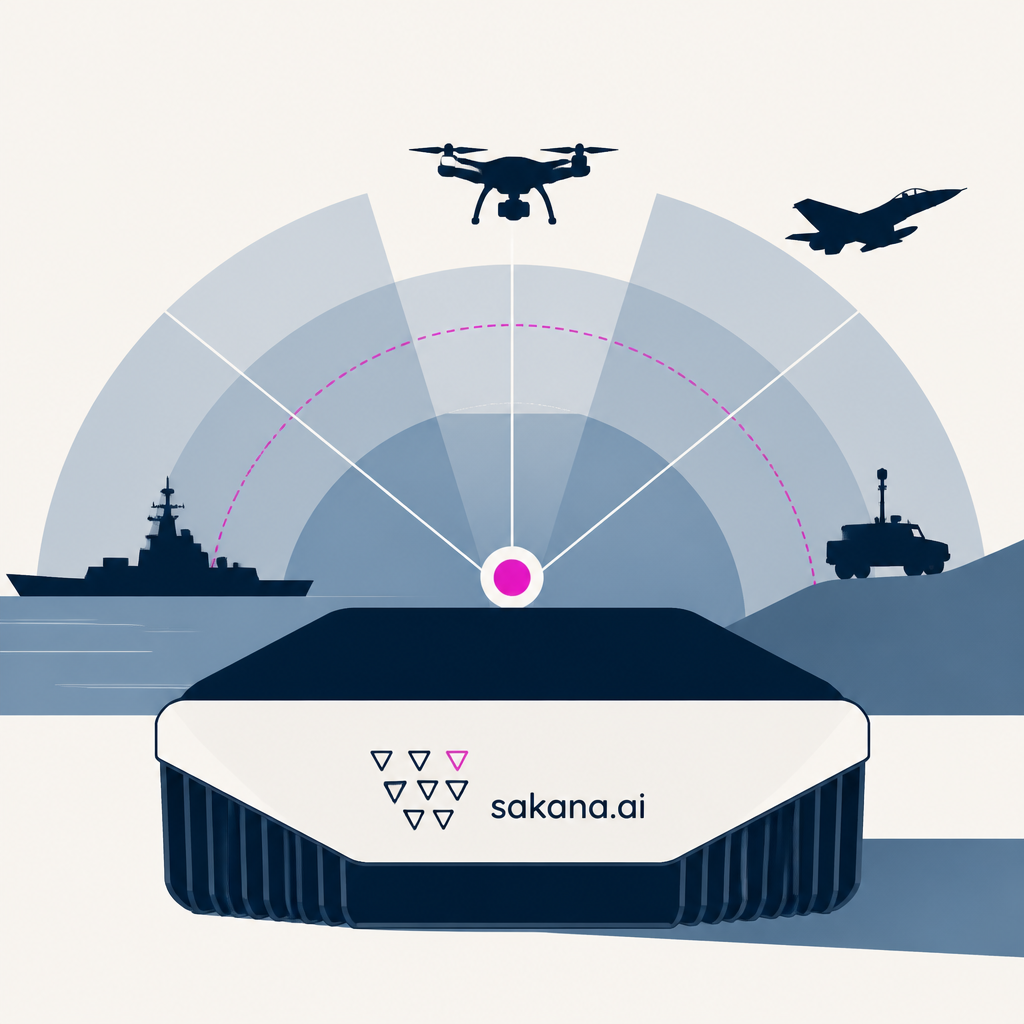
Summary, retelling and take written by AI under human oversight; images are AI-generated illustrations. How we work · Report an error
Sakana AI said it signed a contract with Japan’s Ministry of Defense on July 29, 2026, for a survey and proof-of-concept on AI functions needed for comprehensive analysis work. The target is the information side of defense: helping intelligence officers use newer AI tools in work that feeds decisions at the policy and operations level.
The company frames the project around a simple problem with ugly details. Security conditions are more complex, information keeps piling up, and the people who have to collect, sort, and judge it need faster, more accurate tools. Sakana AI says the goal is to improve speed, precision, and efficiency by applying AI to that flow.
This contract is not just about one model or one demo. Sakana AI says it will use its AI agent technology to strengthen the ministry’s comprehensive analysis work, focusing on three areas: making information gathering more efficient, improving analysis ability, and managing information in a more systematic way. The point is to build AI functions that are reliable enough to support decisions.
The company has already been working with Japan’s defense side. In March, it won a separate research contract from the Acquisition, Technology and Logistics Agency’s Defense Innovation Science and Technology Institute for basic technology research aimed at upgrading command-and-control systems. That earlier work was about combining information from units and sensors to support quick, accurate orders. This new contract reaches higher up, toward strategic intelligence work that supports national policy.
Sakana AI also says it is expanding its team for defense and intelligence work, hiring for roles including software engineers, applied research engineers, cyber security engineers, project managers, and technical editors. For now, the bigger story is that Japanese defense AI is moving beyond the obvious command-room use case and into the slower, more consequential business of analysis.
My take — AI-written commentary, not fact-checked reporting
Defense AI always gets sold as efficiency, which is the polite word. The real question is whether governments want better judgment or just faster paperwork with a neural net on top. Sakana AI seems to be planting itself on the useful side of that divide, which is more honest than most of the industry.
Read more about this at: Sakana AI
Related stories
 Sakana AI Begins Commissioned Research from Defense Innovation Science and Technology Institute
Sakana AI ·
19
Sakana AI Establishes Partnership with General Incorporated Association DEEP DIVE for AI-Powered Information Analysis
Sakana AI ·
24
Sakana AI Begins Commissioned Research from Defense Innovation Science and Technology Institute
Sakana AI ·
19
Sakana AI Establishes Partnership with General Incorporated Association DEEP DIVE for AI-Powered Information Analysis
Sakana AI ·
24
 Sakana AI Wins the Minister of Internal Affairs and Communications Award (Information and Communications Field) at the Japan Startup Awards 2026
Sakana AI ·
15
Sakana AI Wins the Minister of Internal Affairs and Communications Award (Information and Communications Field) at the Japan Startup Awards 2026
Sakana AI ·
15