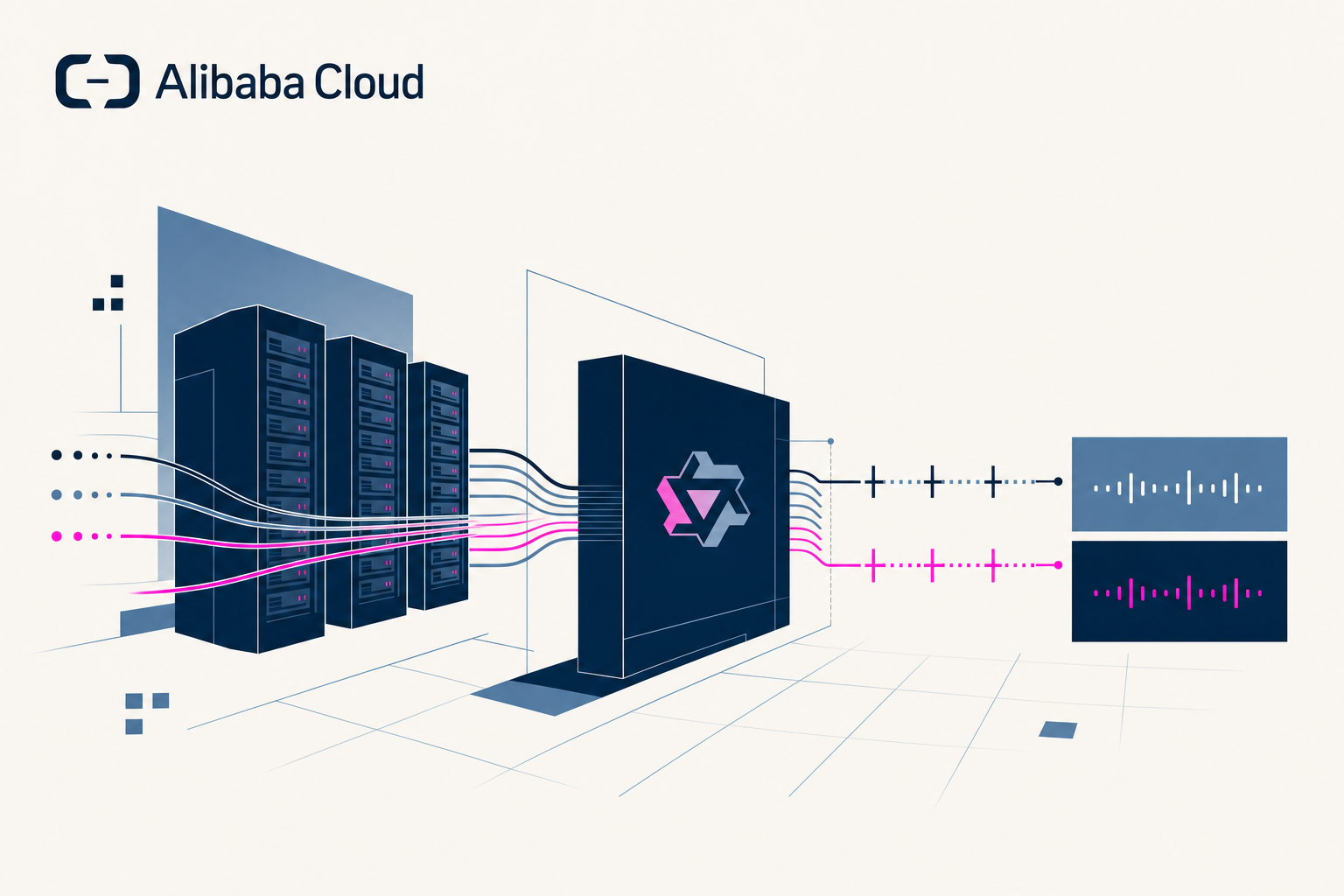
Alibaba’s Qwen team made real-time translation feel a bit less like waiting for subtitles. Qwen3.8-LiveTranslate is a simultaneous interpretation model aimed at live speech, with an optional video input path that can use the surrounding frames for context. The headline metric is latency: average lag (LAAL) drops from 2.8 seconds to 2.3 seconds across 60 languages—small on paper, noticeable in conversation. In practice, that’s the difference between answering like you heard the sentence and answering like you heard the meaning after the sentence.
The release also leans into the messy parts of multilingual speech, not just the translation. It adds real-time speaker diarization so the system can track “who said what” as the audio unfolds, and it synchronizes bilingual display to keep source and target aligned while the speaker is still talking. For ambiguity that shows up late in natural conversation, it uses long-context disambiguation, which is exactly what it sounds like: deciding among competing interpretations with more of the unfolding context. You can get it through Alibaba Cloud’s hosted API over WebSocket, which matters because low latency isn’t just a model property—it’s also an integration pattern.
If Qwen3.8-LiveTranslate becomes a default in meeting rooms, the most important shift won’t be better wording. It’ll be timing.