
The economy has undergone a structural transformation that ended the low-cost era. 'The regime change in inflation and interest rates is the outcome'
Fortune The Associated Press
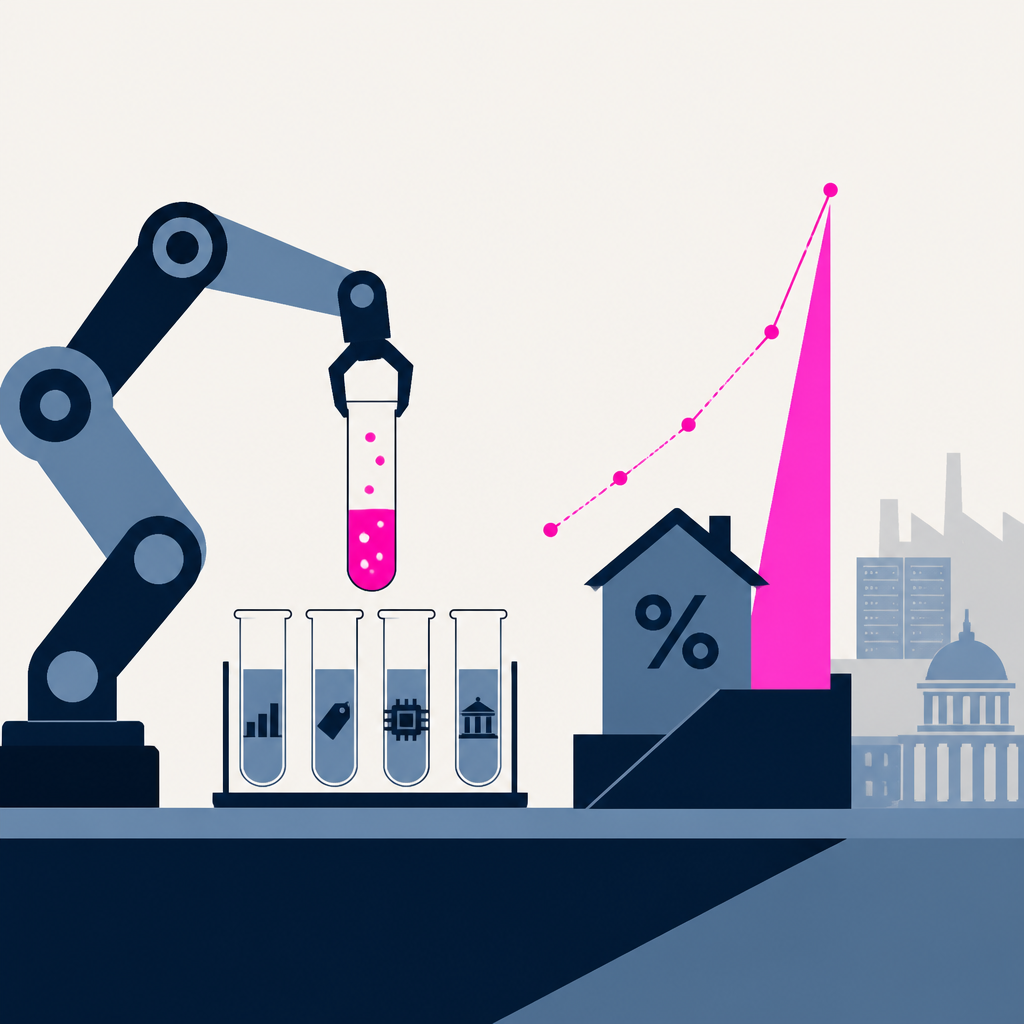
The Fed raised rates again, but economists say the bigger force is a hotter economy. That’s why the cheap-money era is over, even if Trump wants it back.
Based on reporting by Fortune, The Associated Press — read the original for the full story.
Summary, retelling and take written by AI under human oversight; images are AI-generated illustrations. How we work · Report an error
President Donald Trump lashed out at the Federal Reserve after it lifted its benchmark rate Wednesday. But economists say the bigger story is not the Fed’s latest move. It is a wider shift in the economy that is pushing borrowing costs up and keeping them there.
The old setup was built on weak demand, cheap money and very little inflation. That world lasted for years after the Great Recession and even into COVID. Now the picture looks different: spending is solid, inflation is still hanging around, big tech is throwing money at AI data centers, and the federal government is running large yearly deficits. Put those together and long-term rates keep facing upward pressure.
Mortgage borrowers have already felt it. Rates that sat in the 3% range in the 2010s, and even lower during the pandemic, are long gone. The average 30-year mortgage rate hit 6.95% last week, its highest level in more than a year and a half. The 10-year Treasury bond also topped 5% this year for the first time since 2023, before the Fed’s Wednesday hike.
Joe Brusuelas, chief economist at RSM, called it a structural transformation. He said the economy has moved from a period of weak consumer and business demand to one where healthy spending is colliding with supply shocks and bottlenecks. He pointed to higher oil and gas prices tied to the Iran war, plus shortages of chips, electronic equipment and workers for the AI buildout.
That buildout has become the center of gravity. After years when companies like Alphabet’s Google and Meta’s Facebook were sitting on piles of cash, those stockpiles are now going into AI infrastructure, with more borrowing on top. Federal Reserve Chairman Kevin Warsh said much the same at Jackson Hole last month, describing “ever-expanding pools of capital” pouring into AI-related infrastructure. Meanwhile, inflation has outpaced wage growth for five straight months, and that is the kind of arithmetic that keeps households angry even when GDP looks fine.
My take — AI-written commentary, not fact-checked reporting
This is what happens when the economy stops pretending it can run on cheap money forever. The Fed still matters, but it is no longer the main character — and politicians screaming for lower rates while backing policies that raise prices is pure Washington theater. The bigger story is a credit market being pulled around by AI spending, deficits and stubborn inflation, which is a very expensive way to rediscover reality.
Read more about this at: Fortune
Related stories
 Hot or not? The economy’s fate rests on Kevin Warsh’s answer to one key question
Fortune ·
5
Hot or not? The economy’s fate rests on Kevin Warsh’s answer to one key question
Fortune ·
5
 Kevin Warsh finally threw Wall Street some crumbs on what he's thinking: ‘There is one signal nobody can miss: 65 months of elevated inflation'
Fortune ·
36
Kevin Warsh finally threw Wall Street some crumbs on what he's thinking: ‘There is one signal nobody can miss: 65 months of elevated inflation'
Fortune ·
36
 Wall Street used to worry that too much U.S. debt would crowd out the private sector. But AI hyperscalers are 'reverse crowding' the Treasury
Fortune ·
30
Wall Street used to worry that too much U.S. debt would crowd out the private sector. But AI hyperscalers are 'reverse crowding' the Treasury
Fortune ·
30