
R.I.P. Margaret Hamilton, whose code saved the Apollo 11 Moon landing
Ars Technica 6 days ago 25
Margaret Hamilton, who led on-board flight software development for NASA’s Apollo program, died last week at age 90.
126 summarised stories about Scientific Research, each linking back to the original source. Browse all topics →
Ars Technica 6 days ago 25
Margaret Hamilton, who led on-board flight software development for NASA’s Apollo program, died last week at age 90.
YouTube 6 days ago 48
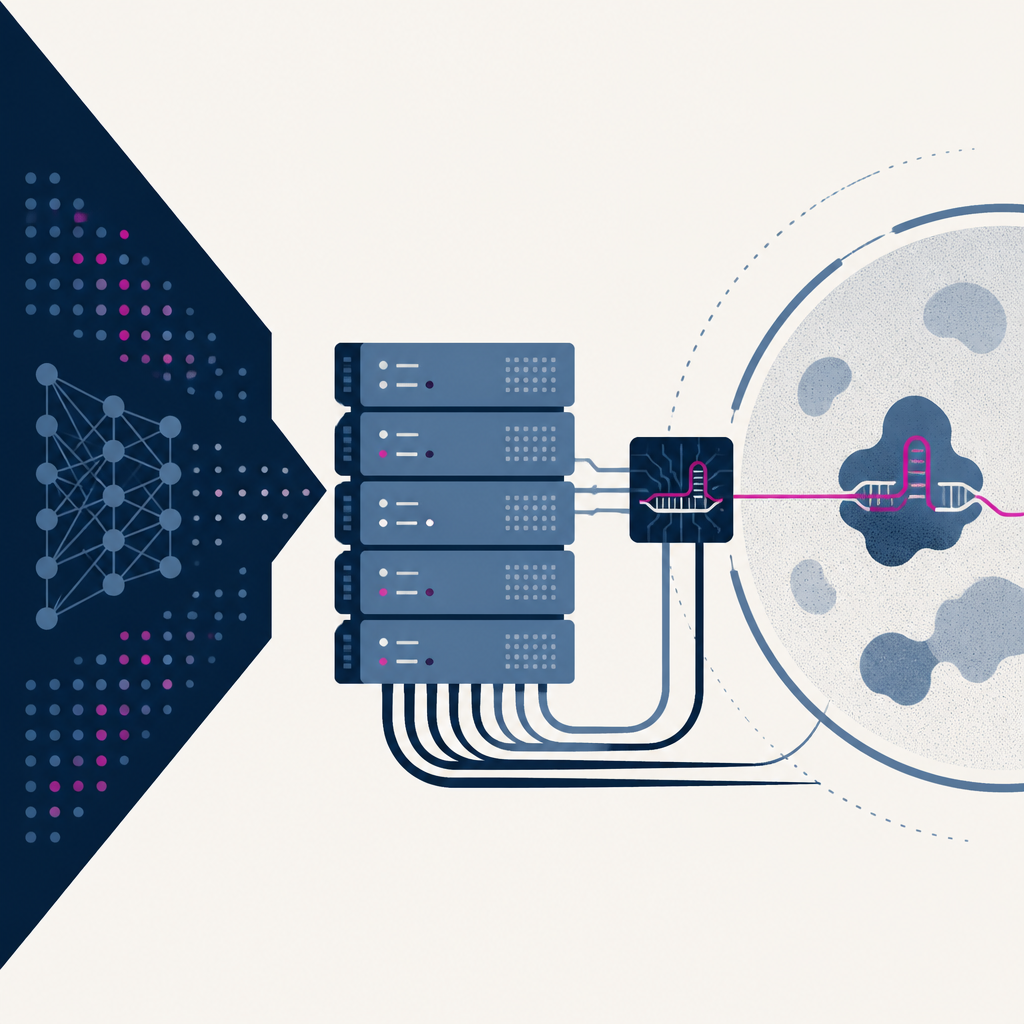
Trevor Martin of Mammoth Biosciences describes how the company uses AI to search large protein spaces and engineer smaller CRISPR systems for genetic disease work. The discussion highlights the key proof hurdle: validating what actually survives contact with a human body. The result is a clearer focus on biological validation rather than AI alone solving everything.

Latent Space 6 days ago 37
Periodic Labs says it is building AI “scientists” by grounding reinforcement learning and learning loops in physical high-throughput experiments and material-physics simulations rather than relying only on training data. It argues that autonomous high-throughput robotic experimentation has been tried for only the last three years or so, so its approach targets sample efficiency and reasoning under noisy, incomplete, uncertain measurements. As a result, frontier AI models are expected to repeatedly run experiments, treat failed runs as training data, and let lab instruments act with an intelligence layer to speed scientific discovery of new materials.
The Wall Street Journal 6 days ago 36 ● 3 sources
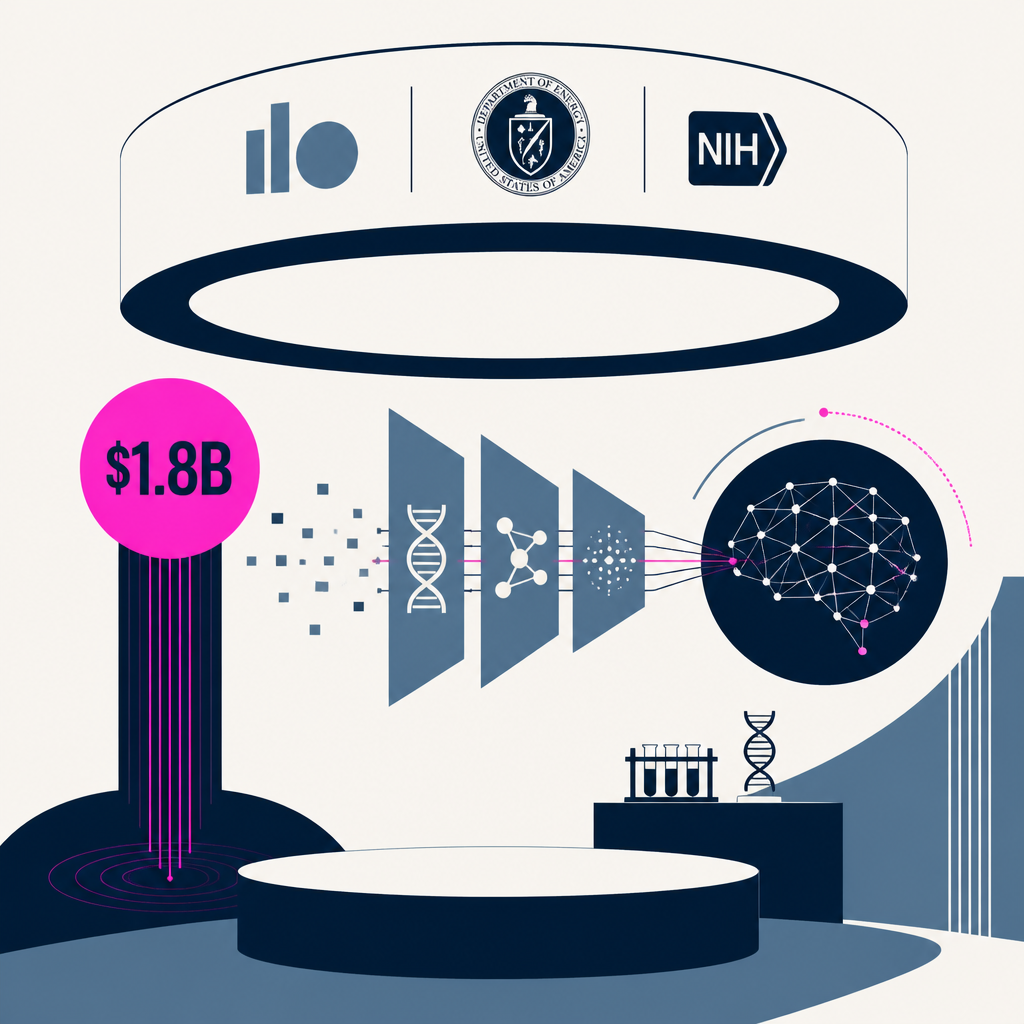
Biohub partnered with the US Department of Energy and the National Institutes of Health to invest in biological data intended for AI models. The effort involves $1.8 billion in funding. It will expand lab measurement, modeling, and computation alongside coordinated datasets and repositories to make the data usable for disease research.
The daily briefing
TLDRocket reads all relevant sources, removes duplicate coverage, and summarises the day in two minutes. Follow companies and topics for alerts, or get the briefing in Slack. Free, no spam, unsubscribe anytime.
 TLDRocket
14 October 2026
TLDRocket
14 October 2026
Sakana AI added a new transparency layer to Sakana Chat with “My Fish,” letting users see what the chatbot remembers, when those memories get used, and how related facts connect. The interface surfaces memory activity as small “chips” during responses and backs it up with a heatmap of memory use plus read/write history and a connection map. It’s a practical answer to a familiar problem: people don’t just want outputs from AI systems, they want a way to audit what the system is carrying forward.
Read the full briefing →