Nvidia CEO Jensen Huang predicted the semiconductor industry must expand 5-10x over the next decade to support AI agents and robots that will consume compute continuously. Huang estimates there will be 100 billion AI agents and billions of robots all using computers, compared to today's 1 billion human users, requiring fundamental changes to backend infrastructure and data center architecture. This forecast is driving major supply commitments, including Nvidia's $500 billion partnership with SK Group to secure advanced memory and build out AI data center capacity in South Korea.
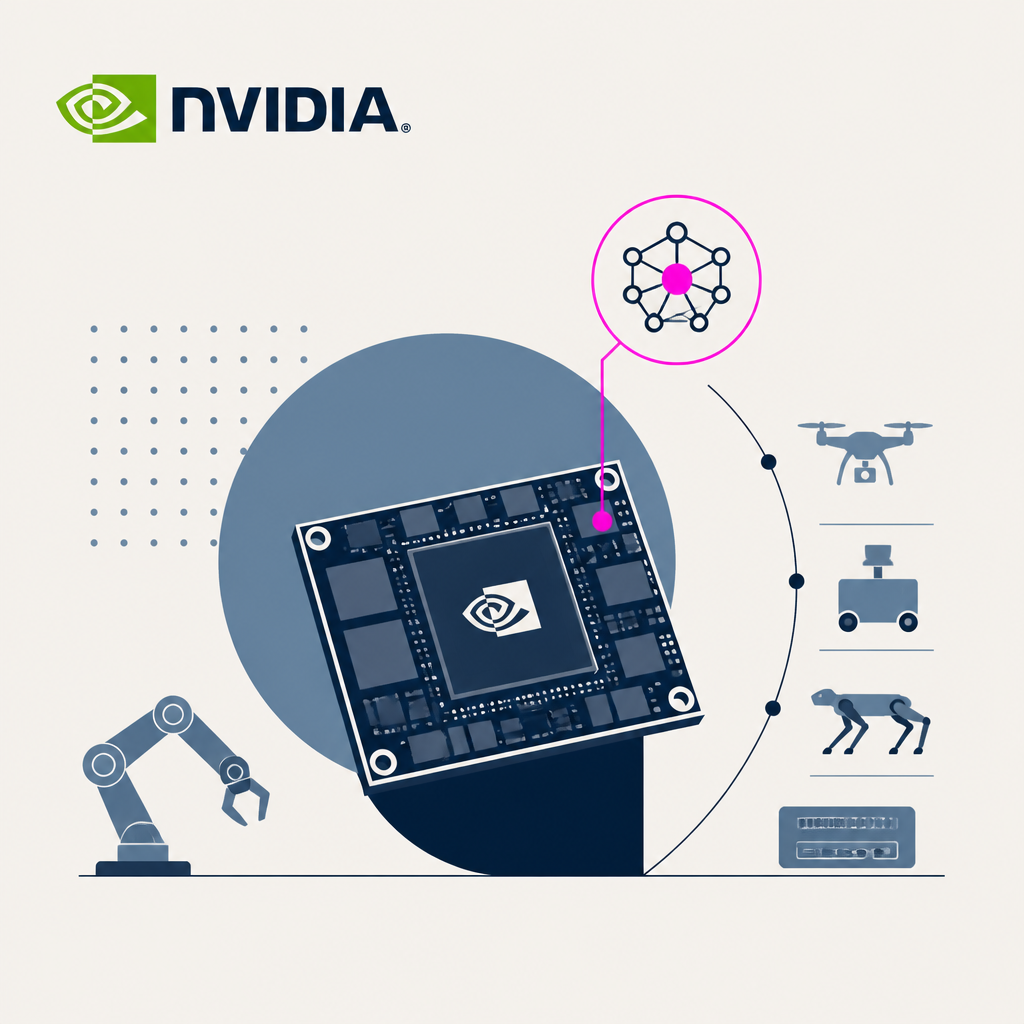
NVIDIA is promoting its Jetson platform for edge AI and robotics, highlighting how its compact Jetson Orin Nano Super module delivers 67 trillion operations per second of AI performance in a handbag-sized form factor. The company showcases various robotics projects built with the platform, from autonomous vehicles to AI-powered assistants running locally without cloud dependency. Developers can now prototype and deploy AI applications at the edge using open models across classrooms, labs, and consumer robotics projects.
Google introduced Gemini Robotics 2, an AI model system that gives robots whole-body control, fine dexterity, and ability to collaborate with other robots on complex tasks. The on-device model can adapt to new robot types in just a few hours with fewer than 200 examples of data. This enables robots to handle real-world multi-step tasks spanning several minutes with coordination across different robot platforms.
Robotics lacks an equivalent to the internet's free pre-training corpus that powered frontier LLMs, creating a severe data bottleneck that researchers address by combining seven types of data arranged in a pyramid. The largest open robot dataset, Open X-Embodiment, contains around 1 million trajectories across 22 robot types, while robots need somewhere between 1 million and 10 million hours of training data compared to internet-scale text corpora. Different data sources—from YouTube videos and egocentric human footage to teleoperation and deployed robot work—each contribute different priors and fidelity levels, with the field recognizing that no single source will solve the problem but rather a mixture tailored to specific deployment requirements will be needed.
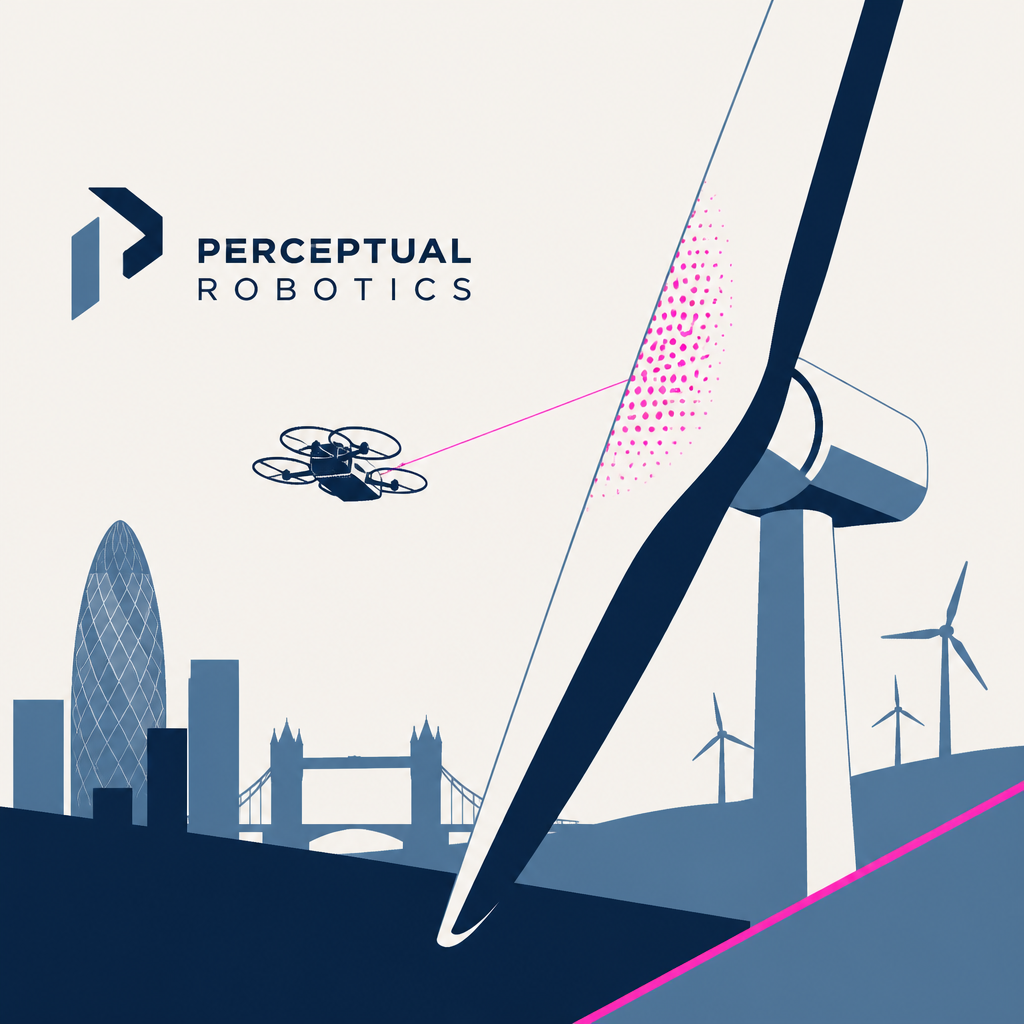
Perceptual Robotics, a UK company developing autonomous inspection systems for wind turbines, raised over £4 million in funding from investors including Investing for Purpose and Loggerhead Ventures, plus UK government support. The company's AI-powered software analyzes blade damage and prioritizes repairs across turbine fleets operating in Europe, North America, and Latin America. The funding will be used to expand product capabilities, strengthen offshore operations, and scale the inspection technology to additional markets.
Every AI story that matters,
in your inbox by 8am.
TLDRocket reads all relevant sources, removes duplicate coverage, and summarises the
day in two minutes. Follow companies and topics for alerts, or get the
briefing in Slack. Free, no spam, unsubscribe anytime.
Reading TLDRocket needs no cookies, and the readership counts we rely on come from
our own cookieless analytics. Google Analytics is the exception: it sets cookies and
reports to Google, so it stays switched off until you allow it. You can change your
mind any time from “Cookie settings” in the footer.
Strictly necessary
Session security and form protection (tldrocket-session,
XSRF-TOKEN, 2 hours). The site cannot work without them,
so they need no consent.
Always on
Google Analytics 4 (_ga,
_ga_<id>, up to 2 years). Measures which
stories and sections readers use. Google acts as a third-party processor and may
store the data outside the EU. No advertising, no profiling, no data sold.