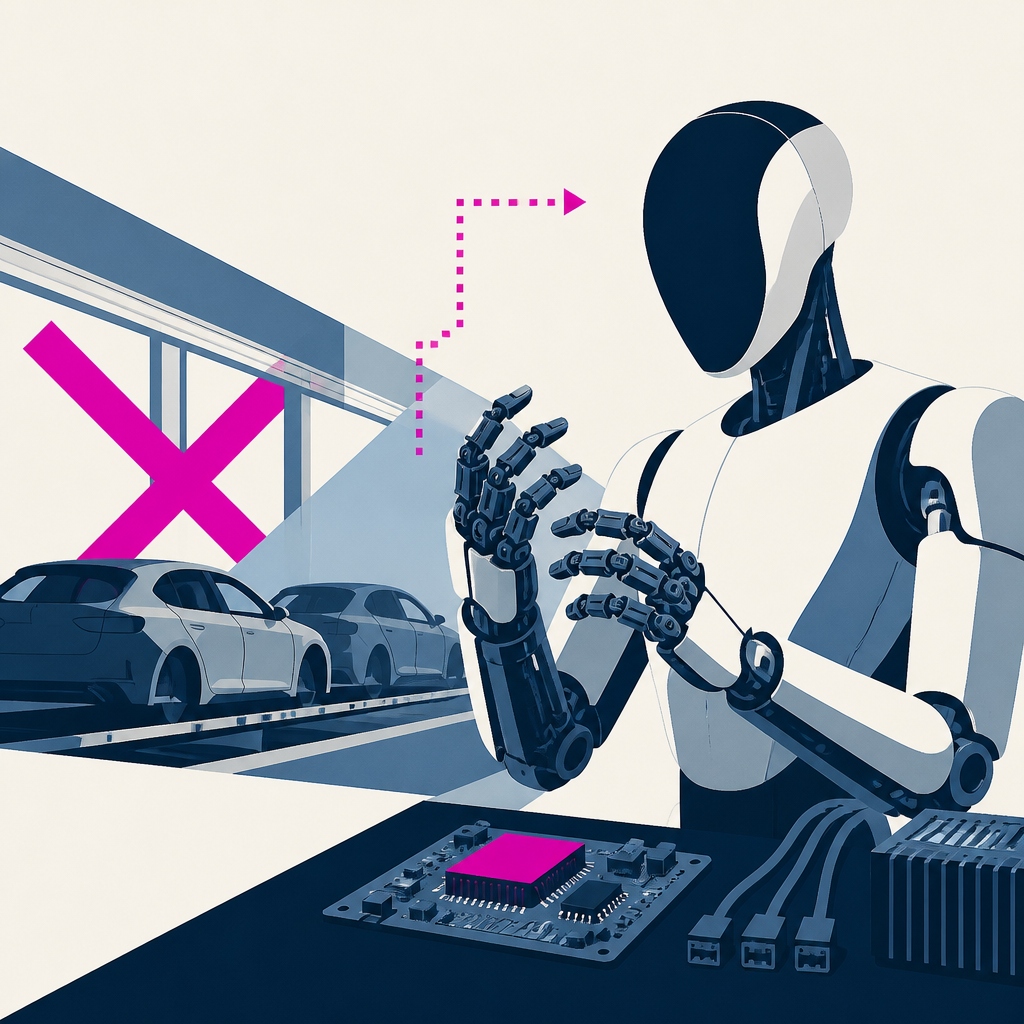
Tesla is trying to train its Optimus humanoid robots to replace workers, but complex robot hands and employee resistance are slowing scaling. Tesla stopped making the Model S and Model X at its Fremont factory in May 2026. That shift is intensifying internal pushback while Tesla works through multiple development complications to reach mass production.
Tekever raised about €500 million in its Series D funding round at an estimated valuation of about €5.5 billion. The round is led by Baillie Gifford and UC Investments and is only the first close. Tekever says the new capital will fund international expansion, production scaling, more R&D, and additional defense-focused acquisitions.
Tesla’s Optimus robot production is falling behind its target of making 20,000 robots per week. Last month, Tesla reportedly produced several hundred robots per week after repurposing its Model S and Model X lines for Optimus. The change is that new, high-precision assembly for much smaller parts is causing manufacturing snags that slow output.
Waymo expanded its robotaxi service from 3 to 15 U.S. cities while rides increased, but its fleet deployment is heavily concentrated in California and Texas. It had 1,102 autonomous vehicles registered in Texas as of September 24, and its Texas fleet grew by 49% in the previous three weeks. The company is shifting more vehicles there, with the share of newly added Zeekr-based minivans (“Ojai”) rising toward about a third of the Texas fleet despite higher import tariffs.
Skild AI trained a humanoid-soccer control policy using self-play in simulation and then transferred it to a real robot for a match. The training involved 140 years of simulated play in NVIDIA Isaac Sim. This resulted in a successful simulation-to-humanoid transfer, with Skild extending the same self-play approach to additional real-world robotics tasks.
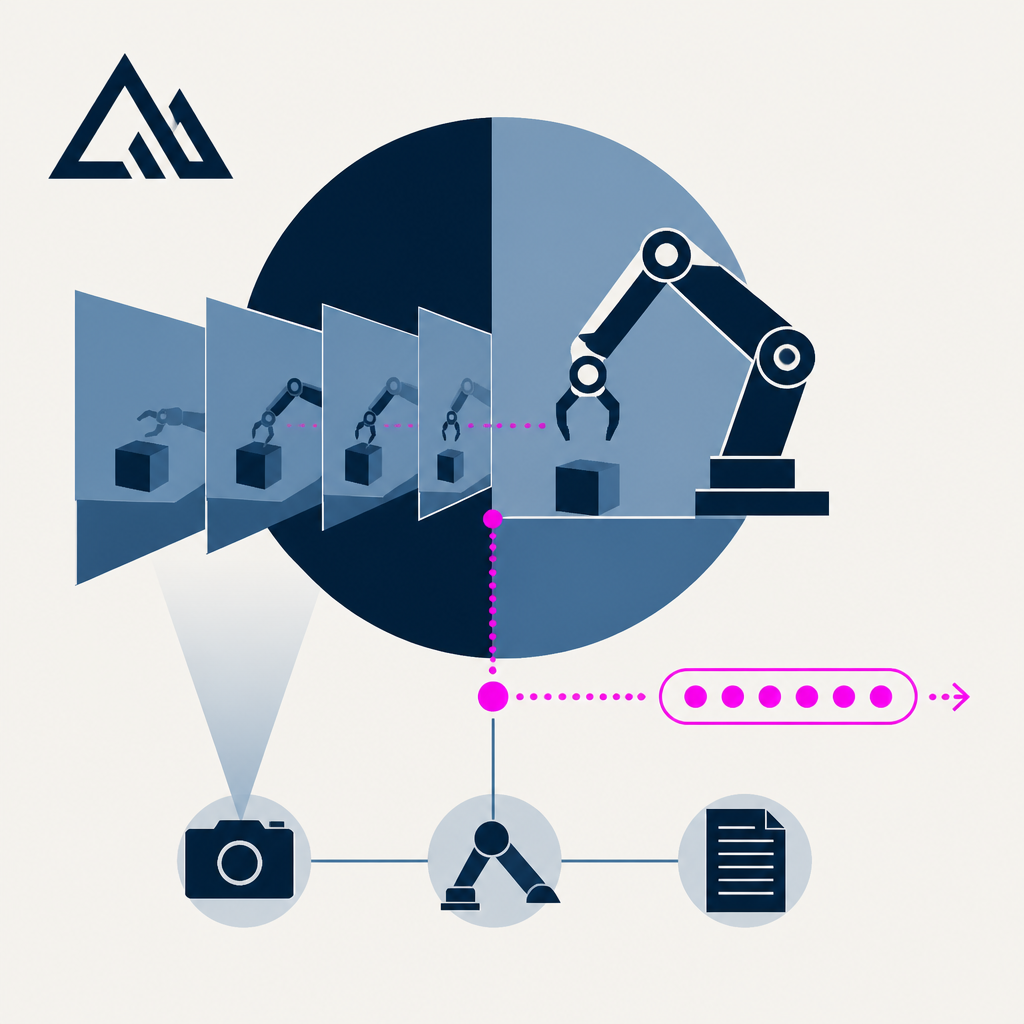
Black Forest Labs released FLUX 3 Action, a 7B open-weights world action model for robot control that predicts future video frames and the next action chunk from camera frames, robot state, and text instructions. It scored 42.92% task success on the RoboLab-120 leaderboard. The release adds deployable GPU-sized checkpoints (with specified memory/quantization options) plus training recipes, code integration for LeRobot, and a hybrid reasoner setup, shifting deployment options toward faster and smaller policy models.
Every AI story that matters,
in your inbox by 8am.
TLDRocket reads all relevant sources, removes duplicate coverage, and summarises the
day in two minutes. Follow companies and topics for alerts, or get the
briefing in Slack. Free, no spam, unsubscribe anytime.
Reading TLDRocket needs no cookies, and the readership counts we rely on come from
our own cookieless analytics. Google Analytics is the exception: it sets cookies and
reports to Google, so it stays switched off until you allow it. You can change your
mind any time from “Cookie settings” in the footer.
Strictly necessary
Session security and form protection (tldrocket-session,
XSRF-TOKEN, 2 hours). The site cannot work without them,
so they need no consent.
Always on
Google Analytics 4 (_ga,
_ga_<id>, up to 2 years). Measures which
stories and sections readers use. Google acts as a third-party processor and may
store the data outside the EU. No advertising, no profiling, no data sold.