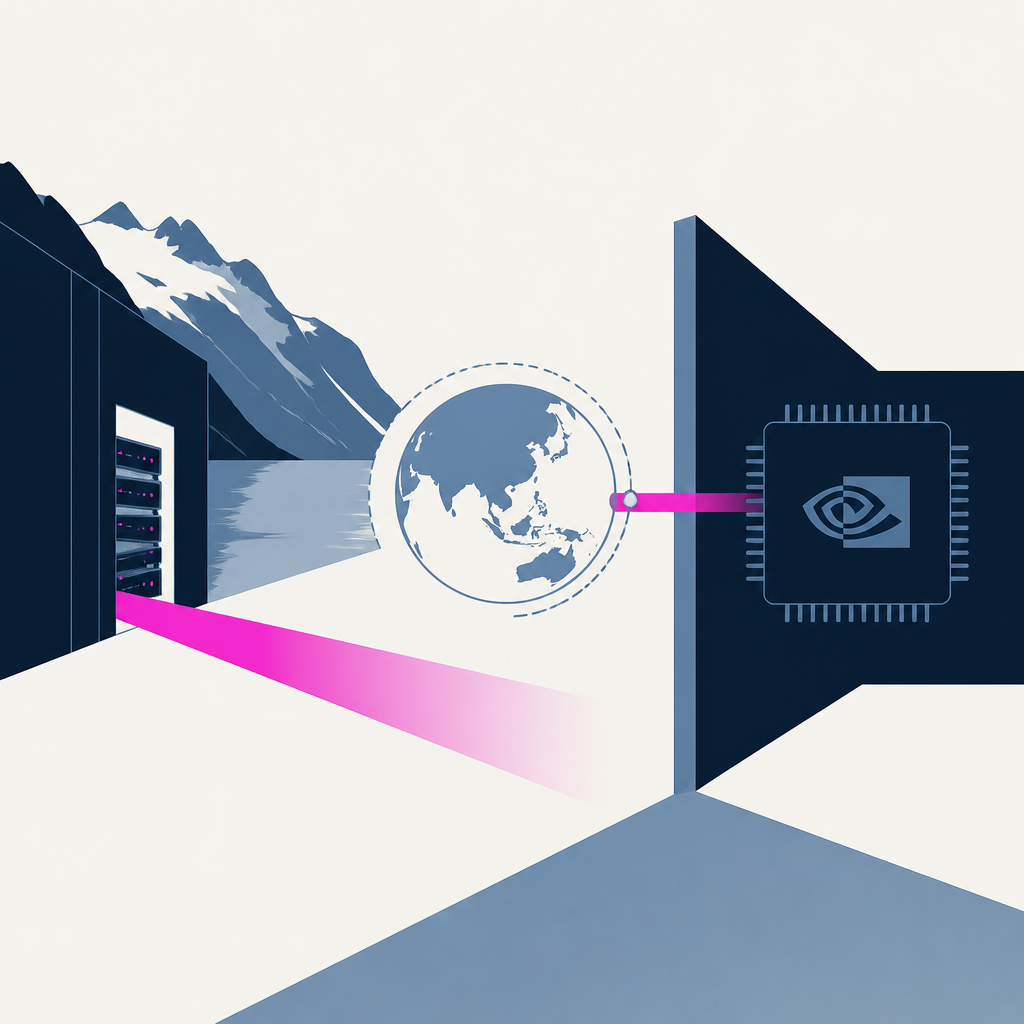
Vast Data introduced DataEnclave to let enterprises and AI labs deploy proprietary models in secure compute so data transfer risk works in both directions. It uses Nvidia’s Confidential Computing technology. As a result, companies can run models without sharing data or handing over model weights, and the market will test the approach through early access into general availability.
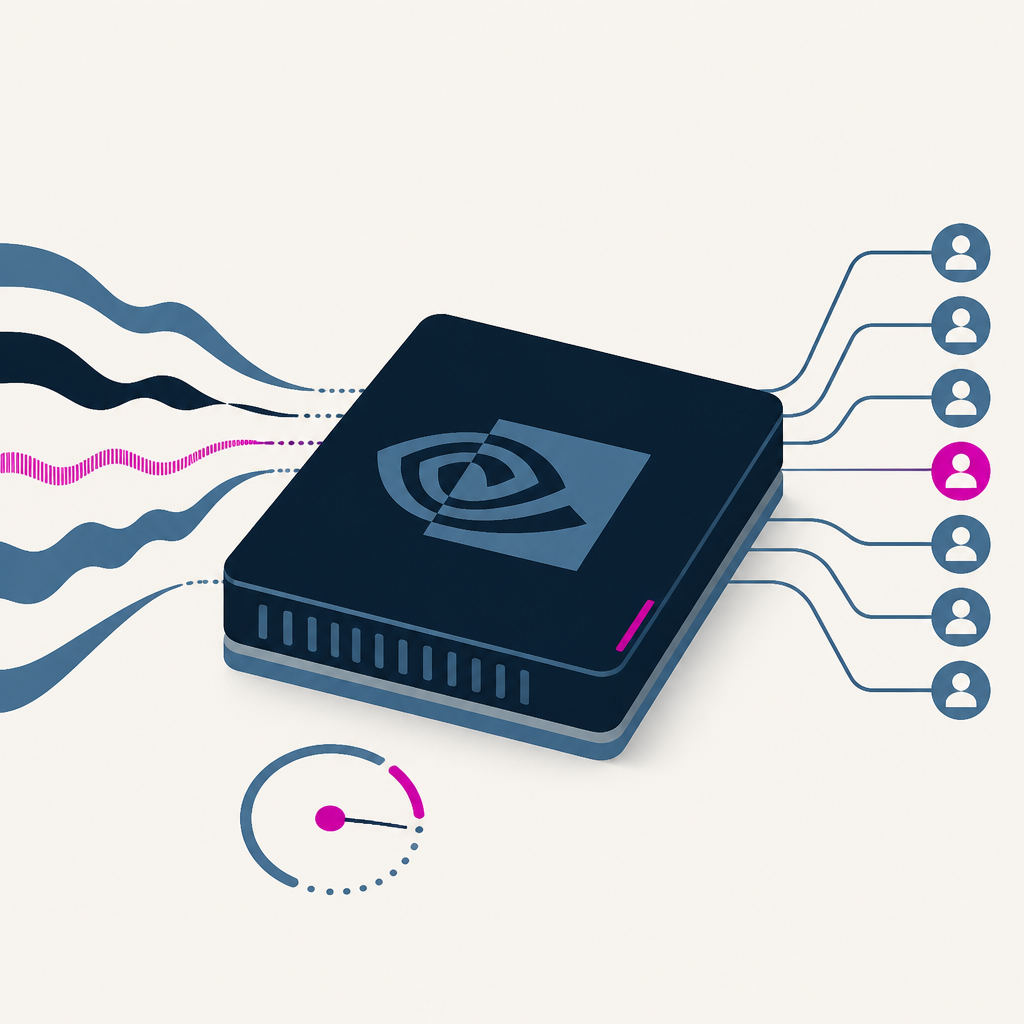
NVIDIA released Nemotron 3 Diarization, an open-weight speaker diarization model on Hugging Face for attributing who spoke when in conversations. It tracks up to 8 speakers with one checkpoint spanning offline to real-time streaming, including a recommended 0.32 s buffer latency. Compared with its prior 4-speaker Streaming Sortformer, the diarization capacity doubles and benchmarks report a 14.72% DER (and about a 41.0% mean relative DER reduction at 1.04 s) along with higher throughput.
CoreWeave describes how multi-rack NVIDIA Vera Rubin NVL72 clusters are brought up by tightly coordinating compute, networking, power, and liquid cooling with automated validation to avoid distributed-system bottlenecks. It says each Rubin GPU is served by two ConnectX-9 SuperNICs delivering up to 1.6 Tb/s backend connectivity per GPU. As racks scale out, the process shifts from per-node checks to rack-, fabric-, and synchronized workload testing so stragglers and underperforming links are caught before production.
CoreWeave brought up multi-rack NVIDIA Vera Rubin NVL72 clusters on CoreWeave Cloud, creating a single scale-out setup for running training and inference across hundreds of Rubin GPUs. Each NVL72 rack pairs 72 Rubin GPUs with 36 Vera CPUs. CoreWeave also added cross-region write acceleration and a new Archive storage tier to keep AI data closer to compute and reduce checkpoint write pauses.
ByteDance’s subsidiary used British AI infrastructure startup Nscale to rent access to Nvidia chips, according to reports. The reports say this arrangement would cover about 74%. As a result, ByteDance can obtain Nvidia compute through rental infrastructure that helps it avoid US chip rules.
Jensen Huang argues Nvidia’s AI will not eliminate software engineering jobs, but will shift junior engineers’ work from writing code to inventing and solving problems while agents handle more tasks. Huang says the junior-developer job gap should end in two years because it takes four years to complete college and the mean time to graduation is two years away. He expects AI-native graduates to enter around 2028 with an advantage, while hiring may remain skewed more senior until that cohort arrives.
Sakeena Fiza, an NVIDIA validation engineer, describes how her team brings new data center systems up from first power and then hunts for failure causes across hardware, firmware, software, and manufacturing. A rack can involve close to 500,000 components that must be proven to work together under real conditions before mass production. This process helps catch problems before customers encounter them, making NVIDIA hardware more resilient at scale.
Basecamp Research raised a $140m Series C to build next-generation biological foundation models with backing from Anthropic and Nvidia. The round totals $140m and was led by S32. It will fund development of the models and use them to move medicines designed through the platform toward clinical use.
NVIDIA released Nemotron 3 Diarization, a single open-weight 100M-parameter model for real-time and offline multi-speaker diarization, including overlapping speech and up to eight speakers. It achieved a 14.72% diarization error rate (DER) on VoiceArena’s Diarization-Bench v1, beating the next-ranked system’s 19.3%. The model expands streaming diarization capacity from four speakers to eight and adds lower-latency operating points while improving DER across benchmark conditions.
Nscale’s $35 billion IPO filing and exhibits show that ByteDance (TikTok’s parent) used Nscale’s Norway cloud facility to access Nvidia chips it otherwise couldn’t buy in China, via a Singapore subsidiary.
NVIDIA and partners used AI Day Singapore to showcase hands-on training, expert sessions, and AI tools aimed at speeding AI and high-performance computing work across Southeast Asia. A key event window is Sept. 22-23 at the Raffles City Convention Centre, where Singapore’s HTX said it is using NVIDIA Nemotron 3 Super and Nemotron 3 Nano Omni for public-safety research and local secure deployment. The focus shifts from AI pilots to production-scale deployments, with more region-specialized Nemotron model adoption and additional enterprise deployments such as Sea’s first ASEAN adoption of NVIDIA Vera Rubin.
Every AI story that matters,
in your inbox by 8am.
TLDRocket reads all relevant sources, removes duplicate coverage, and summarises the
day in two minutes. Follow companies and topics for alerts, or get the
briefing in Slack. Free, no spam, unsubscribe anytime.
Reading TLDRocket needs no cookies, and the readership counts we rely on come from
our own cookieless analytics. Google Analytics is the exception: it sets cookies and
reports to Google, so it stays switched off until you allow it. You can change your
mind any time from “Cookie settings” in the footer.
Strictly necessary
Session security and form protection (tldrocket-session,
XSRF-TOKEN, 2 hours). The site cannot work without them,
so they need no consent.
Always on
Google Analytics 4 (_ga,
_ga_<id>, up to 2 years). Measures which
stories and sections readers use. Google acts as a third-party processor and may
store the data outside the EU. No advertising, no profiling, no data sold.