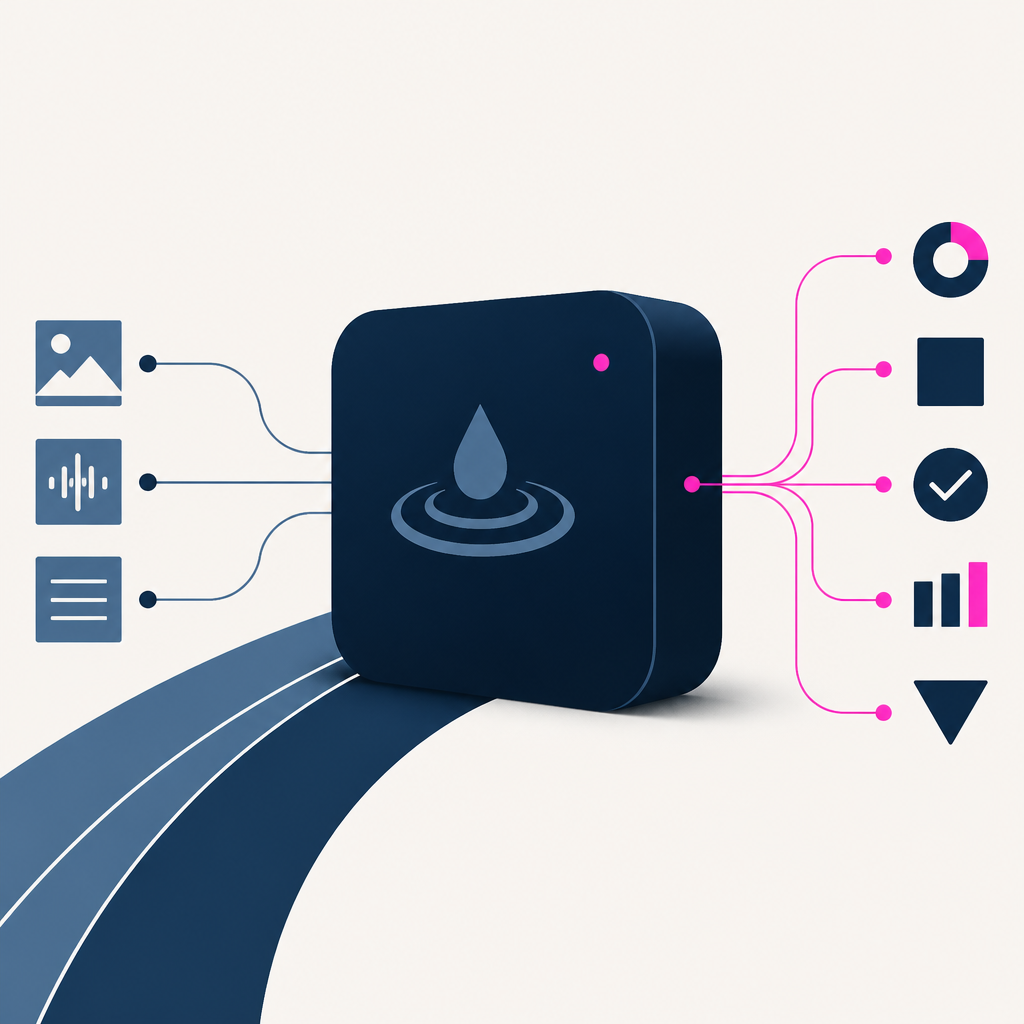
Liquid AI released Open d1, two open-weight multimodal decision models (d1-3B and d1-omni-600M) that return calibrated typed answers with zero output tokens. d1-3B scored 48.57 on Decision Index v0.2.1 and takes 8 ms for one question on an RTX 4090. The models shift deployments from generating token-by-token text to making real-time probabilistic decisions across fixed options, including text+image and text+audio inputs.
Liquid AI released two open-weight d1 decision models for edge use: d1-3B and experimental d1-omni-600M. d1-3B scored 82.9 mean on seven public datasets and answered a single question in 16 ms on an NVIDIA Jetson AGX Thor. The models provide fast single-forward-pass multimodal decision outputs (text+image for d1-3B, and text+image or text+audio for d1-omni-600M) and are now available on Hugging Face with usage code.
Google launched EmbeddingGemma 2, a private multimodal on-device search embedding model that maps text, images, audio, and video into one embedding space. It has 740 million parameters and supports an 8K token context window. Developers can now build fully offline cross-modal semantic search and retrieval (including on-device RAG) using the new open Apache 2.0 model and its smaller, truncated vector outputs for local storage.
Every AI story that matters,
in your inbox by 8am.
TLDRocket reads all relevant sources, removes duplicate coverage, and summarises the
day in two minutes. Follow companies and topics for alerts, or get the
briefing in Slack. Free, no spam, unsubscribe anytime.
Reading TLDRocket needs no cookies, and the readership counts we rely on come from
our own cookieless analytics. Google Analytics is the exception: it sets cookies and
reports to Google, so it stays switched off until you allow it. You can change your
mind any time from “Cookie settings” in the footer.
Strictly necessary
Session security and form protection (tldrocket-session,
XSRF-TOKEN, 2 hours). The site cannot work without them,
so they need no consent.
Always on
Google Analytics 4 (_ga,
_ga_<id>, up to 2 years). Measures which
stories and sections readers use. Google acts as a third-party processor and may
store the data outside the EU. No advertising, no profiling, no data sold.