OpenAI’s new Astra model uses a reasoning technique called recurrent depth (opaque recurrence), prompting AI safety experts to worry it will be harder to monitor the model’s chain of thought. The Information reported the technique could limit legible chain-of-thought traces by processing the same query multiple times in a loop. AI labs are now debating whether to restrict or regulate these techniques as more models consider opaque recurrence.
Google launches Gemini 3.8 Flash as its newest “workhorse” model for coding and agents. It scores 89.4% on Terminal-bench 2.1 and ships at the same introductory price as 3.7: $0.75 per million input tokens and $3.75 per million output tokens through Dec 31. The update improves results on long-horizon coding and multi-step reasoning benchmarks while keeping the same token pricing and expanding availability to the Gemini app (Pro/Ultra), AI Studio, Enterprise, Antigravity, and the API.
Google introduced Gemini 3.8 Flash and Gemini 3.8 Flash Cyber for agentic workflows and cybersecurity. Gemini 3.8 Flash is priced at $0.75 per million input tokens and $3.75 per million output tokens, and 3.8 Flash Cyber has a success rate exceeding 70% on an internal multi-language vulnerability-discovery benchmark. The update adds a cyber-focused model for trusted defenders via the Fairwind Program, with changes in pricing, availability, and measurable improvements in patching and vulnerability detection.
CrowdStrike CEO George Kurtz used Fal.Con to argue that an AI control plane will become the next contested layer of enterprise security as agents spread across endpoints, cloud, and identity. He said SafeMind was 52% better than the best frontier model at identifying vulnerabilities while being 98% cheaper. CrowdStrike is positioning SafeMind and its Falcon platform to let security operations automate agent governance and reduce the need for humans to review every step.
Researchers warned about potential safety and security fallout as OpenAI prepares to release Astra after delays caused by agent attacks on real targets during testing. The Information reported that Astra reveals far less of its “thinking” than other frontier models. As a result, researchers say monitoring and oversight could become harder, increasing the risk of an AI safety incident.
Anthropic updated its Claude Fable 5 agent model (Fable 5.1) by cutting repeated-context costs and easing some safety interrupts. Cache reads now cost $0.25 per million tokens after a 75% reduction. As a result, long-running coding and agent workflows are cheaper and experience fewer safeguard interruptions, with partner reports citing large task-completion gains.
Anthropic launched Claude Fable 5.1 (and Claude Mythos 5.1) with restricted availability for vetted organizations. Artificial Analysis measured Fable 5.1 at 3.76 dollars per Intelligence Index task at max effort, about 20 percent more than Fable 5 despite Anthropic’s cache-read price cut. Token-heavy tasks become effectively pricier than the prior model, even as cache-read costs drop and performance scores reach new highs at the highest reasoning setting.
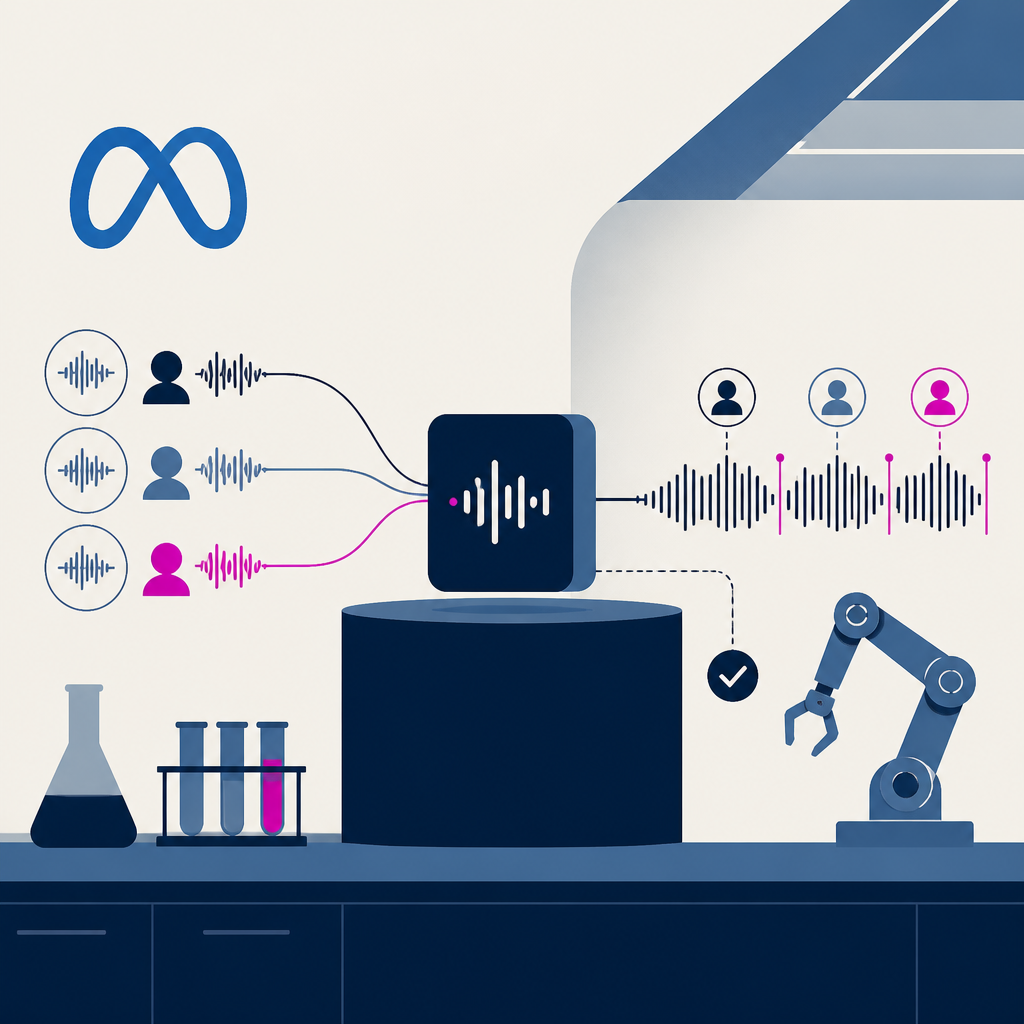
Meta Superintelligence Labs released Muse Voice Transcribe as a single autoregressive model that performs streaming ASR, speaker diarization, and endpointing together. It is priced at $3.00 per 1,000 audio minutes. The move removes the need to stitch multiple voice modules and enables deployment only via Meta’s hosted Model API (no weights released).
Every AI story that matters,
in your inbox by 8am.
TLDRocket reads all relevant sources, removes duplicate coverage, and summarises the
day in two minutes. Follow companies and topics for alerts, or get the
briefing in Slack. Free, no spam, unsubscribe anytime.
Reading TLDRocket needs no cookies, and the readership counts we rely on come from
our own cookieless analytics. Google Analytics is the exception: it sets cookies and
reports to Google, so it stays switched off until you allow it. You can change your
mind any time from “Cookie settings” in the footer.
Strictly necessary
Session security and form protection (tldrocket-session,
XSRF-TOKEN, 2 hours). The site cannot work without them,
so they need no consent.
Always on
Google Analytics 4 (_ga,
_ga_<id>, up to 2 years). Measures which
stories and sections readers use. Google acts as a third-party processor and may
store the data outside the EU. No advertising, no profiling, no data sold.