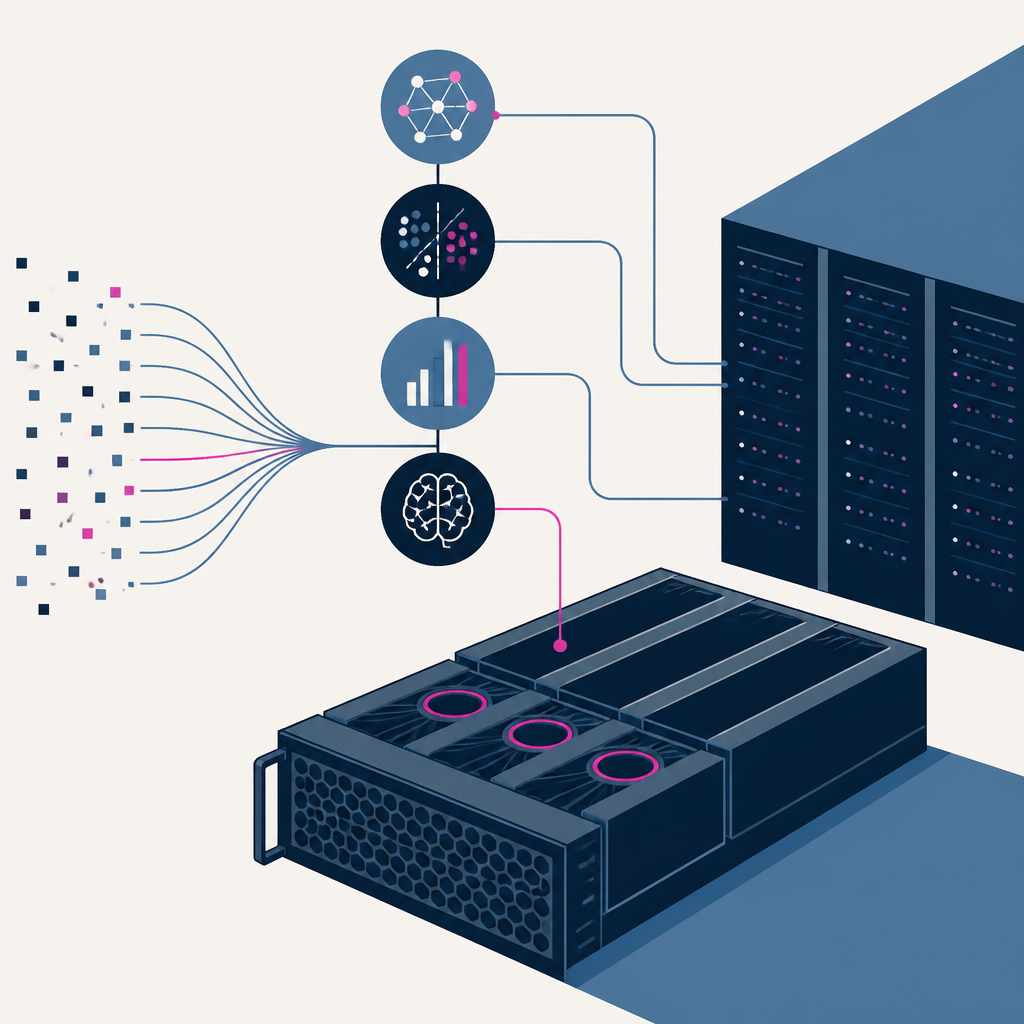
Codex GPU Queue lets users run GPU jobs from multiple Codex tasks through one local Windows queue with a shared broker that starts eligible work automatically. It uses a redacted, read-only CLI to inspect confirmed waiting blockers while leaving uncertain reasons undetermined. As a result, you get centralized job scheduling and clearer dependency visibility across Codex tasks.
The tutorial walks through implementing end-to-end machine learning workflows on NVIDIA GPUs using RAPIDS cuML (including cuML.accel for scikit-learn acceleration) plus CuPy/cuDF interoperability, then benchmarking multiple classic ML tasks on CPU versus GPU. Installing cuML in the described setup can take about 1-3 minutes. As a result, you get reproducible GPU benchmarking and inference/explainability pipelines (e.g., clustering and SHAP), with guidance on keeping data on-device to preserve speed and model portability considerations.
Marqly launched Marqly 6.0, adding an AI Assistant and an AI Organizer that work with users’ saved bookmarks and content. The update adds MCP support to move saved research into Claude, ChatGPT, and Cursor. Marqly also groups articles, highlights, videos, and AI chats together and makes the features available on the web, in the browser, and on iOS (with Android coming soon).
Every AI story that matters,
in your inbox by 8am.
TLDRocket reads all relevant sources, removes duplicate coverage, and summarises the
day in two minutes. Follow companies and topics for alerts, or get the
briefing in Slack. Free, no spam, unsubscribe anytime.
Reading TLDRocket needs no cookies, and the readership counts we rely on come from
our own cookieless analytics. Google Analytics is the exception: it sets cookies and
reports to Google, so it stays switched off until you allow it. You can change your
mind any time from “Cookie settings” in the footer.
Strictly necessary
Session security and form protection (tldrocket-session,
XSRF-TOKEN, 2 hours). The site cannot work without them,
so they need no consent.
Always on
Google Analytics 4 (_ga,
_ga_<id>, up to 2 years). Measures which
stories and sections readers use. Google acts as a third-party processor and may
store the data outside the EU. No advertising, no profiling, no data sold.