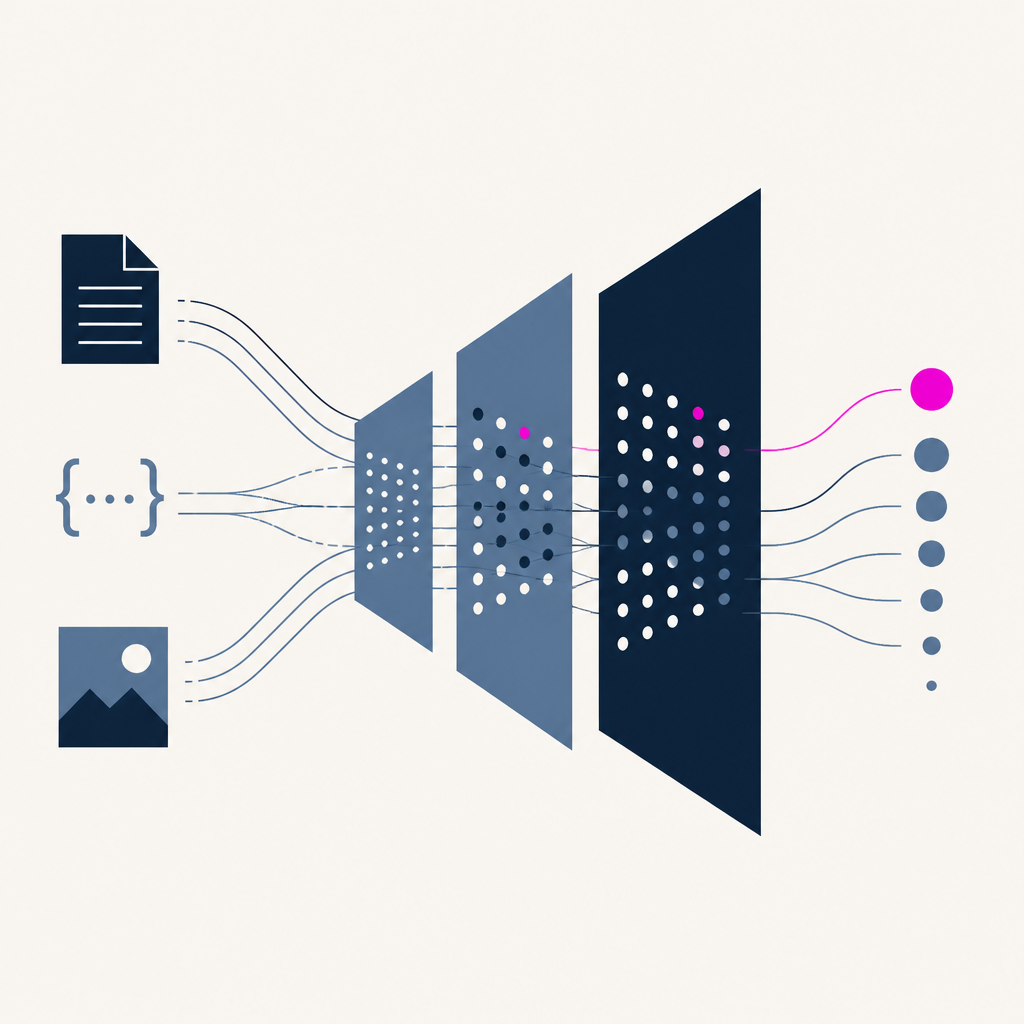
vLLM Semantic Router released Decision 3.0, a family of multimodal decision models that read text, JSON, and images and answer typed questions with probability outputs instead of generated text. The release includes 5 Apache-2.0 models sized from 0.8B to 27B, with median single-request latency on one AMD Instinct MI325X ranging from 21.7 ms (text on d3-nano) to 84 ms (text on d3). Developers can use the probability-based outputs to classify, route, and gate requests without parsing LLM-generated responses, shifting decision logic toward calibrated thresholds.
The Sequence Radar Issue 948 reviews recent AI model launches, funding rounds, and research papers while arguing that the AI market is splitting into separate problems beyond just building better chatbots. Reflection introduced Beam, a 501 billion-parameter mixture-of-experts model with 23 billion active per token. The result is more emphasis on deployment control and behavior evaluation for agents, alongside ongoing progress in AI research for robotics and agent training frameworks.
OrcaRouter released OrcaCyber Zero 1.5, a post-trained cybersecurity model for authorized vulnerability research. It offers a 1M-token context window and reports 100% (39/39) on Cybench. Access is gated and billed via an OrcaRouter hosted API, positioning the model for more validated vulnerability reproduction and exploit development rather than broad disclosure.
Exponential View’s Sunday edition argued that OpenAI’s math manuscript release pushes “Math 2.0” toward explanations and community-building, while also linking next-generation computing sovereignty and energy planning to Pakistan’s shifting electrification plans. Pakistan targeted 30% of all new vehicle sales to be electric by 2030. The piece says this combination changes priorities for AI use (from proofs to understanding) and for computing policy (stress-testing supply-chain autonomy and accounting for grid cost spillovers).
Every AI story that matters,
in your inbox by 8am.
TLDRocket reads all relevant sources, removes duplicate coverage, and summarises the
day in two minutes. Follow companies and topics for alerts, or get the
briefing in Slack. Free, no spam, unsubscribe anytime.
Reading TLDRocket needs no cookies, and the readership counts we rely on come from
our own cookieless analytics. Google Analytics is the exception: it sets cookies and
reports to Google, so it stays switched off until you allow it. You can change your
mind any time from “Cookie settings” in the footer.
Strictly necessary
Session security and form protection (tldrocket-session,
XSRF-TOKEN, 2 hours). The site cannot work without them,
so they need no consent.
Always on
Google Analytics 4 (_ga,
_ga_<id>, up to 2 years). Measures which
stories and sections readers use. Google acts as a third-party processor and may
store the data outside the EU. No advertising, no profiling, no data sold.