Simon Willison’s Weblog·1 month ago·
23
● 19 sources
The writer generated pelican-on-bicycle SVGs with GPT-6 Astra and compared them in a grid against GPT-5.6 Sol, Terra, and Luna across multiple reasoning levels. Astra used 16 input tokens versus 26 for Sol and Terra, and Astra was about twice Sol’s base rate ($10/million input and $50/million output vs $5/$30). The results show Astra producing consistently more detailed pelicans (though legs are still not always correct below max) while making tier-to-tier pricing less disparate due to lower token usage.
The Algorithmic Bridge·1 month ago·
3
● 19 sources
GPT-6 Astra was launched by OpenAI and is described as outperforming Anthropic’s Fable 5.1 across benchmarks while attracting extreme positive reactions. The article cites FrontierMath and ARC-AGI 3, noting version 4 is due in Q1 2027. The author argues that with lab tests increasingly saturated, the key question shifts to real-world impact rather than benchmark results.
OpenAI launched GPT-6 Astra on Thursday, but many developers still can’t access the model’s API endpoint for testing despite documentation and pricing. The rollout was expected to expand in the near future, starting with ChatGPT Pro subscribers, and OpenAI said the broader rollout to finish would take “a few days.” Access delays trigger one “banked reset” per day for paying ChatGPT subscribers without Astra access starting September 3, while developers waiting for API access received no similar announcement.
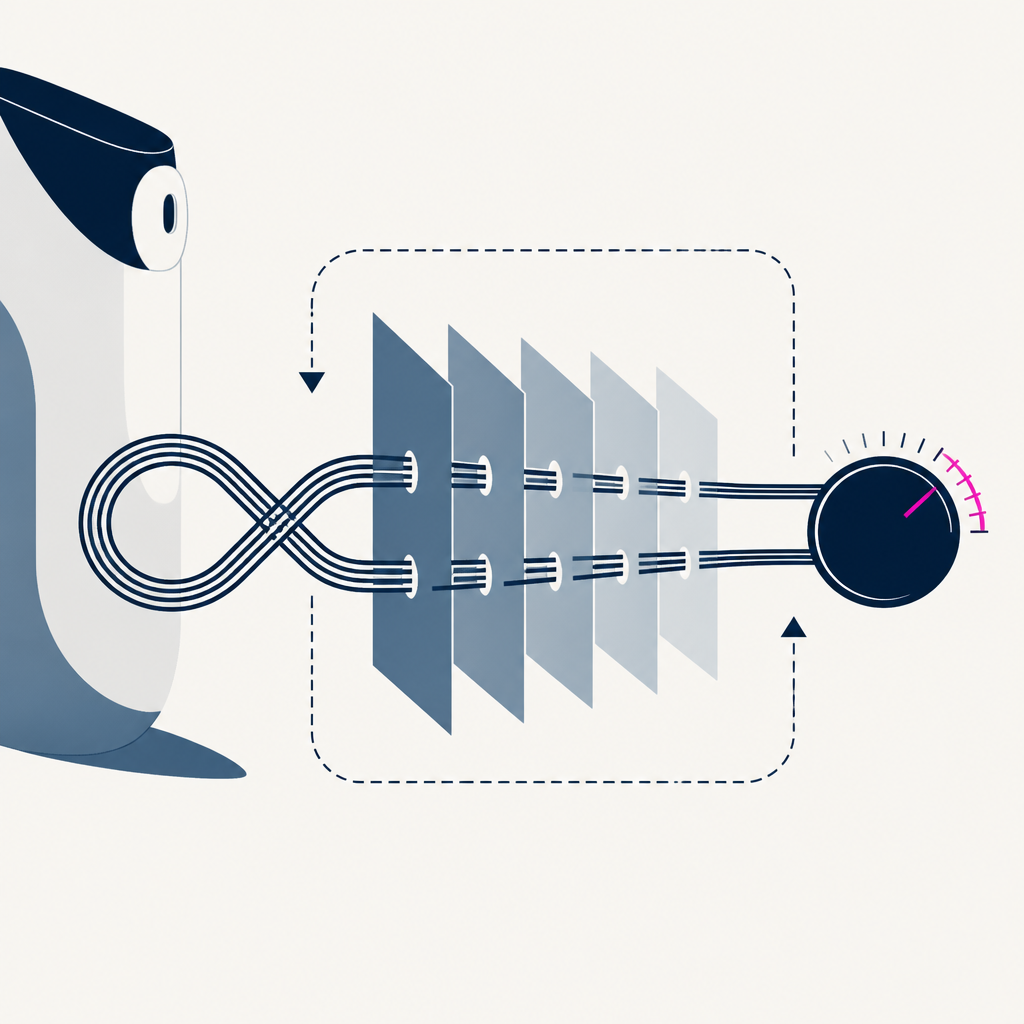
Astra uses a looped transformer architecture that reuses layers across depth instead of keeping an unbounded hidden state like a classic RNN. The design’s main concern is that the loop count can act as a simple performance dial that may make reasoning harder to monitor. As a result, readers should watch how changing the loop count affects model behavior and interpretability.
LLMs are becoming commodities as model quality differences shrink and providers shift toward application fit and packaging other capabilities rather than distinct core models. GPT-4o reportedly cut cost and latency by 2x over 6 months compared with GPT-4 Turbo, and reported task parity keeps tightening (e.g., Gemini-1.5 Pro within 1.5%). As a result, consumers and enterprises increasingly choose based on price/speed and perceived safety with default providers, forcing newer entrants to find niches and differentiate in ways other than raw model quality.
OpenAI launched GPT-6 Astra as a newly released frontier AI model and rolled it out to enterprise customers through its gated Daybreak program. The rollout begins for enterprise customers and then expands over the coming days to ChatGPT and the OpenAI API. Access broadens from gated enterprise use to ChatGPT and multiple API environments, including AWS Bedrock and Microsoft Azure.
Artificial Analysis reported GPT-6 Astra benchmark results showing it ties Fable 5 on its Coding Agent Index while changing token use and pricing relative to GPT-5.6 Sol. GPT-6 Astra’s input/output token prices were raised to $10/$50 per million from $4/$20 (a 2.5x increase). As a result, Astra is more token efficient and less costly per task in coding, but it is 75% more expensive per task in the Intelligence Index, alongside a drop in hallucination rate from 92% to 51% at max effort and mixed gains across other evaluations.
OpenAI introduced GPT-6 Astra as a more tool-using “reasoning model” aimed at getting real work done, backed by demos that involve turning instructions into computer actions and file outputs. Astra’s API model page lists a 1,050,000-token context window. As a result, Astra can handle longer, multi-step projects with tools and memory-like state across requests, and reviewers emphasize that the big ARC-AGI-3 result depends on the specific harness used.
Every AI story that matters,
in your inbox by 8am.
TLDRocket reads all relevant sources, removes duplicate coverage, and summarises the
day in two minutes. Follow companies and topics for alerts, or get the
briefing in Slack. Free, no spam, unsubscribe anytime.
Reading TLDRocket needs no cookies, and the readership counts we rely on come from
our own cookieless analytics. Google Analytics is the exception: it sets cookies and
reports to Google, so it stays switched off until you allow it. You can change your
mind any time from “Cookie settings” in the footer.
Strictly necessary
Session security and form protection (tldrocket-session,
XSRF-TOKEN, 2 hours). The site cannot work without them,
so they need no consent.
Always on
Google Analytics 4 (_ga,
_ga_<id>, up to 2 years). Measures which
stories and sections readers use. Google acts as a third-party processor and may
store the data outside the EU. No advertising, no profiling, no data sold.