OpenAI released GPT-6.1 Sol, positioning it as close to GPT-6 Astra performance while keeping Astra’s public release delayed over safety concerns. GPT-6.1 Sol costs 10 cents per million tokens, about half the price of GPT-6.0 Astra. The change moves more coding and long-running workloads to Sol for lower token cost, while Astra remains held back from public availability.
OpenAI launched dots at DevDay, introducing always-on GPT-6 Astra agents that run on dedicated cloud computers with browsers and can keep working after you log off. GPT-6 Astra scored 72.6% on OSWorld 2.0 at about 40 minutes per task in OpenAI’s latency simulations. Dots now roll out to ChatGPT Pro and Business Premium users with no self-hosted or open-weights option, and enterprise specialist dots are previewed with admin enablement plus optional Agent 365 support with Microsoft.
Simon Willison’s Weblog·2 weeks ago·
46
● 20 sources
Simon Willison posted an update on his Hacker News comment about GPT 6.1 Sol after live-blogging an OpenAI DevDay 2026 keynote. On 2026 Sep 29, he shared links to his “pelicans” (example outputs) for GPT-6.1-Sol, noting they aren’t notably different from other GPT-6 family pelicans. As a result, readers get the specific example links and a comparative assessment of the release’s behavior rather than new functionality details.
OpenAI launched GPT-6.1 Sol, an updated version of GPT-6 Sol, one week after GPT-6 Sol debuted. GPT-6.1 Sol is priced at $2 per million input tokens and $10 per million output tokens (with cached input at $0.10), while claiming it nearly matches GPT-6 Astra for agentic coding and computer use. As a result, OpenAI positions Astra as largely unnecessary for most use cases and makes GPT-6.1 Sol available in the API and multiple ChatGPT tiers (with an Ultrafast Codex option).
OpenAI launched GPT-6.1 Sol one week after GPT-6 Sol, positioning it as near-matching GPT-6 Astra for agentic coding and professional tasks. The model cuts factual-error rates at low reasoning effort from 11.4% to 7.7%. GPT-6.1 Astra was not released, and GPT-6.1 Sol rolled out to ChatGPT Work and Codex users starting that day while reporting improved safety and limit-honoring behavior.
OpenAI announced that GPT-4.5 is being re-introduced at DevDay 2026 and will be streamed for the community. The model is priced at $75 per million input tokens when relaunched. This changes developer access by restoring GPT-4.5’s original capabilities (including a 128,000-token context window) after a prior, short API availability cycle.
NVIDIA released Kumo Tabular, an open foundation model for tabular classification and regression that predicts labels for new rows in a single forward pass without training, tuning, or feature engineering. It ranks first on TabArena overall with an ELO of 1950. The release makes a pretrained tabular-Transformer available on Hugging Face under OpenMDW-1.1, aimed at faster accuracy-efficiency tradeoffs than prior tabular approaches.
Microsoft Research introduced Quine, a research system combining a multimodal biology world model with a harness that connects models, scientific tools, literature, and researchers to run an iterative experiment–reasoning loop.
DrivingBench hooked ChatGPT-style LLMs to a Toyota Corolla and tried to have them steer, accelerate, and brake through a cone course in a parking lot. GPT-6 Astra was the only model that eventually completed the course after extensive prompt changes and troubleshooting. The work became a proposed real-world driving benchmark for off-the-shelf frontier models, with results reported alongside the code and prompts.
Fireworks Research launched Ember-1 on September 23 claiming it matches Moonshot’s Kimi K3 quality while using fewer reasoning tokens. Testing on OpenRouter found Ember-1 finished the same 5-run suites about 3.4x faster while using 23% fewer reasoning tokens, with costs of $2.48 vs $3.26 on Fireworks pricing but slightly lower accuracy (14/15 correct vs 15/15) due to one arithmetic slip. As a result, Ember-1 appears to deliver nearly similar results at much higher speed, though Kimi K3 can be more reliable and may be cheaper if routed to lower-priced providers.
FrontierSWE v2 added 21 new challenges, increasing the total to 34, and retired 4 tasks from v1 while expanding coverage across visual reasoning, graphics, scientific computing, and AI research. The benchmark now scores every task on a 0 to 1 scale. Changes include deterministic, reproducible scoring via a proxy performance metric, plus a cleaner two-container verifier setup and stronger non-root user separation to prevent cheating.
Alex Ewerlu00F6f Notes·2 weeks ago·
49
● 5 sources
The author argues that coding is not solved by LLMs and that teams should still prioritize reading, testing, and accountability for production software. The post notes that on Hacker News it reached spot 2 with 473 points and 476 comments as of 2026-09-29. As a result, the author calls for narrower, well-scoped AI use cases (like translation and summarization) rather than pushing AI into every engineering surface where non-functional requirements dominate costs.
Anthropic launched Claude Sonnet 5.5 and put it on its Artificial Analysis Intelligence Index. It scored 56, 2 points behind Opus 5.5 (max), while using about 193k output tokens per task at max effort. Performance improvements come with higher token usage and a cost per task of $7.60 (about 50% higher than Sonnet 5), plus a pre-release structured-output bug being fixed for the public release.
The Jev AI model has drawn strong attention in technical communities over the past 2 weeks as a text classifier that is framed as more than a basic classifier. It is positioned as handling classification tasks faster and more cheaply than general-purpose GPT/LLM tools. The article responds by placing Jev in the broader evolution of text classification, from bag-of-words and classic models to RNNs and other approaches, explaining what Jev does and why it attracts interest.
H Company released Holo4, an open-weight family of computer-use models for AI agents that can click/type on screens, write code, and call MCP or API tools across desktop, web, Android, and sandboxes.
Opus 5.5 shipped this week and received overwhelmingly positive community reaction, especially around its use for explainer videos. It leads SimpleBench at 88.4% and is also reported as about 60% lower cost than Fable 5.1 on vision evals. The result is that more attention shifts toward Opus 5.5 as the go-to option for both explainer-video outputs and top benchmark performance.
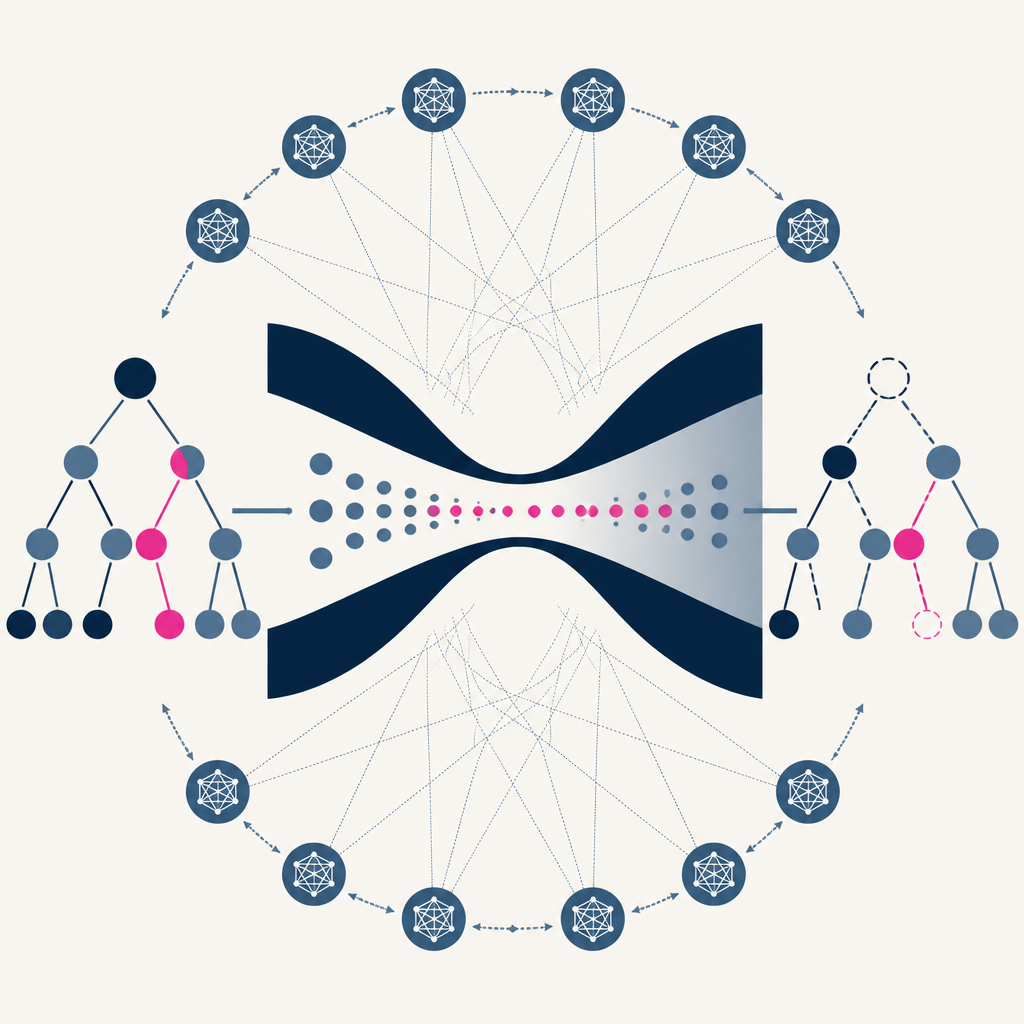
The study measures how well language models preserve tree-structured expressions when they are serialized into word problems and then extracted back. It evaluates all pairwise combinations of sixteen models. The result is an empirical test of the “communication bottleneck,” showing how much of that structured content survives the round trip.
Every AI story that matters,
in your inbox by 8am.
TLDRocket reads all relevant sources, removes duplicate coverage, and summarises the
day in two minutes. Follow companies and topics for alerts, or get the
briefing in Slack. Free, no spam, unsubscribe anytime.
Reading TLDRocket needs no cookies, and the readership counts we rely on come from
our own cookieless analytics. Google Analytics is the exception: it sets cookies and
reports to Google, so it stays switched off until you allow it. You can change your
mind any time from “Cookie settings” in the footer.
Strictly necessary
Session security and form protection (tldrocket-session,
XSRF-TOKEN, 2 hours). The site cannot work without them,
so they need no consent.
Always on
Google Analytics 4 (_ga,
_ga_<id>, up to 2 years). Measures which
stories and sections readers use. Google acts as a third-party processor and may
store the data outside the EU. No advertising, no profiling, no data sold.