Orca Security built Discovery AI on Amazon Bedrock to let users ask natural-language questions that are converted into Orca’s Sonar structured security queries. The company reports cutting query costs by 90 percent, input tokens by 93 percent, and latency by 75 percent versus its initial baseline. As a result, Orca can handle thousands of queries per day with about 15-second response times and reduce the need for users to know exact model names, operators, and schema navigation.
Higgsfield added longer video generation capabilities using GPT-6 Astra, along with improved visual generation via GPT-Image-2.5 and a voice-focused filmmaking path via GPT-Live. Video length increased from 1 minute to over 10 minutes. Creators can now produce longer AI videos and aim for more precise visuals and voice-driven workflows.
Attention underpinned a shift in neural machine translation when Dzmitry Bahdanau and collaborators replaced fixed-size sentence representations with an attention mechanism that let models handle long sentences effectively, later scaled by Google’s transformer architecture. The transformer paper from 2017, “Attention Is All You Need,” reported state-of-the-art translation while using a fraction of the computation needed to train earlier models, and it has been cited more than 250,000 times. This changed model design by making attention central to modern large language models, enabling broad next-word language modeling that powers systems like ChatGPT.
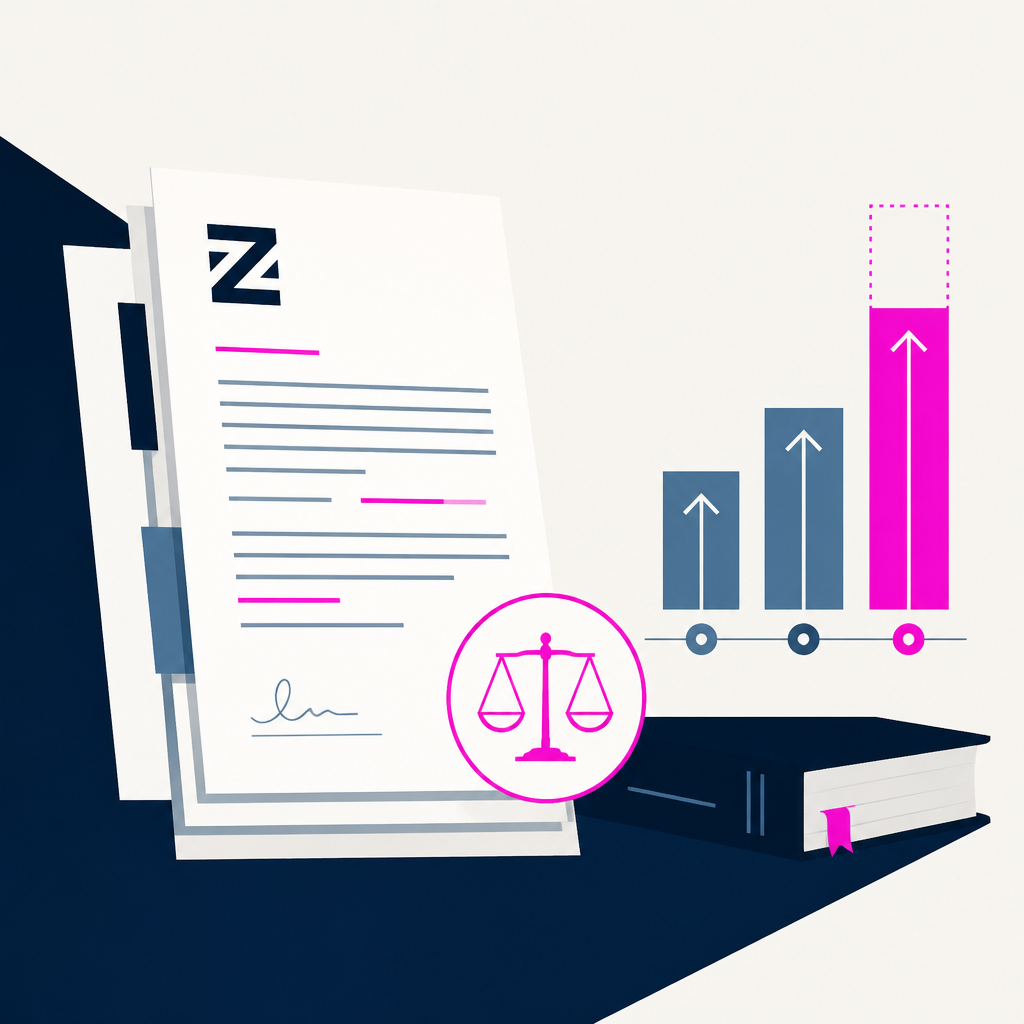
Z.ai launched GLM-Legal, a law-focused version of GLM-5.3-Flash trained for agentic legal tasks like contract review and compliance research. It scored 19.17% all-pass on Harvey’s Legal Agent Benchmark (LAB), up from 6.67% for its base model. Developers can access it via an application-only hosted API (no public weights or published price), and the rollout changes from model experimentation to API-based integration.
Bilingual pre-training experiments found that mixing in an English auxiliary corpus improves low-resource Arabic model training more than aggressive hyperparameter tuning when data is constrained. The study reports mixing boosts validation performance by an amount equivalent to 2–3× the unique target data and improves downstream task accuracy by 2–13×. As a result, the authors recommend prioritizing the mixing ratio (and using high-resource auxiliary data) over hyperparameter search, since target-language validation loss understates mixing’s benefit.
Every AI story that matters,
in your inbox by 8am.
TLDRocket reads all relevant sources, removes duplicate coverage, and summarises the
day in two minutes. Follow companies and topics for alerts, or get the
briefing in Slack. Free, no spam, unsubscribe anytime.
Reading TLDRocket needs no cookies, and the readership counts we rely on come from
our own cookieless analytics. Google Analytics is the exception: it sets cookies and
reports to Google, so it stays switched off until you allow it. You can change your
mind any time from “Cookie settings” in the footer.
Strictly necessary
Session security and form protection (tldrocket-session,
XSRF-TOKEN, 2 hours). The site cannot work without them,
so they need no consent.
Always on
Google Analytics 4 (_ga,
_ga_<id>, up to 2 years). Measures which
stories and sections readers use. Google acts as a third-party processor and may
store the data outside the EU. No advertising, no profiling, no data sold.