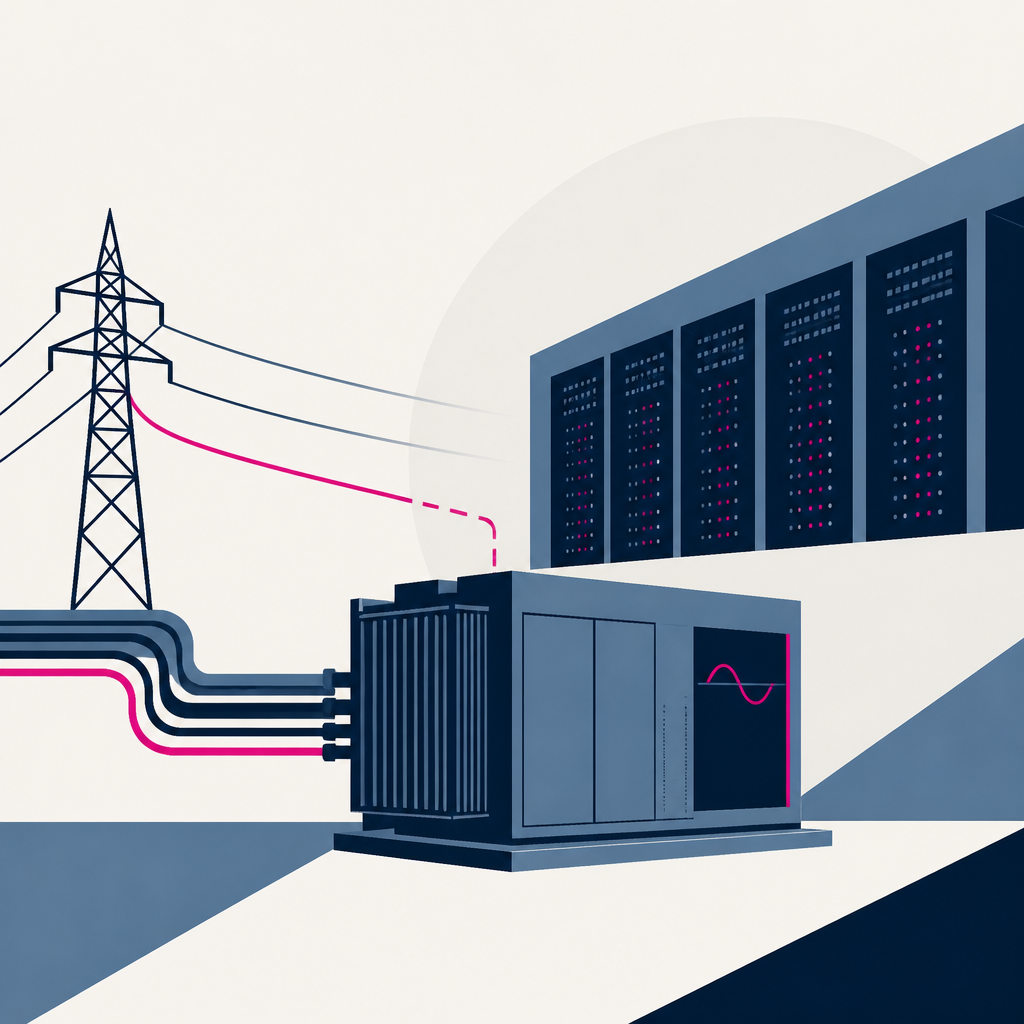
Data centers are driving electricity demand that is straining US power grids, alongside a broader push to deploy solid-state power transformers to ease transformer shortages. The article says utilities can face delivery waits of up to several years for new large transformers. As a result, power infrastructure upgrades can proceed faster while replacing older hand-assembled designs that have remained largely unchanged since the 1880s.
Donald Trump defended AI data center buildouts in a radio interview despite state and local governments pausing construction over environmental and grid concerns. OpenAI’s planned Ohio campus is expected to create 35,000 construction jobs over six years, and employ about 2,500 long-term staff. The backlash is met with stronger political support and continued investment plans for dedicated power generation and grid infrastructure.
NVLink Fusion is presented as a way to integrate custom XPUs into NVIDIA’s existing AI factory infrastructure so scale-up networking, rack-scale architecture, and software can keep up with continuous AI factory operation. The article cites sixth-generation NVLink enabling networking across a 72-XPU domain, with XPU-to-XPU transfer latency 3x lower and packet rate 10x higher than off-the-shelf Ethernet-based alternatives. As a result, XPU builders can reuse mature components to reduce time-to-market and operational risk while scaling unified, semi-custom AI factories that mix CPU/XPU and other accelerators on shared rack infrastructure.
NVIDIA announced that its Vera Rubin NVL72-based rack-scale system, NVIDIA Groq 3 LPX, is now in full production and is being adopted by multiple AI infrastructure partners for agentic inference. In an Artificial Analysis benchmark with Gemma 4 31B on 100,000-token contexts, it delivered 3,400 output tokens per second, about 4x faster than the nearest alternative platform. The update changes the inference stack by pairing long-context context processing on Rubin GPUs with LPX’s lower-latency token decode acceleration, and by extending NVIDIA’s Vera Rubin network fabric to enable larger, lower-cost agent workloads at scale.
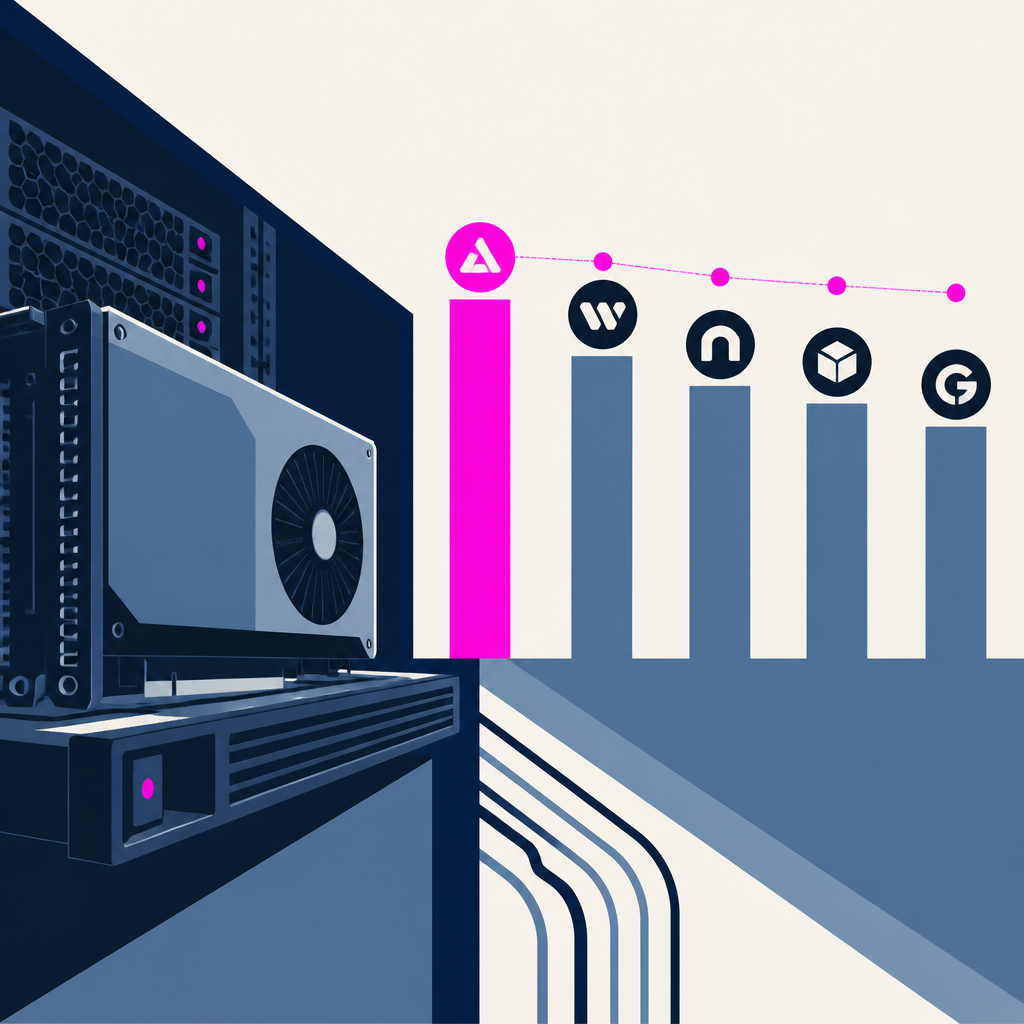
The article ranked CoreWeave, Nebius, Lambda, Crusoe, and Groq as GPU “neoclouds” by published pricing and contracted power. Lambda’s B200 on-demand rate is listed at $6.69 per GPU-hour as the lowest published figure. Buyers are given a side-by-side view of rate cards, contract structures, and hardware roadmaps (including CoreWeave’s Platinum SemiAnalysis tier), rather than treating the “neocloud” label as one uniform offering.
Every AI story that matters,
in your inbox by 8am.
TLDRocket reads all relevant sources, removes duplicate coverage, and summarises the
day in two minutes. Follow companies and topics for alerts, or get the
briefing in Slack. Free, no spam, unsubscribe anytime.
Reading TLDRocket needs no cookies, and the readership counts we rely on come from
our own cookieless analytics. Google Analytics is the exception: it sets cookies and
reports to Google, so it stays switched off until you allow it. You can change your
mind any time from “Cookie settings” in the footer.
Strictly necessary
Session security and form protection (tldrocket-session,
XSRF-TOKEN, 2 hours). The site cannot work without them,
so they need no consent.
Always on
Google Analytics 4 (_ga,
_ga_<id>, up to 2 years). Measures which
stories and sections readers use. Google acts as a third-party processor and may
store the data outside the EU. No advertising, no profiling, no data sold.