
Data centers become "killer application" for new power transformer tech
Ars Technica Jeremy Hsu
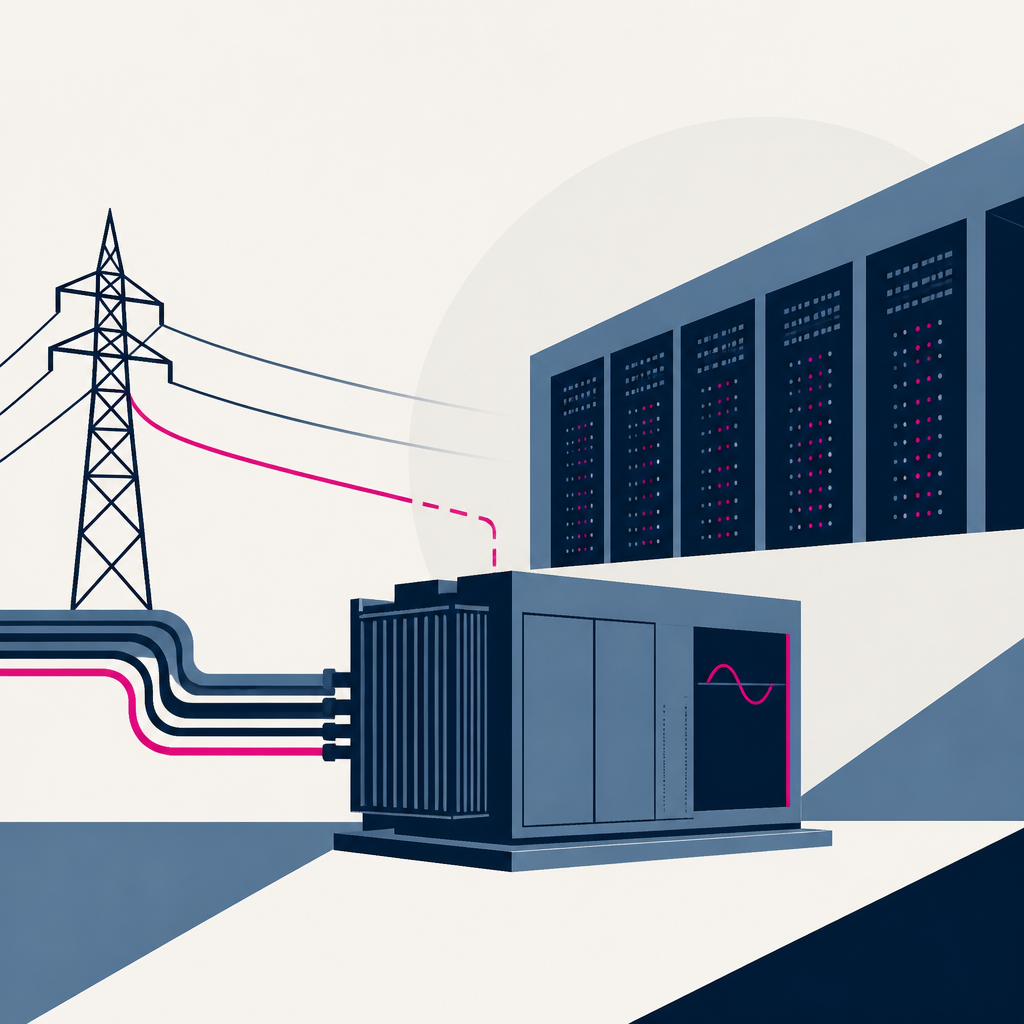
Data centers are driving a rush into solid-state power transformers. The upside: faster grid upgrades for AI could also fix an old bottleneck for everyone.
Based on reporting by Ars Technica, Jeremy Hsu — read the original for the full story.
Summary, retelling and take written by AI under human oversight; images are AI-generated illustrations. How we work · Report an error
Data centers are now the biggest force pushing US electricity demand higher, and the pressure is showing up all over the grid. But the AI buildout is also pouring money into a piece of hardware that has barely changed in more than a century: the power transformer.
Today’s grid still leans on conventional transformers built around a design from the 1880s. They use two copper coils wound around a steel core to raise or lower alternating current voltage, and the biggest units are not stamped out on an assembly line. They are hand-built, one by one, for specific utility substations.
That slow, custom process has become a real constraint. Utilities and other buyers can end up waiting years for new transformers, which is bad news when demand is climbing and aging equipment needs replacing at the same time.
Solid-state power transformers replace that industrial-era setup with power electronics. The article frames data centers as the “killer application” for the new gear: the same AI boom stressing the grid is also helping push investment into technology that could make grid upgrades faster and less painful.
My take — AI-written commentary, not fact-checked reporting
This is one of those rare cases where AI hype might accidentally pay for something genuinely useful. The grid does not need more slogans; it needs hardware that can be built faster than a transformer from the 1880s can be hand-finished. Funny how the most modern workload on earth is being used to drag power infrastructure into the present.
Read more about this at: Ars Technica