Android is rolling out enhanced scam-defense features in Google Messages that evaluate suspicious conversations with unrecognized senders using cloud-based Gemini AI models. The enhanced protection setting is scheduled to roll out in the coming weeks. As a result, Google Messages will add additional safeguards beyond its existing Scam Detection feature by analyzing likely scam intent during the chat flow.
Safety researchers say many AI image tools are being used to generate and spread non-consensual explicit images, often shared via messages or stored in private clouds where detection drops.
A Google co-authored Internet-user study surveyed people in the United States, Australia, and the United Kingdom and found this pattern as of July.
The focus for intervention shifts to blocking at the AI tool source, while recent red-teaming suggests the models may increasingly fail to stop explicit outputs as they improve.
Google made its Gemini 4 Argon multimodal language AI model broadly available via the Gemini API.
API pricing is discounted to 2/10 per 1M tokens for a limited time.
The model can now be used across paid Gemini API tiers and for select subscribers under the lower-cost pricing window.
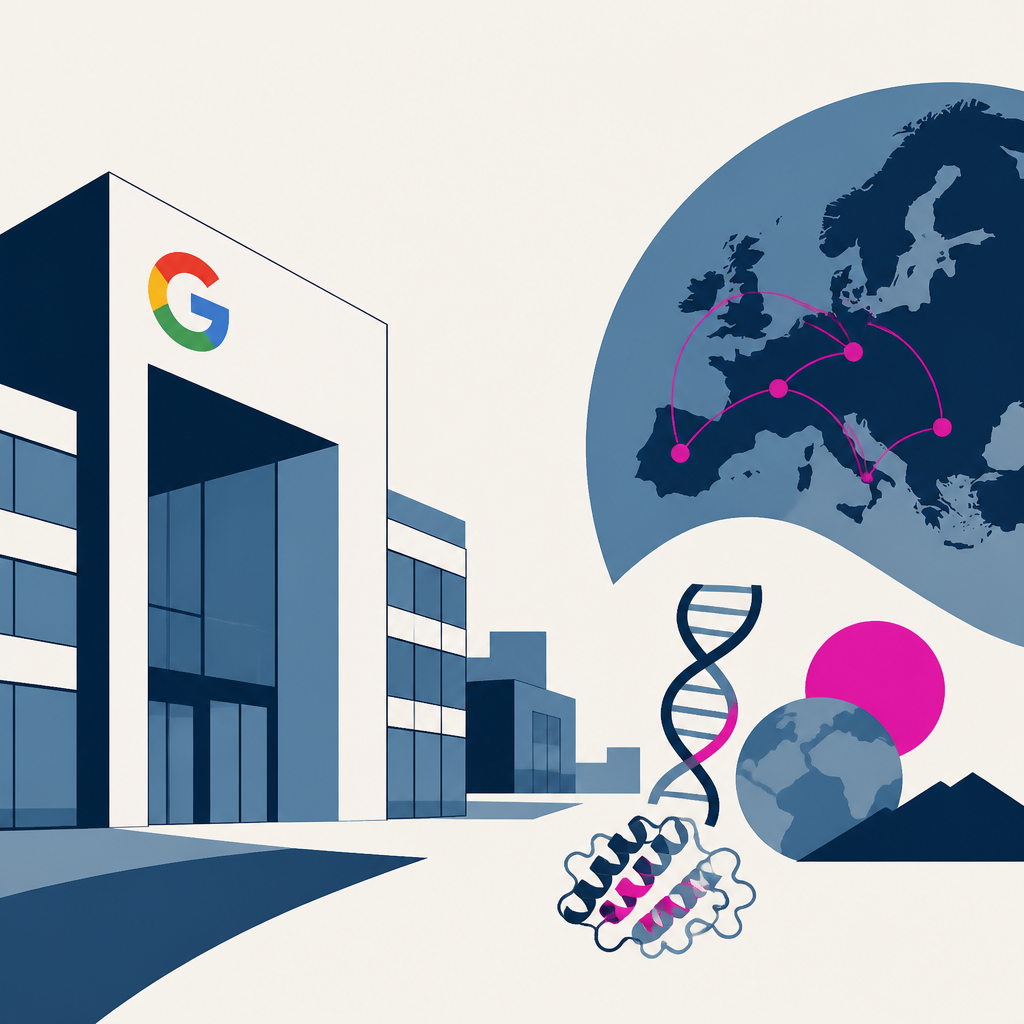
Google DeepMind and Google Cloud will provide up to 200 European scientific researchers direct access to its frontier AI models. The program includes $3 million in compute credits. As a result, selected researchers can use tools including AlphaFold 3 and AlphaEarth to work on projects like extreme weather prediction and molecular mapping faster.
Reports say some Googlers question whether Gemini 4 Argon’s real-world coding and front-end design performance matches its benchmark results. The dispute centers on internal vendor-published benchmark tables. Google disputes the critique and asks for skepticism until outside testers confirm results.
Google launched Gemini 4 Argon for developers and enterprises through API and AI Studio/AI Ultra, plus for consumers via Google apps and Search AI Mode, and also rolled it out to partners for trials. The model is priced at $2 per million input tokens and $10 per million output tokens at launch. Access and pricing shift as paid users and enterprise developers can start using Argon immediately across Google’s platforms, with some programs expanding access to additional partners and a free 6-month high-usage tier for 10,000 scientists.
Google DeepMind released Gemini 4 Argon generally for developers, enterprises, and paid Gemini subscribers via its Gemini API and platforms. The model’s response can generate up to 1M tokens per output, priced at $2 input and $10 output per 1M tokens during the intro period. This increases the maximum single-response output length while keeping the service as a proprietary, cloud-only API (no open weights).
Every AI story that matters,
in your inbox by 8am.
TLDRocket reads all relevant sources, removes duplicate coverage, and summarises the
day in two minutes. Follow companies and topics for alerts, or get the
briefing in Slack. Free, no spam, unsubscribe anytime.
Reading TLDRocket needs no cookies, and the readership counts we rely on come from
our own cookieless analytics. Google Analytics is the exception: it sets cookies and
reports to Google, so it stays switched off until you allow it. You can change your
mind any time from “Cookie settings” in the footer.
Strictly necessary
Session security and form protection (tldrocket-session,
XSRF-TOKEN, 2 hours). The site cannot work without them,
so they need no consent.
Always on
Google Analytics 4 (_ga,
_ga_<id>, up to 2 years). Measures which
stories and sections readers use. Google acts as a third-party processor and may
store the data outside the EU. No advertising, no profiling, no data sold.