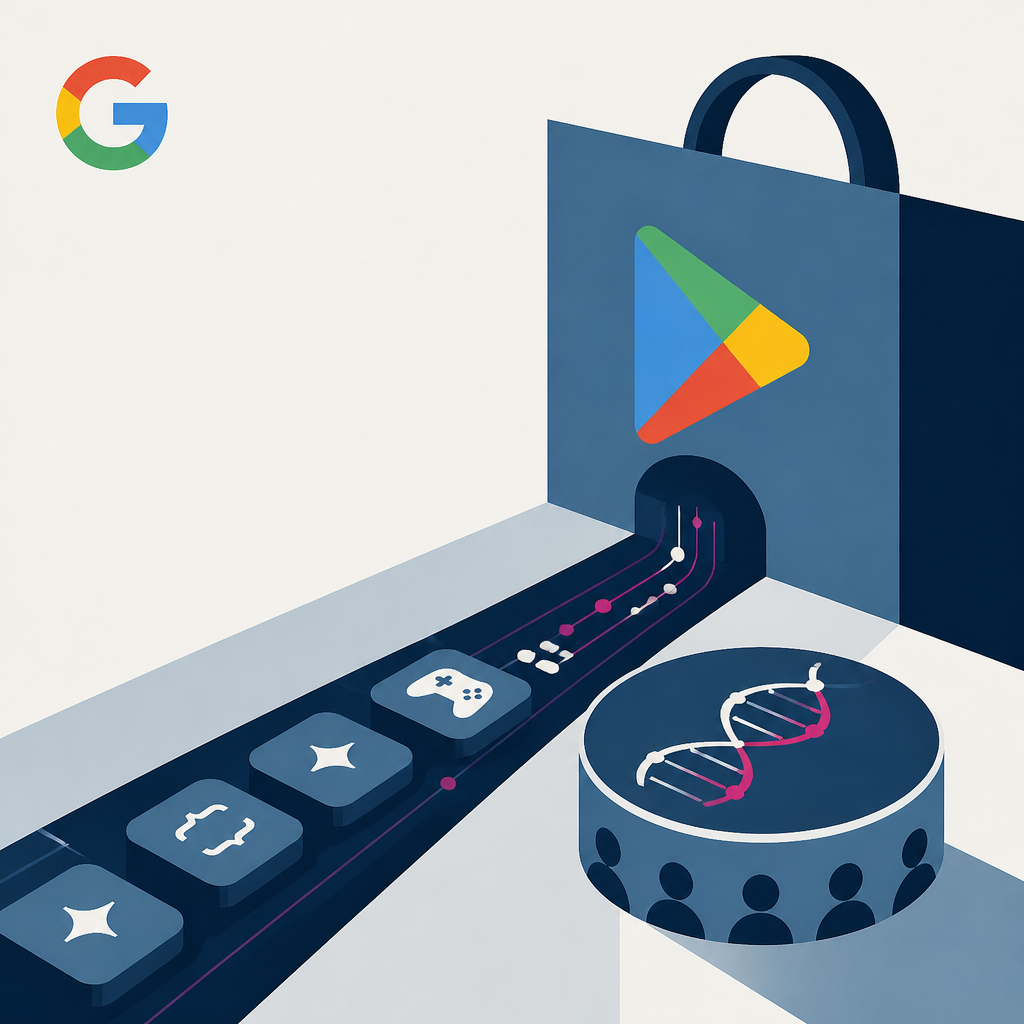
Google is expanding Play Store AI features by upgrading Ask Play for app and game discovery and adding Game Finder for matching players. It is using the activity of 1.2 billion Android game players as the basis for a “Gamer DNA” profile. These changes make Play Store search more AI-led and introduce player matching alongside conventional app recommendations.
Google announced that Google Play will let Android users launch personal apps created on-device without publishing them to public Play listings. The feature launches first in the U.S. for users age 18 and up. As a result, vibe-coded apps can stay private on the creator’s account and later be shared with trusted friends or published publicly after trust and safety reviews.
Google expanded Gemini 4 Argon beyond selected cybersecurity partners and made it available via the Gemini API and paid Google AI subscriptions with rollout across developers, businesses, consumers, researchers, and expanded cyber partners. A 50% introductory discount applies until the end of November, then API prices double from $2/$10 per million input/output tokens to $4/$20 per million. After November, Argon becomes more expensive per token and per typical task, though it remains comparatively cheaper than several other frontier models in the article’s cost ranking.
Google’s AI Studio now lets users launch their vibe-coded personal Android apps directly through the Play Store without connecting a phone to a computer. The new feature was announced in the US on Tuesday. This changes app installation and launch by moving it into Play Store while Google keeps the apps secure, private, and separate from the public catalog.
Google launched its Gemini 4 Argon AI model after months of delay. The release is for Gemini 4 Argon. Google says it improves performance on complex workflows, reduces hedging and repetition, and is being used internally while it claims benchmark wins over rival models.
Every AI story that matters,
in your inbox by 8am.
TLDRocket reads all relevant sources, removes duplicate coverage, and summarises the
day in two minutes. Follow companies and topics for alerts, or get the
briefing in Slack. Free, no spam, unsubscribe anytime.
Reading TLDRocket needs no cookies, and the readership counts we rely on come from
our own cookieless analytics. Google Analytics is the exception: it sets cookies and
reports to Google, so it stays switched off until you allow it. You can change your
mind any time from “Cookie settings” in the footer.
Strictly necessary
Session security and form protection (tldrocket-session,
XSRF-TOKEN, 2 hours). The site cannot work without them,
so they need no consent.
Always on
Google Analytics 4 (_ga,
_ga_<id>, up to 2 years). Measures which
stories and sections readers use. Google acts as a third-party processor and may
store the data outside the EU. No advertising, no profiling, no data sold.