Google's cloud business revenue surged 82% year-over-year to $24.8 billion in the latest quarter, driven largely by enterprise AI adoption, demonstrating returns on the company's substantial AI infrastructure spending. The company reported a backlog of $514 billion in cloud contracting work and profit jumped from $28.1 billion to $112.1 billion compared to the prior year. These results suggest Google's multibillion-dollar AI investments are beginning to generate significant revenue and profitability, though the company continues heavy capital spending of $180–190 billion annually for data centers and chips.
Monday.com is cutting 20% of its workforce, or about 630 employees, to concentrate investment on its AI Work Platform, which includes a no-code app builder, AI agents, workflow automation, and a chatbot. The company expects restructuring charges of $45 million to $55 million. This joins a trend of tech firms laying off thousands to pivot toward AI, with 78% of companies citing AI refocus as a reason for cuts in 2026.
Menlo Ventures' Matt Murphy discusses his investment in Anthropic, which grew from pre-revenue to a $47 billion revenue run rate by May—growth Murphy says exceeds anything he's seen in 25 years across internet, mobile, and cloud. Anthropic's valuation was $4 billion at the Series D despite having no revenue, and success came from building a full platform with Claude Code, MCP, and Claude Skills rather than relying solely on the underlying model. Founders competing in AI must move faster and broader to match the pace of companies like Lovable and Legora, which are scaling quicker than any startups Murphy has previously encountered.
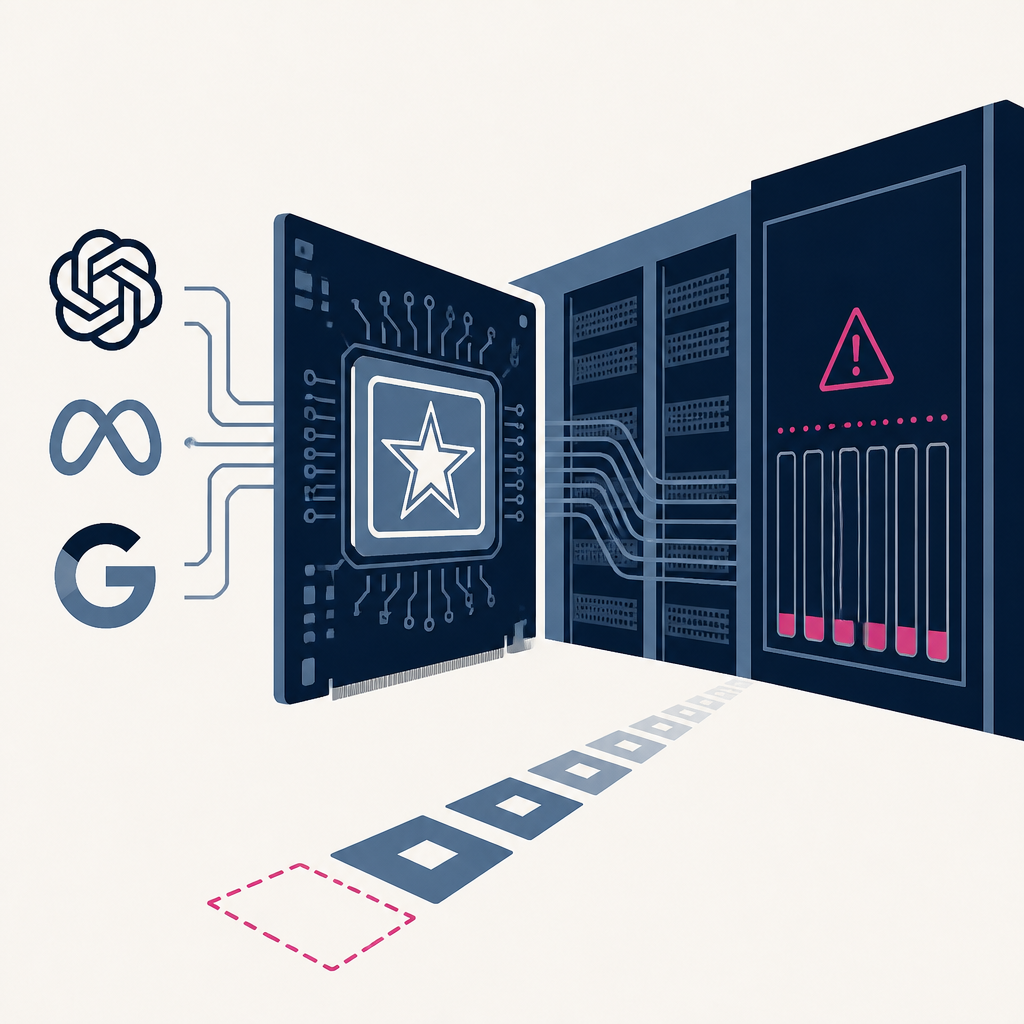
The US Army exhausted its token budget for AI services within weeks of announcing unlimited access to roughly 1.75 million employees, forcing the Department of Defense to reimpose usage limits on Ask Sage, a platform providing access to models from OpenAI, Meta, and Google. The Army CIO's token pool ran dry by mid-June 2026, less than a month after the May announcement of unlimited tokens. Users now face restricted access and uncertainty about whether token renewal will continue beyond October 1st, 2026.
Lev8 is a B2B prospecting platform that uses live web data and neural search to find business contacts and automate outreach workflows. The company claims its system returns 90.0 usable results per query compared to 58.2 for Exa and 47.0 for Parallel, while integrating with over 1,000 apps and processing information 10x faster than manual research at 60% lower cost. Organizations can use Lev8 to identify prospects, track opportunity changes in real time, and automate follow-up tasks across their existing software stack.
Synthesia launched Roleplay Sessions, an interactive training product where employees practice high-stakes conversations with an AI avatar that provides feedback and scoring, moving beyond its core video generation offering. The company has already secured early customers including one of Europe's top three companies by market cap and a Fortune 100 firm, with sales and leadership training as the most popular use cases. By adding performance analytics and rubrics on top of its proprietary avatar technology, Synthesia is repositioning itself as a performance-management platform focused on measurable business outcomes rather than just content generation.
This item is trivial product marketing material, not news. OpenAI announced Presence, an enterprise platform for deploying voice and chat agents in customer and internal workflows, with no substantive details about capabilities, pricing, availability, or performance metrics provided.
Every AI story that matters,
in your inbox by 8am.
TLDRocket reads all relevant sources, removes duplicate coverage, and summarises the
day in two minutes. Follow companies and topics for alerts, or get the
briefing in Slack. Free, no spam, unsubscribe anytime.
Reading TLDRocket needs no cookies, and the readership counts we rely on come from
our own cookieless analytics. Google Analytics is the exception: it sets cookies and
reports to Google, so it stays switched off until you allow it. You can change your
mind any time from “Cookie settings” in the footer.
Strictly necessary
Session security and form protection (tldrocket-session,
XSRF-TOKEN, 2 hours). The site cannot work without them,
so they need no consent.
Always on
Google Analytics 4 (_ga,
_ga_<id>, up to 2 years). Measures which
stories and sections readers use. Google acts as a third-party processor and may
store the data outside the EU. No advertising, no profiling, no data sold.