McKinsey reports that enterprise AI has not translated into earnings for most organizations even as deployments and agent adoption keep rising. Only 6% of the 1,719 surveyed respondents met McKinsey’s “high performer” bar of attributing at least 5% of EBIT to AI with a significant impact, while 37% reported at least some EBIT impact and that share was flat versus 2025. As a result, companies continue investing and scaling agents despite constrained AI operating costs (20%), with gains showing up more in individual productivity (80%) than in organization-wide ROI.
Amazon released Amazon Quick Desktop and a guided Weekly Business Reporting Assistant workflow that uses governed content from Amazon FSx for NetApp ONTAP to generate cited weekly reporting artifacts and Slack-ready summaries. It targets weekly preparation time, cutting it from hours to minutes. Reporting is now repeatable with controlled read access to an approved folder, a searchable knowledge base for citations, and human review before posting.
FGV Capital, the rebranded Fiat Ventures fintech investor, closed an oversubscribed $35 million Fund II after previously targeting $25 million. The new fund takes its assets under management to more than $60 million and unites Fiat Ventures and its Fiat Growth consultancy under the FGV Capital name. It shifts the firm to apply its operating-first approach at institutional scale by co-leading more rounds and offering capital plus growth, strategy, and recruiting support.
Ex-Lunar founders Ken Villum Klausen, Peter Andreasen, and Joachim Strøjer Hansen raised €8.2 million to launch Repodo, an AI-first audit firm targeting competition with Europe’s Big Four. The round is larger than the typical European pre-seed range of €500,000 to €3 million reported for 2026, and Repodo is aiming at a $74.32 billion audit market. Repodo plans to automate parts of audit work in Denmark while keeping licensed auditors responsible for judgement and final approval, and it will use the funding to build its platform and expand across Europe.
Itoflow raised $2.5M in pre-seed funding to build an AI investment platform that automates research and portfolio management for professional teams. The round is led by Balderton Capital and includes angel investors such as Cleo founder Barney Hussey-Yeo. The investment will expand Itoflow’s engineering and quantitative research teams, speed up product development, and support commercial and regulatory work.
Itoflow raised $2.5 million in pre-seed funding led by Balderton Capital to let investment firms use portfolio AI agents that encode each firm’s own strategy, risk limits, and review process. The largest of its three pilots monitors about $3 billion in assets. The startup will use most of the new funding to hire researchers and engineers, expand beyond current pilots, and pursue regulatory and product work to deploy the platform at more firms.
Revolut launched Revolut Research, a dedicated AI research unit in financial services focused on building the AI stack in-house. Revolut says its finance AI model PRAGMA, built with Nvidia, produced early results including 2.3x higher accuracy for credit default risk and 41% more product recommendations. It plans to use these native foundation models across functions like fraud detection, credit decisions, recommendations, and customer service instead of relying primarily on third-party tools.
Lunar co-founders launched Repodo, an AI audit startup, after leaving their executive roles at Lunar. Repodo raised €8.2 million in Denmark pre-seed funding to automate audit steps like data collection, reconciliations, documentation, and transaction analysis. The startup will target small and medium-sized businesses and expand beyond Denmark across Europe while keeping qualified auditors responsible for final sign-off.
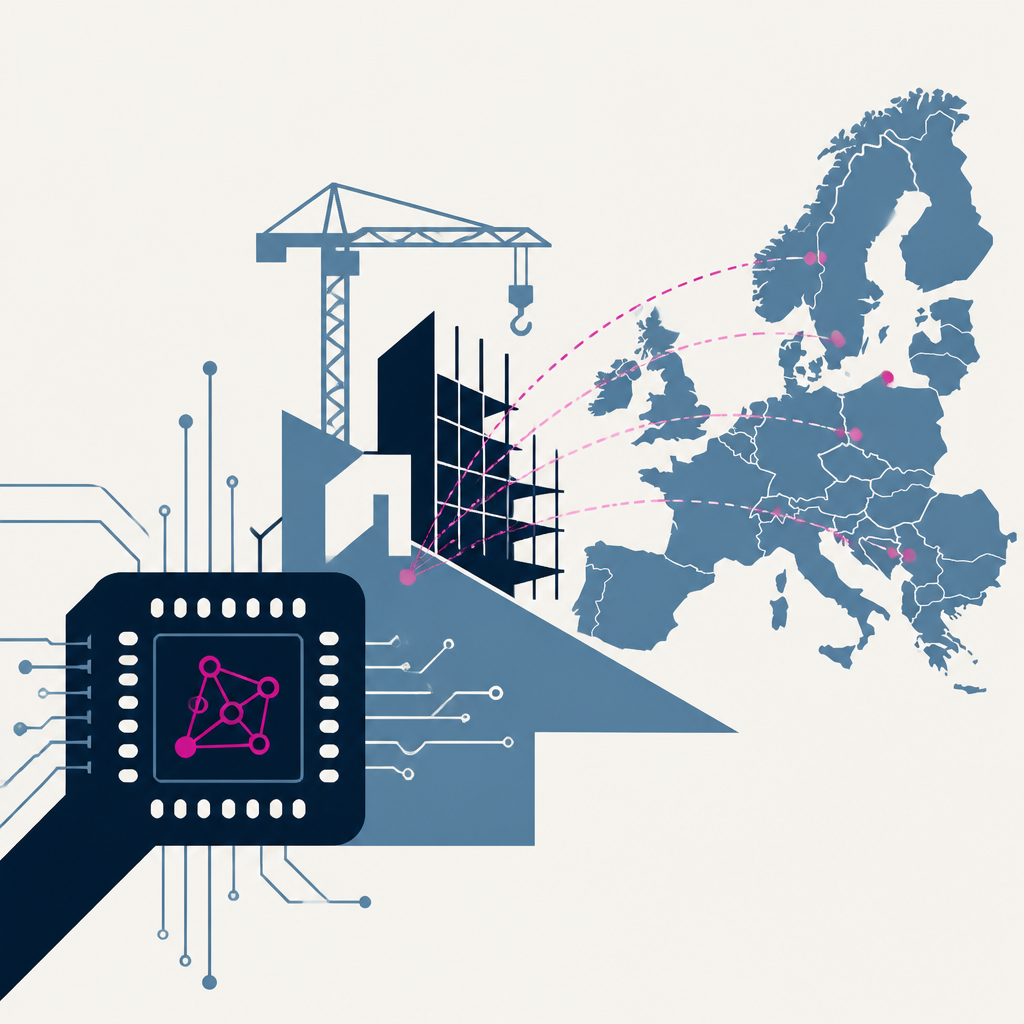
Volve raised $3 million in seed funding to expand its construction tendering and preconstruction intelligence platform across Europe. The round totaled $3 million (NOK 30 million). It plans to deepen its product with a graph-based knowledge structure and accelerate rollout beyond the Nordics into the UK and Continental Europe.
Neno, an Amsterdam fintech founded by Nick Knuppe, raised €6.6 million to build an AI-led accounting service that includes human review of an automatically reconciled ledger for small businesses. The funding totals €6.6 million in seed, leading to the launch of Neno Labs and expansion of its accounting and go-to-market teams. Neno says it will cut customers’ monthly admin by about 8 hours and reduce annual accounting fees by 20%, while entering further European markets in 2027.
Volve raised $3 million to expand its AI-driven construction tendering platform from the Nordics into the UK and Continental Europe. The company says tendering accounts for nearly 1 in 5 of public procurement procedures and that about 80% of final project cost is determined during the tender phase. Volve will use the funding to improve its platform for main contractors and public clients and to scale its operations across Europe’s procurement workflows.
The Admin plugin for ChatGPT Work and Codex was introduced to let admins analyze workspace usage, manage members and permissions, adjust limits, and handle admin requests.
Every AI story that matters,
in your inbox by 8am.
TLDRocket reads all relevant sources, removes duplicate coverage, and summarises the
day in two minutes. Follow companies and topics for alerts, or get the
briefing in Slack. Free, no spam, unsubscribe anytime.
Reading TLDRocket needs no cookies, and the readership counts we rely on come from
our own cookieless analytics. Google Analytics is the exception: it sets cookies and
reports to Google, so it stays switched off until you allow it. You can change your
mind any time from “Cookie settings” in the footer.
Strictly necessary
Session security and form protection (tldrocket-session,
XSRF-TOKEN, 2 hours). The site cannot work without them,
so they need no consent.
Always on
Google Analytics 4 (_ga,
_ga_<id>, up to 2 years). Measures which
stories and sections readers use. Google acts as a third-party processor and may
store the data outside the EU. No advertising, no profiling, no data sold.