Wrapture, a Python library by Graham Dumpleton, extends wrapt-style monkeypatching to support both tracing and function overriding for testing and observability.
It provides an entirely configuration-based tracing example that uses OpenTelemetry with a capture set to "summary" for a target like "domain:Calculator".
The result is a tool that can attach observations to code you don’t control and also act as an alternative to unittest.mock for stubbing and transforming results.
Kombai launched its 4th Kombai Gallery to let users browse curated UI designs for agent and human use. The gallery is launching today with 20,000+ curated UI designs and is free forever with no sign-up required. As a result, people can preview designs live and copy ready-to-use prompts instead of building UI prompts from scratch.
OpenAI announced it will cut Cursor’s direct access to its models in November, citing prior contract-related issues involving Elon Musk’s companies. The change is tied to a November access cutoff and follows SpaceX’s $60 billion Cursor acquisition closing. Anthropic, instead of cutting Cursor, publicly reaffirmed its “trusted partner” stance and said it will keep increasing compute for Claude models in Cursor, highlighting its continued dependence on SpaceX compute.
GhostReply launched a Mac Terminal tool that auto-sends iMessage replies in a user’s texting style for selected one-to-one chats. It offers 10 free replies and then charges $4.99 as a one-time payment. It skips group chats and routes context directly from the user’s Mac to Groq using their API key (or uses the new hosted option that avoids needing an API key).
Touchy is presented as a free option promoting Tines as a single secure environment for agents, apps, and automations. The page highlights that it is “Free” without providing any specific pricing or benchmark figures. As a result, it functions mainly as a product promotion rather than a report or analysis of new AI research, funding, or policy changes.
Cosmic launched its 24th release of Cosmic Agent Plugins to connect Cosmic agents to other services via MCP servers. The page says the launch starts today and lists GitHub, Stripe, Render, PostHog, and Resend as installing “today.” This adds vendor MCP-based integrations (including a token slot) so agents can use real vendor tools in more places, not guessed API calls.
Model Context Protocol (MCP) enables AI apps to connect to tools, but it assumes the client already knows which server to use so it skips agentic resource discovery across many registries. The proposed ARD specification is at v0.91, dated August 26, and defines a required POST /search endpoint for discovery. ARD would add a discovery layer so agents can search multiple compatible registries before attempting tool access, allowing federation across providers without forced migration.
Amazon Bedrock AgentCore runtime was used to build an enterprise agentic retrieval system that routes questions to multiple Managed Knowledge Bases, retrieves iteratively, and returns grounded answers with citations. The deployment is done as a single AWS CloudFormation chain with four stacks: 01-knowledge-bases, 02-agentic-gateway, 03-agent-runtime, and 04-dashboards. This changes operations by making the reason-and-act retrieval loop observable via OpenTelemetry spans and evaluated continuously with CloudWatch and X-Ray, rather than being a black box.
OpenClaw shipped OpenClaw 2.0, a major update to its open-source personal AI agent tool. The release (v2026.8.1) reports 933 contributors, including 569 first-timers, and over 16,000 merged pull requests. It adds reusable setup options for existing model subscriptions/keys, a rebuilt browser app with conversational dashboards and progress tracking, new memory plus Swarm/Fleet shared-session and collaboration features, and requires backed-up data plus breaking migrations for some older components.
OpenAI is testing enterprise pricing that charges customers only for successful AI outcomes instead of token usage, with The Information reporting the switch has already started in pilot form. The change centers on success-based billing rather than compute consumed, with no publicly disclosed criteria for when a task is deemed successful. The shift forces developers and providers to build evals and grading systems that decide completion in more subjective, multi-step agent scenarios, changing who bears the cost of failures and tightening incentives around reliable first-pass performance.
OpenClaw released version 2.0 of its open-source personal AI agent framework, positioning it as an update to its task-executing “digital secretary” experience. The release version is 2026.8.1. It adds streamlined installation, a redesigned control-center dashboard with live-agent monitoring, multiplayer shared sessions, improved search, and tighter security via trust boundaries and least-privilege controls.
Amazon describes Verus, an open-source automated verifier that adds formal specifications and proofs directly to Rust code to prove behavioral correctness rather than just relying on runtime checks like panics. Verus is reported to provide feedback on code and proofs in under 1 second and scale to verifying projects with thousands of lines of code. This enables machine-checked guarantees for properties like unsafe Rust safety and concurrent-program correctness, including Amazon’s prior proofs of primitives used in the Nitro Isolation Engine.
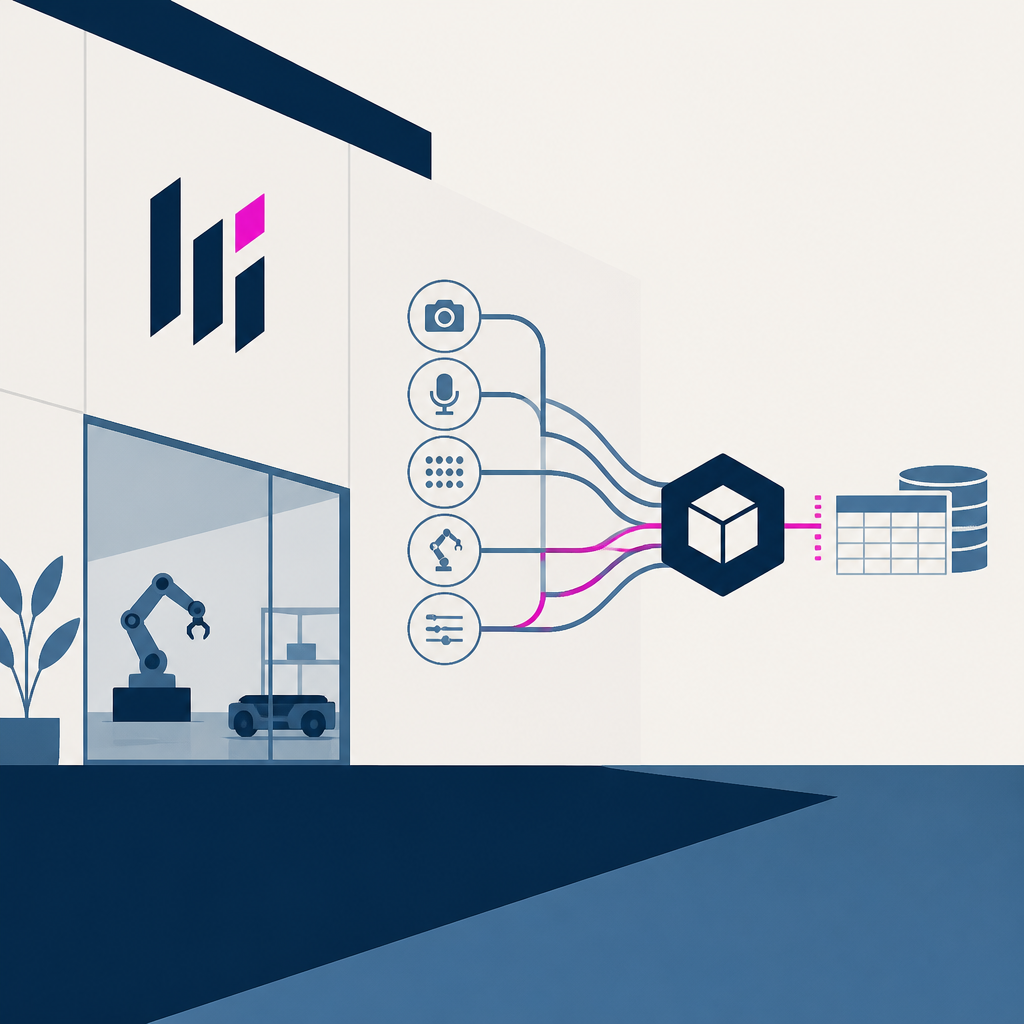
Hebbian Robotics launched HFlow, an SDK that converts synchronized robot and human multimodal recordings into standardized, quality-checked episodes with queryable dataset manifests. HFlow takes one MCAP file per episode and writes a canonical MCAP plus an append-only Parquet catalog. Robotics teams can run the same registered processing steps via Airflow 3 DAGs, query reproducible manifests with DuckDB SQL, and quarantine bad episodes without deleting the underlying data.
Coding teams can spend many AI-coding-agent tokens on tool output because verbose formats repeat labels and structure before any code is written. The article cites a 25-issue comparison where TOON used 49% fewer characters than pretty-printed JSON and 33% fewer than minified JSON. The change is switching tool responses from default JSON to a schema-first, row-based format like TOON when the agent must read many records with the same fields, reducing repeated scaffolding in the context sent to the model.
Teams that build coding agents treat skills, agent configs, prompt instructions, and rules files as informal artifacts, but these context pieces effectively control agent output. The article proposes a four-phase Context Development Lifecycle (Generate, Evaluate, Distribute, Observe) with testing and versioned distribution to prevent skills from breaking after model updates or drifting from the codebase. It shifts agent development from “ship and debug via complaints” to an engineered workflow with evaluation infrastructure, monitoring, and feedback loops so context quality is continuously maintained.
Circleback added a free subscription tier for its meeting note-taker to increase user trials in a crowded market. The free tier allows users to transcribe an unlimited number of meetings but limits transcript history to the last 30 days. Paid plans now start at $14 per month (paid annually) instead of $20.83, with access to integrations, longer history, and full API/MCP reserved for subscribers.
Debian voted to allow developers to use AI tools in contributions to its Linux distribution for development, maintenance, and documentation. The policy was set after Debian’s voting developers considered and rejected ban-style proposals. As a result, generative AI usage is treated under the same contributor standards as before rather than being subject to extra or special rules.
Blume.codes launched as an automation tool for AI coding agents that watches agent sessions locally and converts learned corrections into reusable context, rules, and workflows. It claims agents can reach results 4x faster. This changes how you run agents by making them less likely to repeat the same mistakes over time.
Pocket, a Meta mobile app, lets users type prompts to generate interactive “gizmos” as shareable prototypes without viewing or editing any code. Pocket launched in the US on August 21. The shift makes game idea prototyping faster for non-coders, but it also limits users’ ability to take results out of Meta’s walled garden.
Tide launched Raziel, positioning it as AI security tooling that treats compromise as already having occurred and focuses on what authority an attacker can gain after bypassing authentication and authorization. The release happened on Monday. As a result, AI assistants can use Raziel as an MCP server to recommend integration options and generate verified playbooks that shift authority toward cryptographically computed, distributed “emergent authority.”
Unified API was launched as a single OpenAI-compatible API for hundreds of models on attested infrastructure, with end to end encryption and options like provider failover and no prompt or output logs. The page also highlights a Motion Studio launch video priced at about $3. As a result, developers get a unified AI API plus an additional low-cost tool for creating launch videos.
Eclatira is launching a product that lets developers add real-time conversational voice and live vision to applications via custom APIs and MCP integrations. It says its tools work with 3,000+ apps. As a result, developers can ship multimodal video agents faster through its API-based platform.
BobVault for BobCLI was launched as a local-first AI coding command-line tool that keeps code and related context on your own hardware with explicit approval before writing.
Terminals launched as a free open source, node-based terminal manager for macOS, Linux, and Windows that lets users run real terminals and connect coding agents as live nodes on a canvas. The launch page highlights dictation for Wispr Flow claiming “4x faster.” Sessions are kept across reboots and tools/agents can be wired together visually.
Naseem is launching as a native macOS AI agent built entirely in Swift. It can automate tasks by running terminal commands and driving iOS Simulator testing. Users can bring their own model or run locally with Ollama/MLX, instead of using Electron or Node.
OpenClaw released OpenClaw 2.0 with a rewritten installation flow and a rebuilt browser Control UI. JavaScript requests dropped from 140 to 45 in a simulated default-chat test with mocked Gateway and 50 ms HTTP/1.1 latency. The upgrade makes the browser UI the primary surface, moves sessions/transcripts to SQLite, and adds shared cloud sessions with explicit limits that are not a security boundary for multi-tenant use.
NovaSynth by Noveum launched to help teams test voice agents by simulating realistic callers using custom personas, scenarios, and audio conditions. It scores calls across 30+ dimensions and reports the failures and fixes to address. This adds automated audio/transcript QA for voice-agent deployments, rather than being a plain update to existing tooling.
KloudMate launched KloudMate 2.0, positioning it as an AI-powered full-stack observability and “agentic” SRE-ops platform that unifies metrics, logs, and traces.
Monid launched OpenRouter for agent tools as its 3rd release. It says it connects an AI agent to 1,800+ APIs using one key and no subscriptions. This expands agent access to features like SEO, lead gen, media generation, social posting, stocks/market data, on-chain information, and competitor tracking.
Every AI story that matters,
in your inbox by 8am.
TLDRocket reads all relevant sources, removes duplicate coverage, and summarises the
day in two minutes. Follow companies and topics for alerts, or get the
briefing in Slack. Free, no spam, unsubscribe anytime.
Reading TLDRocket needs no cookies, and the readership counts we rely on come from
our own cookieless analytics. Google Analytics is the exception: it sets cookies and
reports to Google, so it stays switched off until you allow it. You can change your
mind any time from “Cookie settings” in the footer.
Strictly necessary
Session security and form protection (tldrocket-session,
XSRF-TOKEN, 2 hours). The site cannot work without them,
so they need no consent.
Always on
Google Analytics 4 (_ga,
_ga_<id>, up to 2 years). Measures which
stories and sections readers use. Google acts as a third-party processor and may
store the data outside the EU. No advertising, no profiling, no data sold.