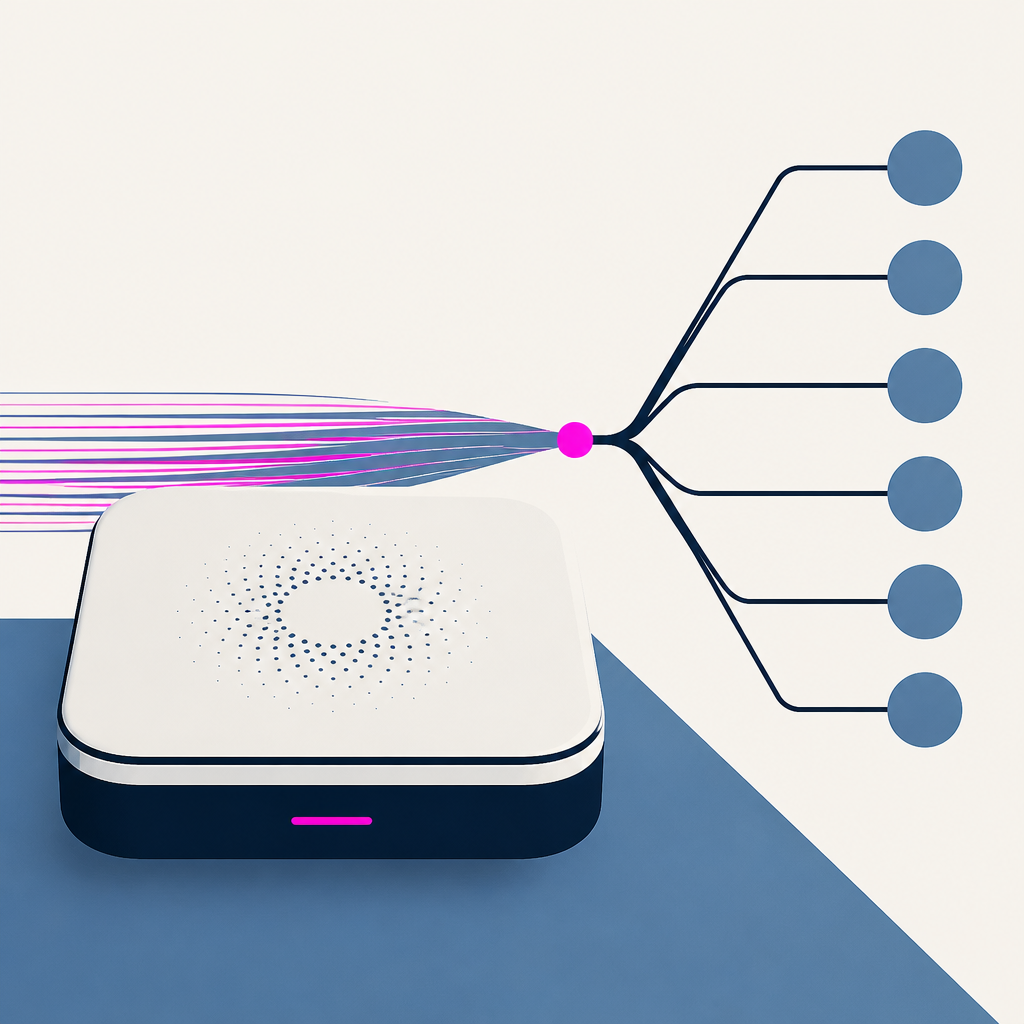
LUCI Desktop is launched as a screen history and meeting transcript app that stores content locally for later retrieval by AI agents. It is free for both Mac and Windows. Users get on-device transcription and daily summaries, avoiding per-app connector setup.
OpenClaw shipped version 2026.9.5 of its open-source personal AI agent, adding Atomic Updates, plugin hot reload, conversation sharing, and expanded GPT Live. Atomic Updates were built to address a failure mode where an update could break the running agent and leave no agent online to repair it. It now prepares and validates the next version while keeping the existing Gateway running, rolling back on failure but with the caveat that database migrations can’t be undone.
gg-friggin-ez launched a fast, free drop-in profanity and toxicity screening tool for Node.js. It targets sub-500ms screening with an estimated cost of about $0.000004 per message. Users can run multilingual checks (including Indic languages) to apply configurable moderation actions via the npm package.
Lauren Tan describes a coding-agent workflow (pstack) that lets one engineer ship changes end-to-end with automated self-verification. She reports 2,000 pull requests a month reaching production, and argues human review cannot keep up at that volume. As a result, teams need verification-focused runtime environments that isolate hundreds of concurrent agent changes while still exercising real dependencies, with environments created and discarded by agents rather than provisioned manually by platform teams.
Epismo launched Epismo OS to organize team collaboration around AI agent work, including results, decisions, reviews, and next steps. The page says this was Epismo’s 7th launch. The workflow now adds an Auto Review feature that rechecks saved results, flags issues, and keeps the original unchanged.
Simular launched Sai, a robosecretary that uses a fleet of autonomous computers to perform screen-based tasks like browsing and form filling. Sai is available across Windows, macOS, and Linux, with “73% on OSWorld.” Users can now delegate repetitive software actions even for systems without APIs to the autonomous fleet.
Zed, Anthropic, and OpenRouter updated their agent software harnesses while reporting continued declines in inference cost and persistent gaps in coding-agent performance. Vercel’s AI Gateway reported the average price per token fell 23.2% in August for a third straight month. As cheaper inference spreads, companies are shifting investment toward context handling, routing, verification, and caching so models can be used reliably.
Meta launched Muse for Mac, a new Muse agent that can complete tasks directly on a user's computer using native apps and local files. The macOS download is free and available today, with use limited to the US for now. It adds opt-in, user-controlled permissions (with approvals needed for deletions and sending messages) and extends Muse from phone/web/WhatsApp to desktop, while using Meta’s hosted setup rather than an open model.
Jev’s launch drew 36M views in two days, prompting immediate speculation and the release of 6 Jev-like clones. The biggest concrete details include LayaJev’s 421M parameters and reported faster inference in the ecosystem. The result is a shift toward discriminative “System 1” decision/workflow control models, with integrations and standards (like AGENTS.md) spreading alongside debate over benchmarks and evaluation.
Context.dev launched Answers, an API that lets AI agents and apps scrape, enrich, and understand web content via real-time structured data. It says it’s trusted by 5,000+ businesses and that most teams integrate in under 10 minutes. The workflow shifts from stitching together search, scraping, and LLM steps into a single API call that returns structured JSON plus source URLs.
Every AI story that matters,
in your inbox by 8am.
TLDRocket reads all relevant sources, removes duplicate coverage, and summarises the
day in two minutes. Follow companies and topics for alerts, or get the
briefing in Slack. Free, no spam, unsubscribe anytime.
Reading TLDRocket needs no cookies, and the readership counts we rely on come from
our own cookieless analytics. Google Analytics is the exception: it sets cookies and
reports to Google, so it stays switched off until you allow it. You can change your
mind any time from “Cookie settings” in the footer.
Strictly necessary
Session security and form protection (tldrocket-session,
XSRF-TOKEN, 2 hours). The site cannot work without them,
so they need no consent.
Always on
Google Analytics 4 (_ga,
_ga_<id>, up to 2 years). Measures which
stories and sections readers use. Google acts as a third-party processor and may
store the data outside the EU. No advertising, no profiling, no data sold.