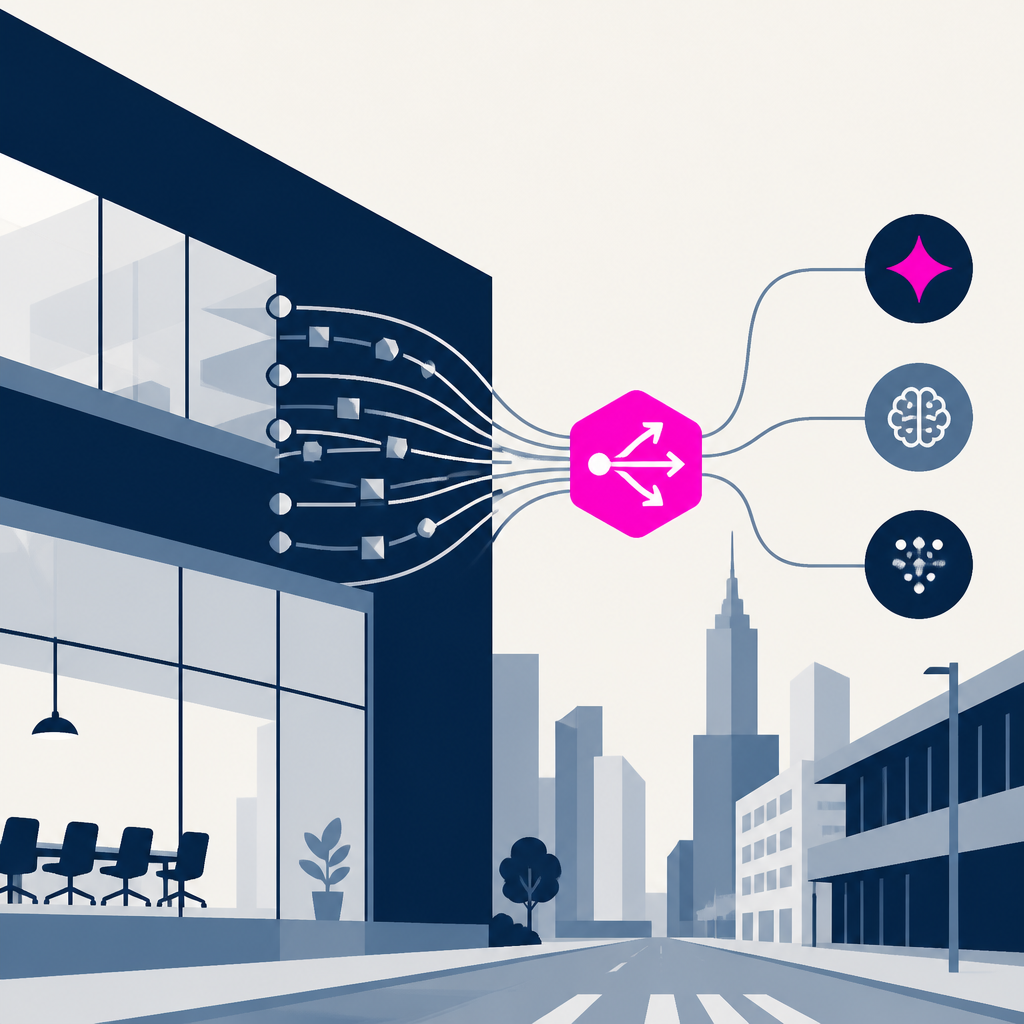
This week’s news from Zed, Anthropic, and OpenRouter shows why better harnesses matter more than better models
The New Stack Matthew Burns ● Covered by 2 sources
Zed, Anthropic, and OpenRouter all pushed the same idea: make AI easier to use, not just smarter. That’s where the money is as token prices keep falling.
Based on reporting by The New Stack, Matthew Burns — read the original for the full story.
Summary, retelling and take written by AI under human oversight; images are AI-generated illustrations. How we work · Report an error
This week’s most-read stories pointed to the same lesson from five different angles: the model is only half the product. The rest is the harness — the code that adds context, connects tools, routes work, and checks whether the output is any good. Zed, Anthropic, OpenRouter, a coding benchmark, and a caching guide all circled that idea from different directions.
Zed drew the biggest crowd by rebuilding code review around shared threads instead of pull requests. Its new Delta public beta keeps the conversation attached to the code, which matters when an agent has been making edits and decisions along the way. Nathan Sobo’s line was blunt: everyone is trying to replace GitHub. Zed says 33 people on its team landed 570 changes in Delta’s main branch without opening a single pull request there, though the public Zed editor repo still uses the familiar system.
Anthropic took a quieter route and removed a choice users apparently didn’t enjoy making. It merged Claude Chat and Cowork into one interface so people don’t have to decide upfront which mode fits a task. The rollout starts with Pro and Max users. That kind of cleanup does not sound glamorous, but it’s the sort of thing people actually feel.
OpenRouter made the infrastructure argument in a different register. Its US in-region routing is now generally available to business and enterprise customers, and requests have to be decrypted, processed, and served inside the country or rejected. That control is selling well: roughly 60% of OpenRouter’s US-originating token use in August came from open-weight models, with Chinese models making up most of that volume. Meanwhile, Vercel said the average price per token on its AI Gateway fell 23.2% in August, the third monthly drop in a row. Inference is getting cheaper. The wrapper around it is where people are spending attention.
The benchmark results made the same point with fewer niceties. Real-SWE, built on private company codebases, gave the best setup just 38.8% success. None of the tested systems broke 40%, and one task defeated every attempt across 64 tries. Even when the model is strong, the work is spread across files, dependencies, and checks. The tooling is part of the score whether anyone admits it or not.
My take — AI-written commentary, not fact-checked reporting
This is the part of AI that actually deserves attention: plumbing, not pageantry. Models keep getting cheaper, and the winners will be the teams that make them easier to route, cache, verify, and survive in production. The frontier is less magical now, which is excellent news for anyone tired of being sold smoke in a slick demo.
Read more about this at: The New Stack