
Answers by Context.dev
Product Hunt Ely
Context.dev now does web research in one API call, returning JSON with source links. It’s the third launch from the company, and it cuts out the usual scrape-search-LLM mess.
Based on reporting by Product Hunt, Ely — read the original for the full story.
Summary, retelling and take written by AI under human oversight; images are AI-generated illustrations. How we work · Report an error
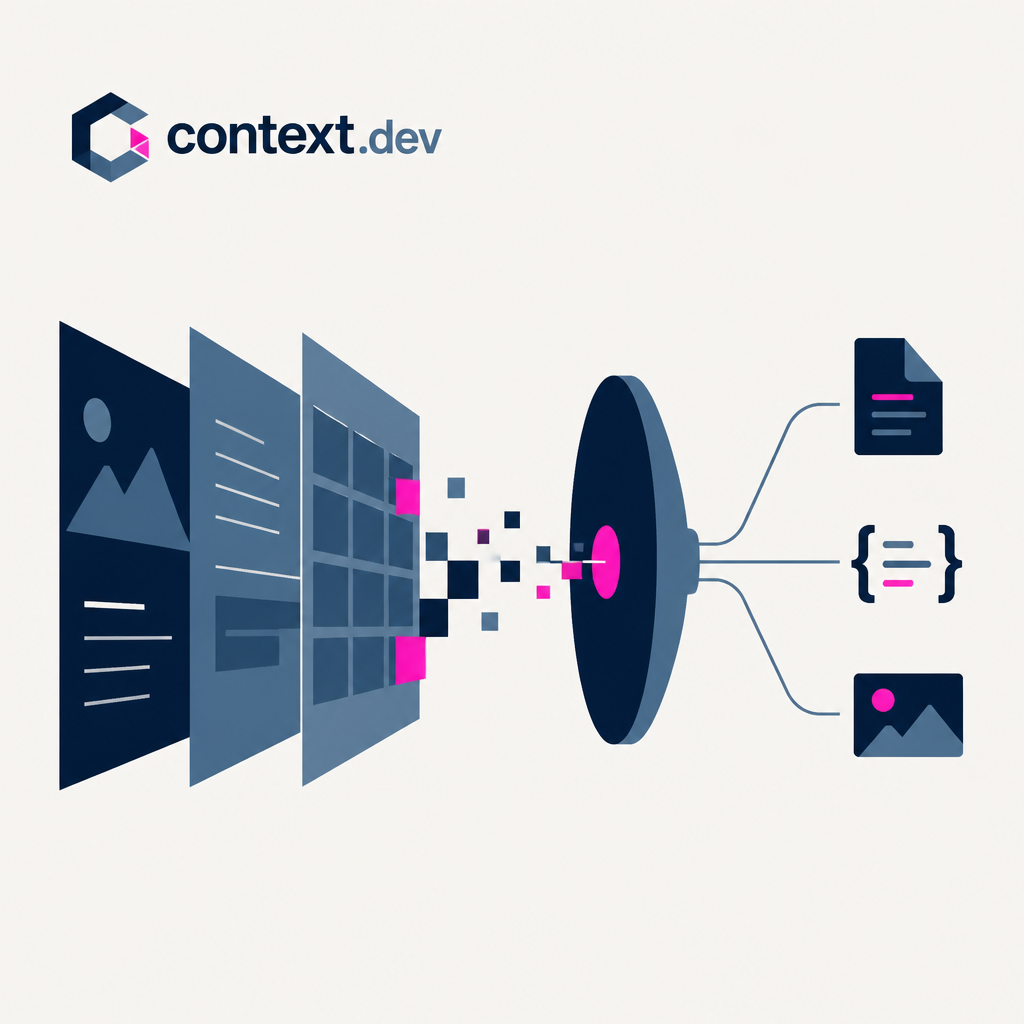
Context.dev is back on Product Hunt with a sharper pitch: give it a research task and the JSON shape you want, and it returns structured answers with source URLs. The company is calling the launch “Answers by Context.dev,” and the idea is simple enough to fit on a napkin — let developers ask for web research the same way they’d call any other API.
That matters because a lot of teams still glue this stuff together by hand. Search here, scrape there, then feed the result into an LLM and hope nothing breaks when a page changes. Context.dev is trying to remove that brittle middle layer. Instead of building and maintaining scraping infrastructure, teams can ask for structured web data directly.
The feature set is broad. Context.dev says it can scrape any URL as clean markdown or HTML, pull brand details like logos, colors, fonts, and social links from a domain, crawl sitemaps, and resolve transaction descriptors. It also ships typed SDKs for TypeScript, Python, and Ruby, which is the sort of detail that tells you this is aimed squarely at builders, not casual users.
The company says more than 5,000 businesses already use its tools, including Mintlify, Daily.dev, and Ferndesk.com. It also says most teams integrate in under 10 minutes. And this is not a first swing at Product Hunt: today’s launch is the third one from Context.dev, which suggests the product has been steadily expanding from basic web access toward something closer to a research layer for AI apps.
My take — AI-written commentary, not fact-checked reporting
This is the kind of product that quietly makes the rest of the stack look overcomplicated. A lot of “AI agents” are really just three services in a trench coat, so one API for research and structured output is a cleaner bet. The funny part is that the less glamorous the plumbing sounds, the more useful it usually is.
Read more about this at: Product Hunt
Related stories
 Launch HN: Context.dev (YC S26) – API to get structured data from any website
context.dev · 2 months ago ·
37
Launch HN: Context.dev (YC S26) – API to get structured data from any website
context.dev · 2 months ago ·
37
 The AI context gap: Enterprise AI organizations have a trust problem, not a retrieval problem — and most are still building the fix
VentureBeat · 2 months ago ·
54
ContextsBase - Backlog for Coding Agents
Product Hunt · 4 days ago ·
23
The AI context gap: Enterprise AI organizations have a trust problem, not a retrieval problem — and most are still building the fix
VentureBeat · 2 months ago ·
54
ContextsBase - Backlog for Coding Agents
Product Hunt · 4 days ago ·
23