llm-anthropic 0.30 was released, adding direct refresh of the Anthropic model list from their API and a token-count feature before prompts are sent.
It was posted on 28th September 2026 at 11:06 pm.
As a result, new Anthropic models can be supported without pushing another release, and token usage can be checked ahead of time.
Simon Willison’s Weblog·2 weeks ago·
3
● 13 sources
Anthropic released Claude Sonnet 5.5 and said it runs over 30% faster while costing up to 30% less for most work. It also reused the Opus 5.5 issue where “max” thinking for 128,000 tokens cost $1.28 but failed to produce an SVG. Sonnet 5.5 is now the model for the free tier on claude.ai, and Haiku 5.5 is slated for release in the coming weeks.
Anthropic released Claude Sonnet 5.5 with cyber safeguards and model fallbacks that can route certain requests to Sonnet 5 in higher-risk cybersecurity cases. In ExploitBench, turning off safeguards led to full arbitrary code execution in 178 of 410 runs. As a result, API developers may need to enable opt-in fallback, and teams using it must account for more refusals and potential prompt-injection risk when requests are rerouted to the older model.
Anthropic released Claude Sonnet 5.5 and it placed No. 2 behind its own Opus 5.5 in Artificial Analysis’s Intelligence Index while beating OpenAI’s GPT-6 Astra. Sonnet 5.5 scored 56 points on the index, up 18 from Sonnet 5 at 38. This shifts the top two spots to Anthropic and raises attention to a tradeoff of higher token usage—about 193,000 output tokens per task—for stronger benchmark performance.
AWS is making Anthropic’s Claude Sonnet 5.5 available on Amazon Bedrock and Claude Platform on AWS for use in coding and knowledge-work workflows. It is available today on Amazon Bedrock via the Global CRIS inference profile. Teams can start testing in the Bedrock console and call the model through AWS APIs, with usage billed on their AWS bill and governed by existing AWS security and monitoring tools.
Anthropic launched Claude Sonnet 5.5, its mid-tier workhorse model for everyday tasks, positioning it as an upgrade over the previous Sonnet generation. It runs over 30% faster and is priced at $2 per million input tokens and $10 per million output tokens, with the company saying it is about 30% cheaper for the same work. The rollout also adds invisible text watermarking aimed at detection compliance (including the EU AI Act) and introduces faster agentic coding results such as a Terminal-Bench 4.0 score of 70.6% versus 10.3% previously.
Anthropic launched Claude Sonnet 5.5, its latest workhorse model in the Claude 5.5 family. It generates output more than 30% faster and reduces cost per task by up to 30%. The model is now available on major cloud and AI platforms with unchanged Sonnet 5.5 pricing ($2 per million input tokens and $10 per million output tokens) and uses Opus-level cybersecurity safeguards.
Anthropic released Sonnet 5.5, its mid-tier AI work model, positioning it as a faster assistant for everyday tasks like coding and document creation. Sonnet 5.5 is claimed to be 30 percent faster than Sonnet 5. Anthropic says it will be used under the same cyber safeguards as its Opus models and that a Haiku update is planned in the coming weeks.
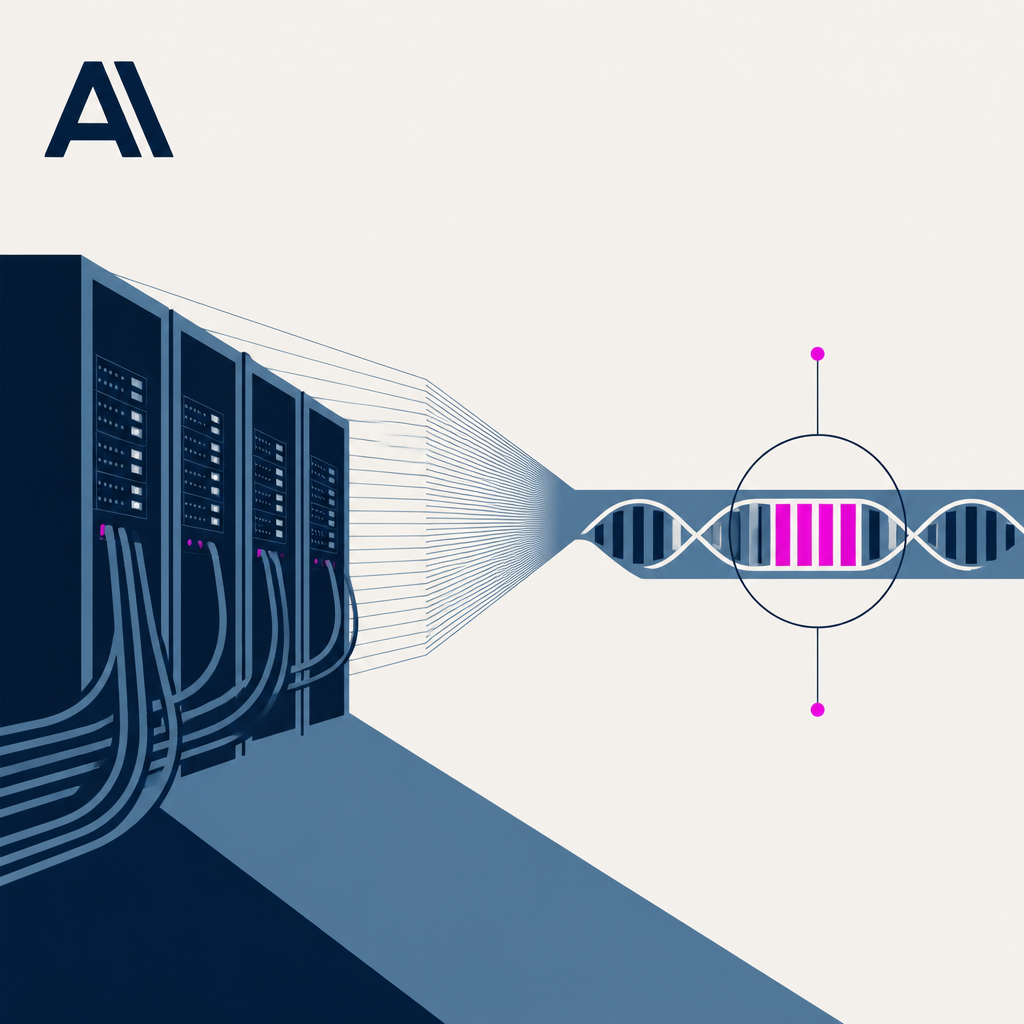
Anthropic announced that its Claude agent molecular biology lab made its first discovery by flagging an unreported repeating genetic pattern around a known enzyme. The company said the 950-agent system found the pattern in 21 hours. Biologists pushed back that the result was not a true breakthrough and claimed the pattern may have been found already, raising scrutiny of AI-discovery claims and whether AI outputs count as scientific advances.
Anthropic launched Claude Sonnet 5.5 as its next Claude 5.5-family model for everyday work including coding, bug fixes, documents, slides, and design.
It is described as running 30%+ faster than Sonnet 5 and lowering task costs up to 30%.
The new model is positioned to replace prior Sonnet 5 usage for those tasks, with improved coding and knowledge-work performance.
NASA used generative AI to plan Mars rover routes, test a compressed model in orbit for Earth observation, and astronauts tried a large language model for maintenance questions on the ISS. In May, NASA and IBM demonstrated a compressed AI model in space on the International Space Station and a satellite. These tests are shifting space engineering toward partial autonomy and gradually expanding how much non-deterministic AI systems can interpret conditions and plan tasks, while keeping humans supervising since AI is not yet trustworthy enough for full control.
AI CEOs at Anthropic and OpenAI warned that advanced AI could be dangerous and urged regulation and independent testing while positioning their own safety plans ahead of U.S. political and funding timelines. Biden created the U.S. Center for AI Standards and Innovation in 2023 to handle voluntary model testing, but the article says universal AI safety standards are still lacking. As a result, major labs are shifting the debate toward self-chosen audits and evaluators rather than relying on the existing federal oversight channel.
Every AI story that matters,
in your inbox by 8am.
TLDRocket reads all relevant sources, removes duplicate coverage, and summarises the
day in two minutes. Follow companies and topics for alerts, or get the
briefing in Slack. Free, no spam, unsubscribe anytime.
Reading TLDRocket needs no cookies, and the readership counts we rely on come from
our own cookieless analytics. Google Analytics is the exception: it sets cookies and
reports to Google, so it stays switched off until you allow it. You can change your
mind any time from “Cookie settings” in the footer.
Strictly necessary
Session security and form protection (tldrocket-session,
XSRF-TOKEN, 2 hours). The site cannot work without them,
so they need no consent.
Always on
Google Analytics 4 (_ga,
_ga_<id>, up to 2 years). Measures which
stories and sections readers use. Google acts as a third-party processor and may
store the data outside the EU. No advertising, no profiling, no data sold.