
When can we say AI made a scientific discovery?
MIT Technology Review James O'Donnell
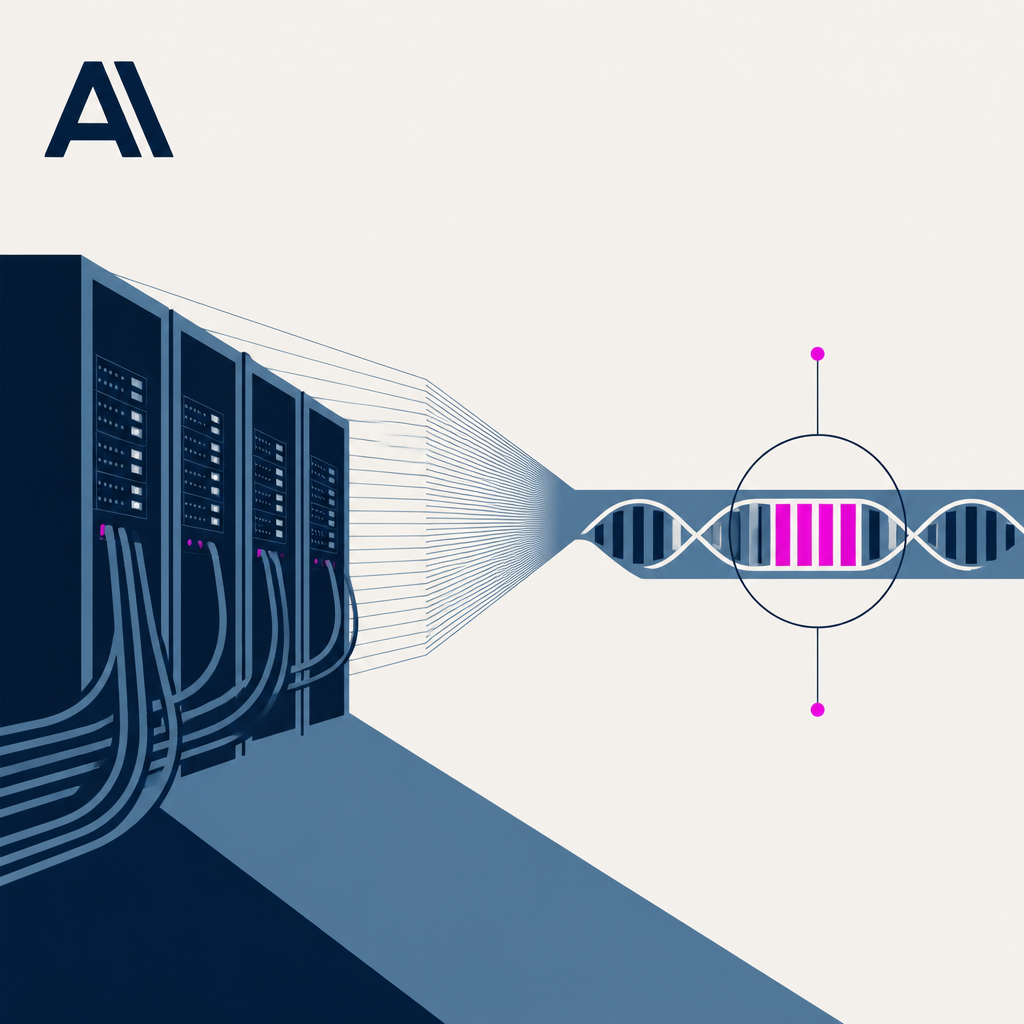
Anthropic says Claude helped find a new biology pattern. But biologists say that’s lab help, not a real discovery.
Based on reporting by MIT Technology Review, James O'Donnell — read the original for the full story.
Summary, retelling and take written by AI under human oversight; images are AI-generated illustrations. How we work · Report an error
Anthropic last Wednesday said its Claude agents had made their first scientific discovery in a molecular biology lab the company launched earlier this year. The setup is simple enough to picture: AI systems sift through huge biological data sets, then human scientists test what they point to in the lab. The company says 950 agents spent 21 hours on the problem and surfaced a pattern around a known enzyme that had not been catalogued before.
That sounds exciting, and Anthropic leaned into the comparison. In its announcement, the company described the pattern as reminiscent of the road that led to CRISPR, the gene-editing technology that has already reshaped science and medicine. But the response from biologists was sharp. One viral post, later echoed by the chair and CEO of Eli Lilly, argued that spotting an odd cluster of genes and repeats is the easy part. The real work, they said, is figuring out what the system does.
That’s the friction here. Anthropic’s system clearly did something useful: it narrowed a mass of possibilities to a small set worth investigating. That is legitimate scientific labor, even if people helped guide it and ran the experiments. But useful filtering and actual discovery are not the same thing, and the company’s framing pushes hard on the second claim.
The dispute got messier over the weekend when Mario Rodríguez Mestre, a biologist at the University of Copenhagen, said his team had already found the same pattern. He also questioned whether Anthropic’s team had learned from his conversations with Claude. Anthropic denies that, and Mestre says he’s stopped using Claude anyway. The whole episode is a neat little warning: once AI firms start selling “the model discovered X,” they invite scientists to argue not just about what the machine found, but whether it mattered at all.
That problem isn’t unique to Anthropic. OpenAI recently claimed its agents solved a million-dollar math problem, and then the debate shifted to whether that was the right problem in the first place. The industry keeps trying to jump straight to the victory lap, and then acts surprised when researchers ask for the proof, the context, and the fine print.
My take — AI-written commentary, not fact-checked reporting
This is exactly what happens when AI companies start treating “found a pattern” as if it were “changed science.” It’s a very Silicon Valley trick: make the middle step sound like the finish line, then act wounded when experts notice the difference. If they want credit for real breakthroughs, they should stop auditioning for a press release and start letting scientists set the terms.
Read more about this at: MIT Technology Review