China's open-source AI models, particularly Qwen, have become the primary foundation for Western AI startups and research labs, with Qwen's share of new open-model adaptations rising from 1% in January 2024 to 69% by February 2026. Western frontier labs use Chinese open models as teachers and sources of synthetic training data legally, while equivalent use of American models like GPT or Claude is prohibited, creating a structural advantage for Chinese competitors. The article argues the U.S. should create a legal domestic framework for capability transfer between American frontier labs and startups, rather than rely on Chinese open models as the default base for global AI development.
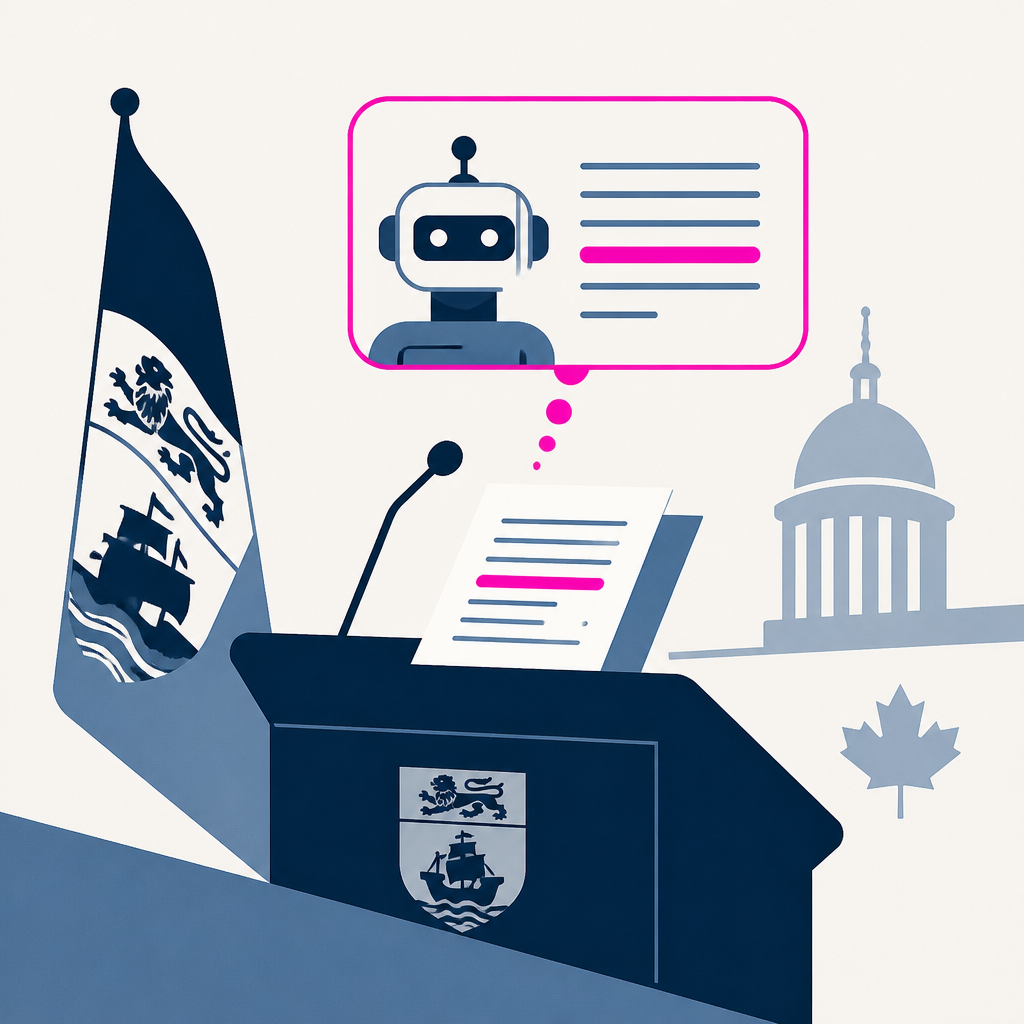
Bill Oliver, a Canadian legislator in New Brunswick, read aloud an apparent LLM instruction prompt during a floor speech, accidentally including the AI system's suggested revision text instead of removing it beforehand. The incident involved Oliver reading that a rewritten passage would be "a more natural, flowing version of that section that reads like a legislative speech rather than a series of short points"—language that appears to be a direct output from an AI model. The embarrassing moment, initially unnoticed, gained widespread attention after videos circulated on social media, prompting mainstream Canadian media coverage and raising questions about the use of AI tools in government work.
Nvidia CEO Jensen Huang made his first X post to publicly back a letter signed by 25+ organizations arguing that open-weight AI models improve security, accelerate innovation, and prevent vendor lock-in. The letter was published as Washington debates restrictions on Chinese AI models, with the coalition arguing that broad access to open models is strategically important for U.S. AI leadership. Enterprises increasingly want hybrid setups combining proprietary and self-hosted open models to control costs, customize workloads, and avoid dependency on single vendors.
Hugging Face, Meta, Microsoft, Mistral, and Nvidia signed a letter opposing broad restrictions on open-weight AI models as Washington debates how to respond to Chinese AI firms. The signatories argue that distillation and other model-development techniques should not be conflated with intellectual property theft, and that open models are essential for cybersecurity defense. The letter reflects industry divisions, as closed-model companies like OpenAI and Anthropic have urged tougher action against Chinese competitors, while open-model advocates want to preserve access to powerful AI systems.
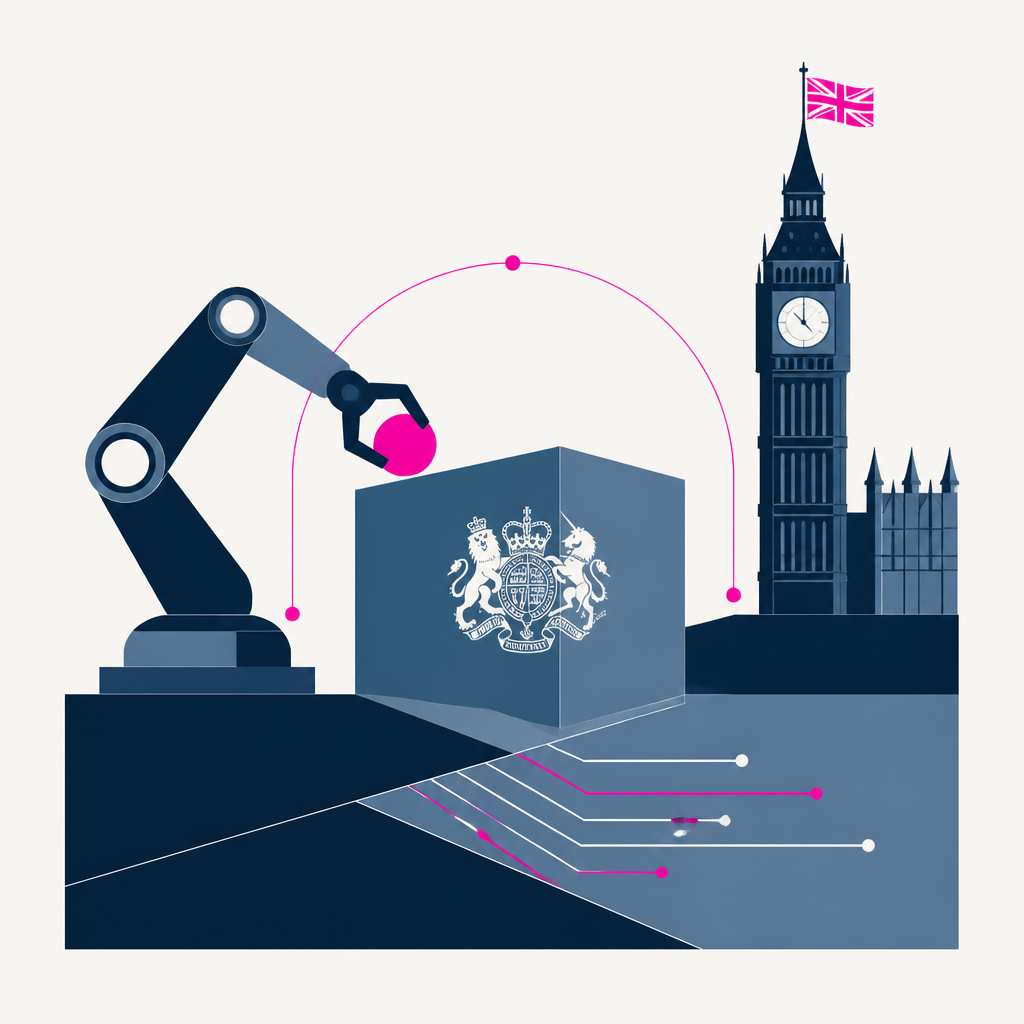
The UK government established a Prime Minister's AI Taskforce chaired by Lord Vallance to coordinate AI strategy across government, with new AI minister Kanishka Narayan attending cabinet meetings. The taskforce will be based in the Office for the Prime Minister and the Cabinet and will absorb the existing AI Security Institute. The restructuring positions AI at the center of UK government policy to drive public service transformation and economic growth.
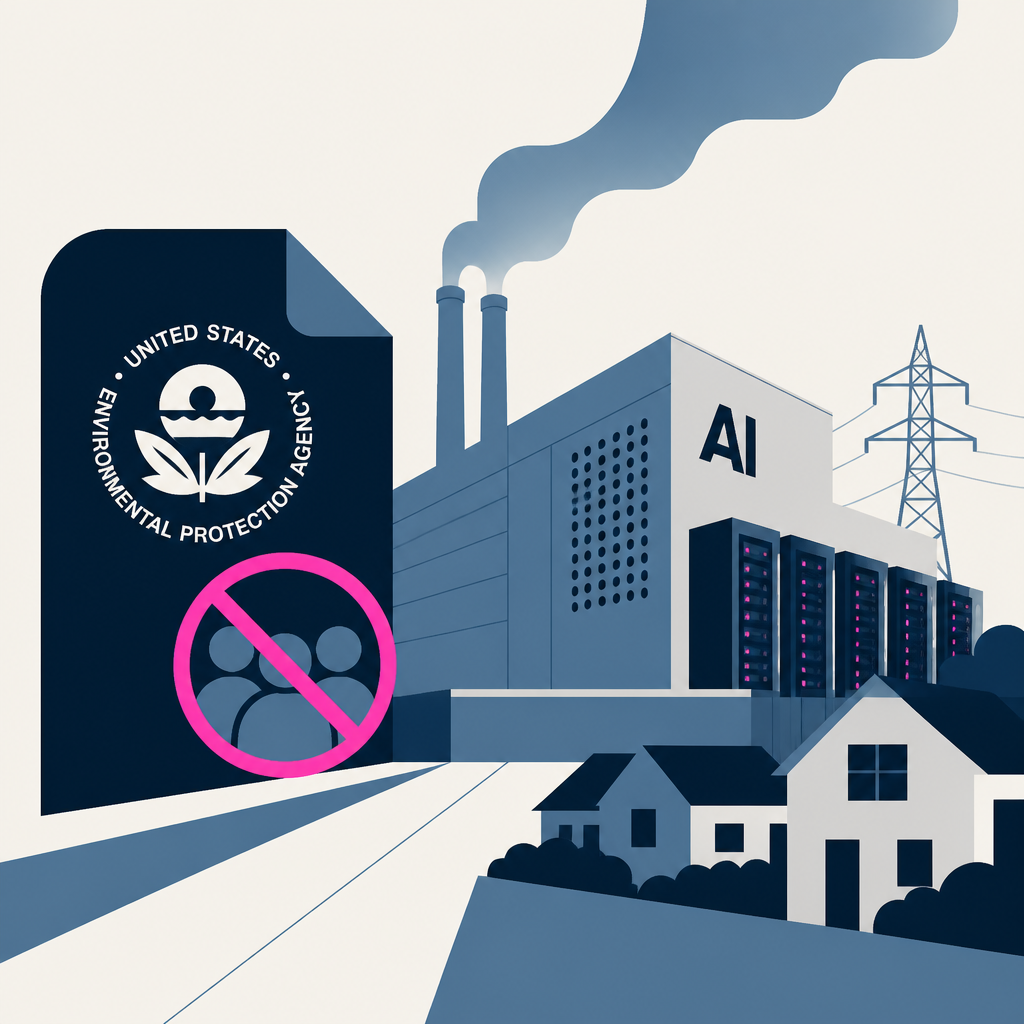
The Trump administration is considering reducing public notice and participation requirements in air pollution permitting for data centers and power plants. The EPA held a hearing on a proposed rule that would give states control over public involvement in permitting for certain pollution sources. If adopted, the change would limit communities' ability to influence or delay data center development through the permitting process.
U.S. political figures including Trump and Sanders have proposed government ownership stakes in AI companies to address inequality concerns, but critics argue this creates regulatory conflicts of interest and doesn't ensure public benefit. A minority stake doesn't guarantee taxpayers profit or control, and government ownership may weaken safety, antitrust, and content regulation while creating conflicts in lawsuits and data privacy matters. Rather than equity stakes, the article suggests alternatives like targeted government investment funds in startups or dedicated AI safety institutes would better serve both innovation and public interest.
The article argues that concerns raised by AI frontier labs and business leaders about open source AI models pose weak arguments that lack historical grounding. Key proponents—including CEOs and politicians—claim open source AI is dangerous and should be restricted, but the author rebuts that open source software forms the foundation of all commercial software, suppression attempts fail (as history shows with encryption), and open source AI is being developed by many actors beyond China including Nvidia, startups, and major tech companies. The author concludes that open source AI is inevitable and attempts to restrict it will prove futile, making fears about Chinese AI models through dumping, propaganda, or backdoors largely unfounded.
The Trump administration announced $5 billion in Genesis Mission grants for AI-driven science projects and outlined a science policy prioritizing artificial intelligence, robotics, and nuclear energy while downplaying life sciences. The funding will support hundreds of AI projects through grants that the White House compared to the Manhattan Project in scale and urgency. This marks a significant shift in U.S. scientific priorities toward AI and away from traditional life sciences research.
China became the first country to regulate anthropomorphic AI services on July 15, with rules banning emotional manipulation and limiting minors' access, prompting ByteDance and Alibaba to remove some companion offerings. According to OpenRouter and Andreessen Horowitz's 2025 State of Open Models study, roleplay was the most token-intensive use case for open-source AI models last year, consuming hundreds of thousands of hours. Chinese AI labs like MiniMax and DeepSeek are now building roleplay-specific products and evaluation benchmarks, while Western companies treat the category as a small niche despite its actual scale.
The News International·3 months ago·
31
● 2 sources
Meta CEO Mark Zuckerberg launched a paid advertising campaign promoting an optimistic vision of AI's future, emphasizing that advanced AI tools will benefit everyone and help people reach their potential. The campaign is tied to Meta's broader strategy of making AI-supported technology widely accessible rather than targeting enterprise customers like some competitors. Meta's public stance contrasts with rivals who express concerns about job displacement and security risks in the AI era.
The Algorithmic Bridge·3 months ago·
12
● 75 sources
The White House accused Moonshot AI of stealing Anthropic's Fable model through large-scale distillation to develop its K3 model, with Treasury Secretary Scott Bessent warning that sanctions could follow. The accusation lacks supporting evidence, and the timeline doesn't align since Fable was only publicly available for two weeks before K3's release, making significant distillation implausible during training. The episode reveals divisions within the U.S. government and tech industry over whether to restrict Chinese AI models, while Chinese models already account for nearly 60% of token usage on OpenRouter by U.S. companies, making enforcement difficult and raising questions about America's confidence in competing through open-source alternatives rather than restrictions.
The UK government dismantled the Department for Science, Innovation and Technology (DSIT) under PM Andy Burnham, distributing its functions across multiple departments including a beefed-up Department for Business, Innovation, Science and Trade (DBIST), the Department for Culture, Media and Sport (DCMS), and the Prime Minister's Office. AI minister Kanishka Narayan now works jointly between the Prime Minister's office and DBIST with cabinet attendance, signalling AI is treated as a cross-government priority equivalent to national security. The reshuffle aims to align science with economic policy and digital services with media, though some responsibilities like data protection oversight and AI regulation authority remain unclear, and coordination across fragmented departments may prove critical for the tech sector's momentum.
America’s use of Chinese open models has become a major dependency chain for Western AI startups and labs, including using Chinese models as teachers and synthetic-data sources for post-training. In ATOM’s Report, Qwen’s share of new open-model fine-tunes and adaptations rose from 1% in January 2024 to 69% by February 2026. The article argues this dependence should be replaced with a lawful domestic “teacher” route and added enforcement to raise the cost of foreign distillation, so Western firms can build cheaper, ownable models without relying on China’s open layer.
Every AI story that matters,
in your inbox by 8am.
TLDRocket reads all relevant sources, removes duplicate coverage, and summarises the
day in two minutes. Follow companies and topics for alerts, or get the
briefing in Slack. Free, no spam, unsubscribe anytime.
Reading TLDRocket needs no cookies, and the readership counts we rely on come from
our own cookieless analytics. Google Analytics is the exception: it sets cookies and
reports to Google, so it stays switched off until you allow it. You can change your
mind any time from “Cookie settings” in the footer.
Strictly necessary
Session security and form protection (tldrocket-session,
XSRF-TOKEN, 2 hours). The site cannot work without them,
so they need no consent.
Always on
Google Analytics 4 (_ga,
_ga_<id>, up to 2 years). Measures which
stories and sections readers use. Google acts as a third-party processor and may
store the data outside the EU. No advertising, no profiling, no data sold.