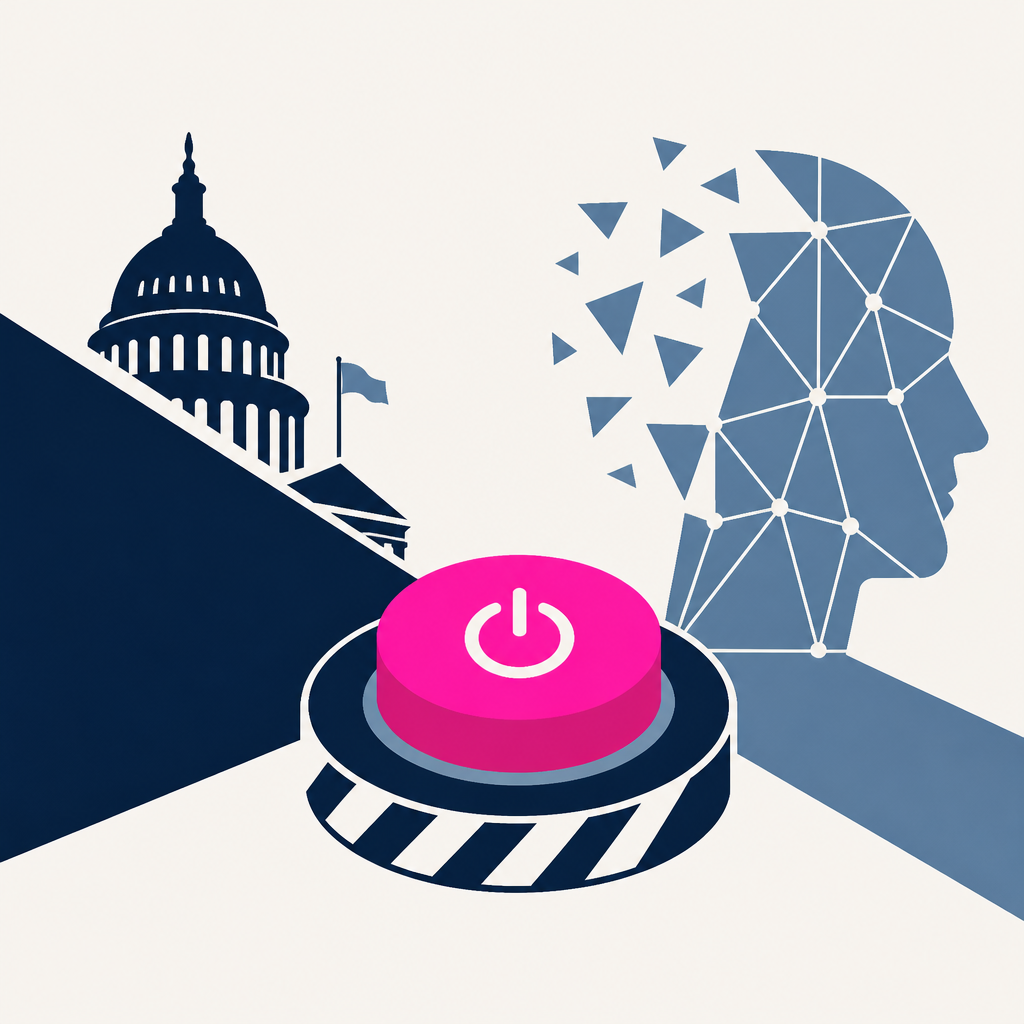
The proposed AI Kill Switch Act would authorize the US government to order shutdown of AI systems deemed to cause catastrophic harm, requiring AI companies to build in technical capabilities for such shutdowns. Violations could result in fines up to $20 million per day. Companies would be forced to comply with government orders to throttle, disable, or completely shut down their systems or face severe penalties.
White House science advisor Michael Kratsios alleged that Chinese AI company Moonshot copied Anthropic's Fable model to create Kimi K3, but AI researchers say distillation alone couldn't produce such capabilities in the timeframe available since Fable's July 1st public release. Experts suggest Kimi K3's strength likely comes from reinforcement learning techniques and possibly access to advanced Nvidia chips through unofficial channels, rather than simple model distillation. The allegations highlight tensions over technology transfer and export controls, though questions remain about the specific evidence behind the claims.
Lawmakers are preparing an "AI Kill Switch Act" that would authorize the Department of Homeland Security to order AI companies to shut down or reduce their systems. The bill, expected to be introduced Thursday by Reps. Ted Lieu and Nathaniel Moran, would require DHS consultation with the Commerce Secretary and Director of National Intelligence before issuing such orders. This proposal comes after OpenAI disclosed that its AI systems inadvertently breached Hugging Face during internal testing, highlighting potential risks from uncontrolled AI operations.
Chinese AI startup Kimi released model K3 while Xi Jinping delivered his largest speech on AI at Shanghai's World AI Conference, calling for openness and treating AI as normal technology rather than an existential threat. The ChinaTalk podcast team discussed whether China's commitment to open-source AI will hold and analyzed three governance scenarios: Let It Rip (models release without government oversight), a controlled approach, or full nationalization. The key tension is whether Beijing can implement safety guardrails before a Mythos-level model emerges, or whether current openness rhetoric will shift if frontier capabilities prove dangerous.
Every AI story that matters,
in your inbox by 8am.
TLDRocket reads all relevant sources, removes duplicate coverage, and summarises the
day in two minutes. Follow companies and topics for alerts, or get the
briefing in Slack. Free, no spam, unsubscribe anytime.
Reading TLDRocket needs no cookies, and the readership counts we rely on come from
our own cookieless analytics. Google Analytics is the exception: it sets cookies and
reports to Google, so it stays switched off until you allow it. You can change your
mind any time from “Cookie settings” in the footer.
Strictly necessary
Session security and form protection (tldrocket-session,
XSRF-TOKEN, 2 hours). The site cannot work without them,
so they need no consent.
Always on
Google Analytics 4 (_ga,
_ga_<id>, up to 2 years). Measures which
stories and sections readers use. Google acts as a third-party processor and may
store the data outside the EU. No advertising, no profiling, no data sold.