Why state-owned AI won’t solve inequality
Rest of World Rina Chandran
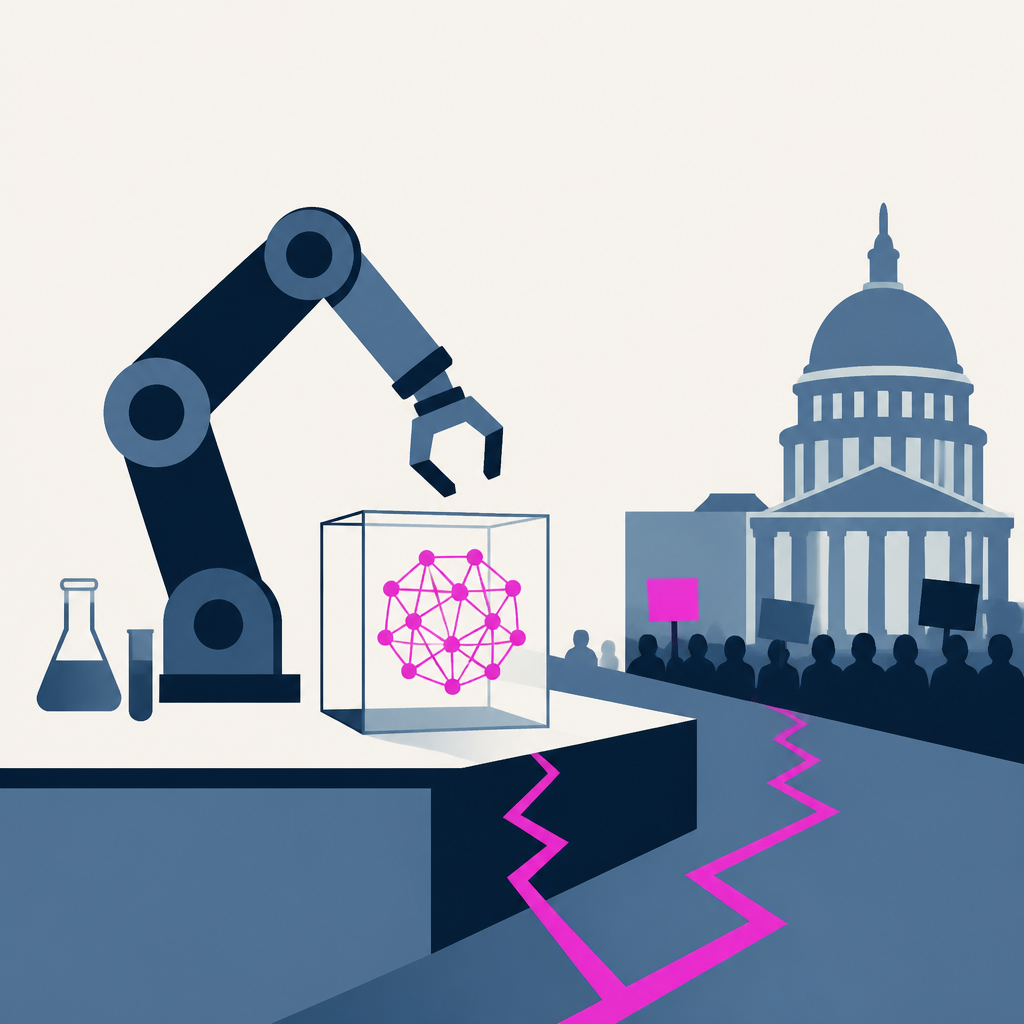
Trump wants the US government to buy equity in AI firms; Sanders even floated a 50% stake for a sovereign wealth fund. Turns out owning a slice of OpenAI won't actually spread the wealth—or keep anyone honest.
Based on reporting by Rest of World, Rina Chandran — read the original for the full story.
Summary, retelling and take written by AI under human oversight; images are AI-generated illustrations. How we work · Report an error
Washington has suddenly discovered a taste for AI ownership. Trump floated the idea of the government buying equity in AI companies after concerns grew that the boom was leaving most Americans behind. Bernie Sanders got there first, pitching a sovereign wealth fund that could hold as much as a 50% stake in AI firms. Meanwhile OpenAI is reportedly negotiating to hand the government a 5% stake ahead of its IPO, and both OpenAI and Anthropic have floated their own version of a public fund to spread AI-generated wealth around.
None of this is unprecedented, exactly. Governments already hold stakes in industries deemed critical — oil, steel, telecom, shipbuilding. The US has its own model in the Alaska Permanent Fund, which pays out oil dividends to residents. And over the past year the Trump administration has struck equity deals with more than two dozen companies spanning semiconductors, nuclear energy, minerals, quantum computing, and steel. So the appetite for owning a piece of AI isn't coming out of nowhere.
But treating ChatGPT's maker like a steel mill misses something. A minority stake doesn't equal public ownership, and it definitely doesn't guarantee that ordinary people see a dime of the profits. Worse, with no federal AI law on the books — the current administration worries regulation would blunt America's edge against China — a government that also owns equity has even less reason to crack down on safety, antitrust, or content issues that might dent the stock price. Throw in unanswered questions about surveillance, data center approvals, and whether the state would ever side against an AI firm in court, and the picture gets messier fast. Michael Bloomberg called the whole idea dangerous, warning that government shareholding invites cronyism and corrodes competition and regulation alike.
There's a rival vision on the table too. Mona Sloane and Emanuel Moss, data science professors at the University of Virginia, argue AI should be treated as a public utility instead, since it now touches the public interest in ways that demand real accountability. Ironically, the ownership path the US is edging toward already has a template — in Beijing. China holds so-called golden shares in major tech firms, giving the state veto power over decisions, and its national AI fund is preparing to invest in DeepSeek as part of a strategy that spans chip design to applications. But China pairs that ownership with fast, strict regulation on safety and content, chasing what Xi Jinping recently called AI that's "secure and controllable."
Americans, notably, aren't as enthusiastic about AI as people elsewhere, and that unease will likely deepen once looming IPOs mint a small circle of very wealthy winners. Trump isn't wrong that the gains aren't being shared fairly. He's just reaching for the wrong tool. A government fund that invests in startups the way China's does, or a dedicated AI safety institute along the lines of what Singapore or the UK has built, looks like a far better bet than the state simply becoming a shareholder.
My take — AI-written commentary, not fact-checked reporting
Turning the government into a shareholder is the political equivalent of buying a lottery ticket and calling it a retirement plan — it looks like action without requiring anyone to actually write a rulebook. If Washington wants AI wealth spread fairly, it should build something like a safety institute with teeth, not a stock portfolio with a conflict of interest baked in. The China comparison should worry people more than it comforts them: golden shares work there because the state also regulates fast and hard, and nobody serious thinks the US is about to do that anytime soon.
Read more about this at: Rest of World