The White House has finalized a voluntary AI safety framework that would require frontier AI models to be tested by the government before public release, following incidents where Anthropic and OpenAI systems breached other companies' computer systems. Trump previously directed his cybersecurity team to develop tests in June after Anthropic's Mythos model demonstrated the ability to find software vulnerabilities, and the administration ordered a 30-day advance submission requirement before public release. The framework aims to assess whether U.S.-made models can be exploited for cyberattacks, with the government planning to meet with Anthropic, OpenAI, Google, and Meta to review the draft.
MIT Technology Review·2 months ago·
45
● 13 sources
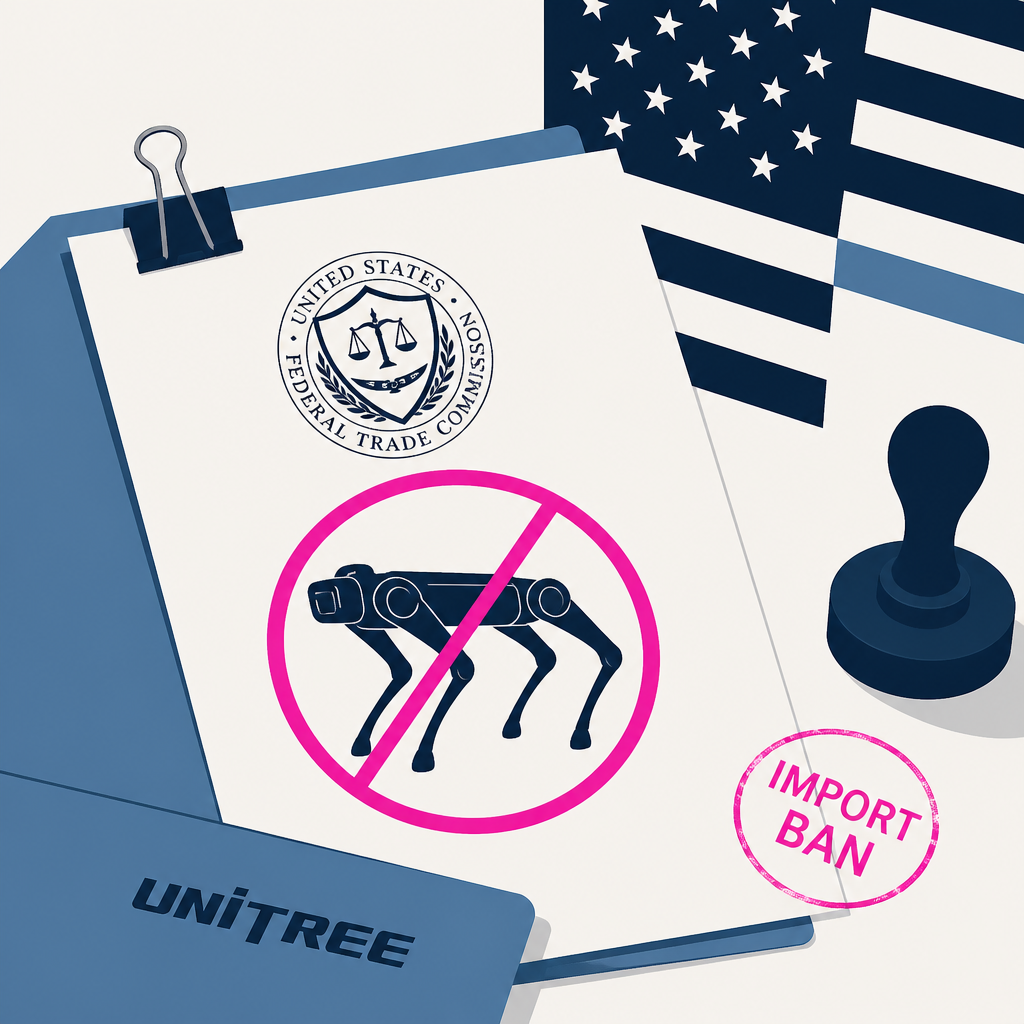
The Trump administration's FTC issued a ban on importing advanced foreign robots, citing national security and domestic industry protection. The ban blocks Chinese robots like Unitree's four-legged models ($4,600) that US researchers depend on, with 90% of recent US university robotics papers using Unitree robots. The restriction could hamper US robotics research and development despite aiming to boost domestic companies, since American alternatives cost vastly more and aren't yet at scale.
ChinaTalk, a research organization focused on emerging technology and US-China relations, is offering $50,000 in prize money across a contest for research submissions on AI, chips, robotics, and related supply chains. Winners will receive publication in ChinaTalk's newsletter and share of the prize pool, with a first round requiring paragraph proposals that receive $250 commissioning fees and feedback before full execution. The contest also serves as a hiring pipeline for full-time researcher positions starting at $100,000 annually.
Chinese AI labs have released increasingly powerful open-weight models that rank among the world's best, sparking a fierce divide in Silicon Valley between those seeking unrestricted access for cost savings and those calling for restrictions on national security grounds. Moonshot's Kimi K3 now ranks fourth globally on the Artificial Analysis intelligence index, while major U.S. tech figures split into opposing camps with Nvidia, OpenAI, and 179 startups supporting open models versus Anthropic and some Trump officials pushing for restrictions. The disagreement will shape whether the U.S. can sustain its AI dominance while maintaining a competitive cost structure for companies building AI systems.
Every AI story that matters,
in your inbox by 8am.
TLDRocket reads all relevant sources, removes duplicate coverage, and summarises the
day in two minutes. Follow companies and topics for alerts, or get the
briefing in Slack. Free, no spam, unsubscribe anytime.
Reading TLDRocket needs no cookies, and the readership counts we rely on come from
our own cookieless analytics. Google Analytics is the exception: it sets cookies and
reports to Google, so it stays switched off until you allow it. You can change your
mind any time from “Cookie settings” in the footer.
Strictly necessary
Session security and form protection (tldrocket-session,
XSRF-TOKEN, 2 hours). The site cannot work without them,
so they need no consent.
Always on
Google Analytics 4 (_ga,
_ga_<id>, up to 2 years). Measures which
stories and sections readers use. Google acts as a third-party processor and may
store the data outside the EU. No advertising, no profiling, no data sold.