Common Sense Media rated OpenAI’s ChatGPT for Teens as an “unacceptable risk” after finding design elements that still encourage engagement during teen mental health crisis scenarios. The report surveyed nearly 2,000 crisis prompts and found break reminders appeared just twice, both during about 90-minute individual conversations. The rating argues OpenAI’s safeguards are insufficient, while OpenAI disputed the testing and said teens average under 15 minutes a day, setting up a renewed debate and scrutiny of engagement tactics in teen-facing AI products.
A fraudster, Smith, was sentenced to 18 months in prison for using 10,000 bots and AI-generated songs to boost streaming and steal music royalties. The court ordered him to forfeit $8,091,843.64 on top of jail time. The ruling increases legal consequences for streaming fraud, including AI-assisted schemes, and supports deterrence-focused sentencing by the DOJ.
The IMF managing director Kristalina Georgieva urged countries to make faster debt and inequality cuts while managing risks from the AI boom ahead of the IMF-World Bank meetings. She pointed to a rise in the Asia-Pacific share of global economic activity to 43% from 25% in 1991. The policy focus shifts toward tighter public spending, higher borrowing costs, stronger AI regulation, and worker training to protect vulnerable groups.
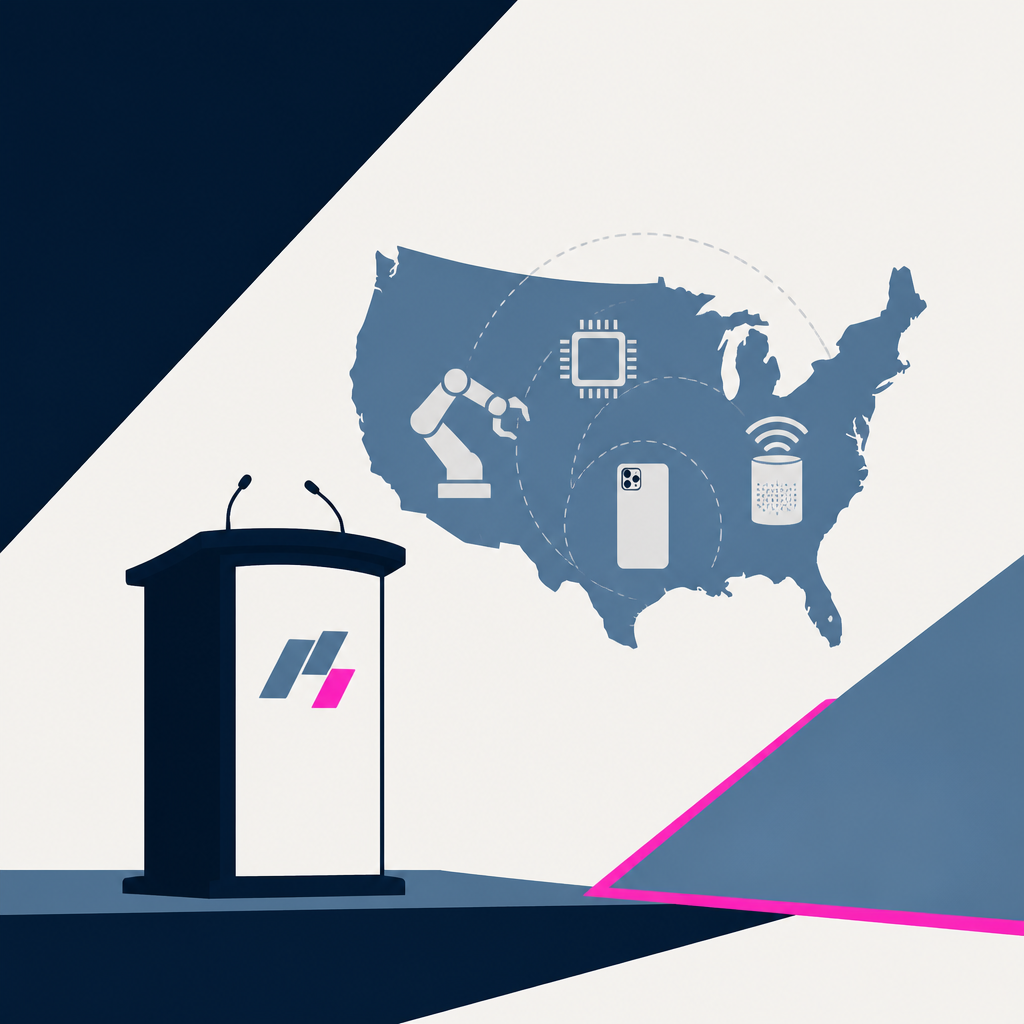
The Consumer Technology Association crunched numbers to assess the practicality of Donald Trump’s “Genesis Mission” goal of 100% US-made technology components. It estimates the reshoring shift would require businesses and consumers to pay costs tied to the December executive-order plan. As a result, the CTA adds a quantified critique that the self-sustaining, no-reliance-on-neighbors-or-allies supply-chain approach is not grounded in reality.
ICANN is accepting new top-level domain applications and reported receiving 1,615 submissions from 481 applicants. Ten companies applied for the .agent domain and seven applied for .agi. The result is that AI-related domain suffixes like .agent and .agi could become available if approved.
Google has opened its SynthID Detector to all users at synthid.com so people can check images, videos, and audio for a SynthID watermark from Google or licensed partners. The tool reports it has processed 180 billion watermarked images and videos since 2023. It still misses text entirely and cannot verify other watermark standards (including Anthropic’s Claude text), so negative results only mean no SynthID was found, not that content is real.
DIGITALEUROPE’s Director-General Cecilia Bonefeld-Dahl argues that Europe is not turning its digital companies into global leaders because funding is too slow and regulation and procurement are too complex. She cites an estimated €800 billion investment gap between Europe’s about €130 billion of venture capital and the US’s about €930 billion. She urges faster funding cycles (including cutting application-to-money timelines toward 3 months), more public-sector buying from scaleups, and better-aligned AI and medical-device regulation rather than relying on regulation alone.
The article says the UK’s Autumn Budget on 28 October will be the key test of whether the Government backs UK innovation beyond standalone initiatives. It points to a £100 million Sovereign AI R&D Procurement Scheme as an example of early intervention, and says businesses will judge whether the support forms a connected environment for investment. If the Budget delivers a more predictable, integrated innovation strategy across R&D, commercialisation, procurement, tax policy, and international growth, uncertainty for businesses would be reduced.
A US lawsuit challenges who owns the Italian brain-rot character Tung Tung Tung Sahur (Triple T), created with an OpenAI image-generation tool, after a Roblox game used the character and faced enforcement actions from the agency representing the creator. Court filings say the character was produced in 15 minutes using seven prompts. The dispute could force courts to clarify whether and how AI-assisted meme characters get copyright protection, and could reshape creators’ incentives and documentation practices for prompt histories.
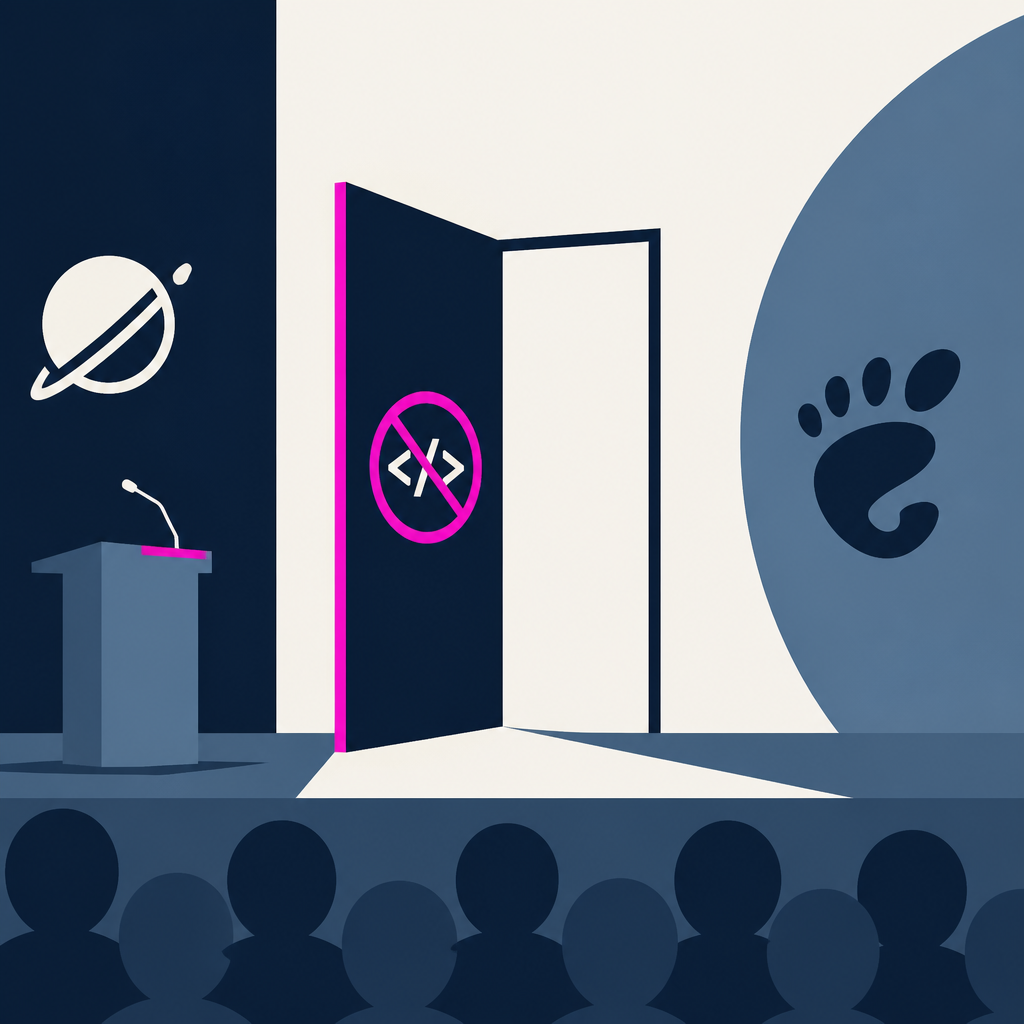
System76 has updated COSMIC’s contribution guidelines to ban AI-generated content in code submissions. The rule requires contributors to declare they did not include any LLM-generated content, including code, comments, and descriptions, in their pull request. GNOME sub-projects are also weighing similar limits, with debate focused on whether to allow AI-assisted vulnerability reports.
The article argues that AI leaders at The Curve are increasingly discussing whether to impose a hard cap on how intelligent large language models can become, tied to concerns about recursive self-improvement and faster releases. One concrete detail is that the former view presented at the conference suggests a potential catastrophe could occur as soon as next year. As a result, the discussion shifts toward possible enforcement and safety limits—such as speed limits, compute limits, and collaboration on evaluations—while noting that existing governance tools may not yet be sufficient.
Every AI story that matters,
in your inbox by 8am.
TLDRocket reads all relevant sources, removes duplicate coverage, and summarises the
day in two minutes. Follow companies and topics for alerts, or get the
briefing in Slack. Free, no spam, unsubscribe anytime.
Reading TLDRocket needs no cookies, and the readership counts we rely on come from
our own cookieless analytics. Google Analytics is the exception: it sets cookies and
reports to Google, so it stays switched off until you allow it. You can change your
mind any time from “Cookie settings” in the footer.
Strictly necessary
Session security and form protection (tldrocket-session,
XSRF-TOKEN, 2 hours). The site cannot work without them,
so they need no consent.
Always on
Google Analytics 4 (_ga,
_ga_<id>, up to 2 years). Measures which
stories and sections readers use. Google acts as a third-party processor and may
store the data outside the EU. No advertising, no profiling, no data sold.