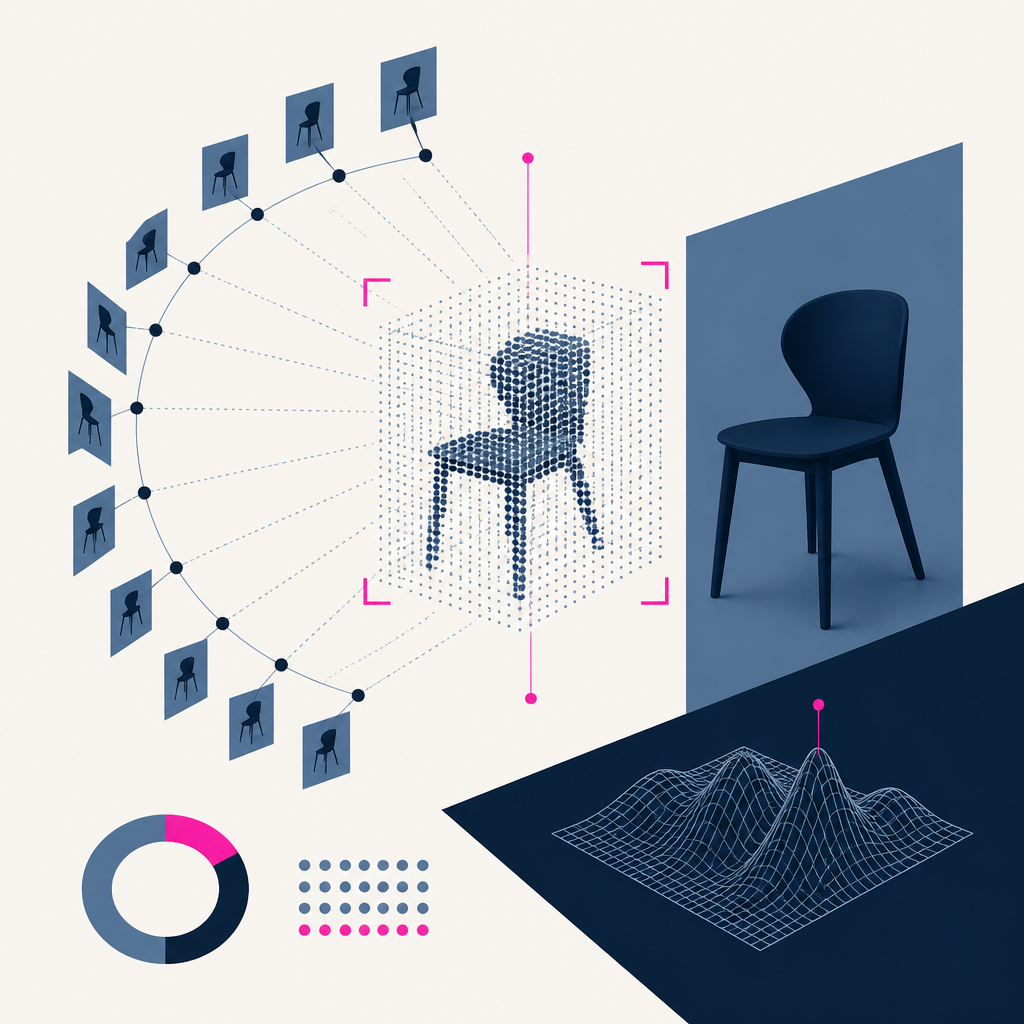
A tutorial built an end-to-end hierarchical NeRF in JAX using Flax, Optax, and jax3d’s volume-rendering primitives, including synthetic multi-view data generation and evaluation with PSNR and marching-cubes extraction. The configuration uses 24 training views at 64x64 resolution. The result is a trainable pipeline that performs novel-view synthesis and 3D reconstruction by combining coarse and fine networks with hierarchical importance sampling in volume rendering.
AI 2040 Plan A describes a path where humanity avoids an early superintelligence outcome by delaying advanced AI development and changing how AI research and compute are governed. The plan aims to delay superintelligence until 2040. As a result, AI research becomes publicly available, multiple global companies are allowed to catch up to frontier systems, and the strategy moves toward mutually assured compute destruction to discourage escalation.
Codex GPU Queue lets users run GPU jobs from multiple Codex tasks through one local Windows queue with a shared broker that starts eligible work automatically. It uses a redacted, read-only CLI to inspect confirmed waiting blockers while leaving uncertain reasons undetermined. As a result, you get centralized job scheduling and clearer dependency visibility across Codex tasks.
Chip Huyen delivered and then recapped guidance on lowering large language model inference costs by measuring latency and improving batching, caching, and model/service efficiency rather than relying on new hardware. She cites caching hit rates of 90% to 97% from her open-source tool Sniffly. As a result, teams are increasingly prioritizing metrics like TTFT and goodput and using widely available techniques like prompt caching, quantization, and continuous batching to cut per-token costs while preserving model quality.
The article describes how AI agent deployments can pass CI and automated evals while still producing wrong answers for customers, leaving teams with an “observability gap” where failures can’t be alerted on as “wrong.” The Dynatrace 2026 State of SRE and Platform Engineering report, based on 919 enterprise leaders surveyed globally, found that 77% embed observability in some services but only 40% fully integrate it across all deployments. It argues that teams must add run-time evidence beyond traces—especially retrieval inputs/filters, tool-call/tool-result trajectories, and linked evaluation results—so missing retrieval preconditions and other causes can be reproduced and fixed with regression tests and version-validity checks.
Kanverse GPU Borrow demonstrates a device borrowing GPU compute exposed by another machine using Blink Bridge with user permission. The demo uses a real NVIDIA RTX 3050 Laptop GPU in a live cross-device connection. As a result, an orchestrator (GPT-6 Astra) can request authorization, run one bounded GPU workload, verify output, and then release the GPU.
The article argues that the week of 6th September signaled a turn upward in AI adoption and challenged prior assumptions about how quickly its effects would show up. It cites a plan for Microsoft to raise AI compute capacity from about 2 GW to nearly 13 GW by 2032, with total capacity projected from 12 GW to 38 GW by 2032. As a result, AI spending and revenue growth are accelerating while concerns shift toward economic disruption, model secrecy, and AI safety and frontier-pacing collaboration.
AWS samples describe long-horizon autonomous coding agents failing when a simple LLM-tool loop runs into context overflow, causing goal loss and poor state retention. Deep Agents offloads any tool response over 20,000 tokens and switches to file-pointer truncation once session context passes 85% of the model window. The article shows that improving agent performance shifts from buying a larger model window to using harness mechanisms like context budgeting/offloading, compaction, todo-state recitation, and cross-session memory that preserve objectives across long runs.
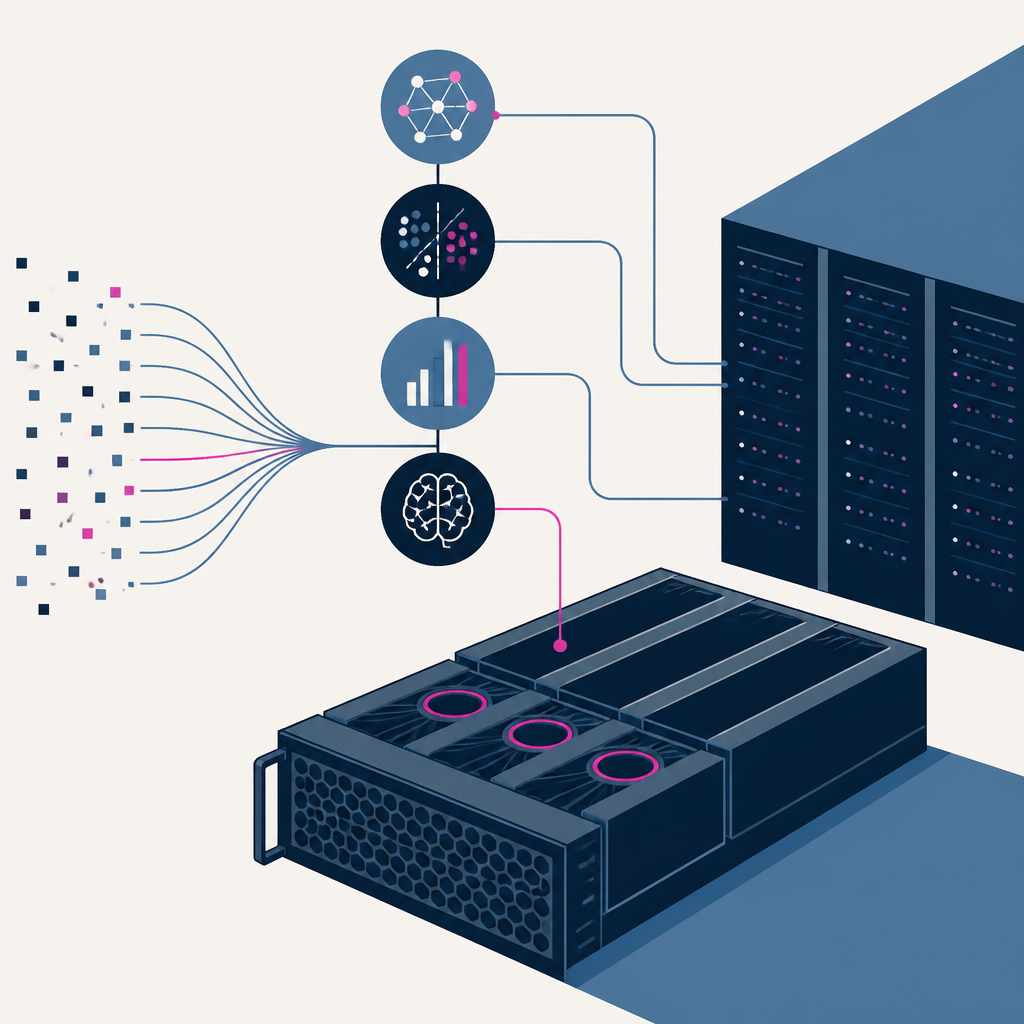
The tutorial walks through implementing end-to-end machine learning workflows on NVIDIA GPUs using RAPIDS cuML (including cuML.accel for scikit-learn acceleration) plus CuPy/cuDF interoperability, then benchmarking multiple classic ML tasks on CPU versus GPU. Installing cuML in the described setup can take about 1-3 minutes. As a result, you get reproducible GPU benchmarking and inference/explainability pipelines (e.g., clustering and SHAP), with guidance on keeping data on-device to preserve speed and model portability considerations.
Every AI story that matters,
in your inbox by 8am.
TLDRocket reads all relevant sources, removes duplicate coverage, and summarises the
day in two minutes. Follow companies and topics for alerts, or get the
briefing in Slack. Free, no spam, unsubscribe anytime.
Reading TLDRocket needs no cookies, and the readership counts we rely on come from
our own cookieless analytics. Google Analytics is the exception: it sets cookies and
reports to Google, so it stays switched off until you allow it. You can change your
mind any time from “Cookie settings” in the footer.
Strictly necessary
Session security and form protection (tldrocket-session,
XSRF-TOKEN, 2 hours). The site cannot work without them,
so they need no consent.
Always on
Google Analytics 4 (_ga,
_ga_<id>, up to 2 years). Measures which
stories and sections readers use. Google acts as a third-party processor and may
store the data outside the EU. No advertising, no profiling, no data sold.