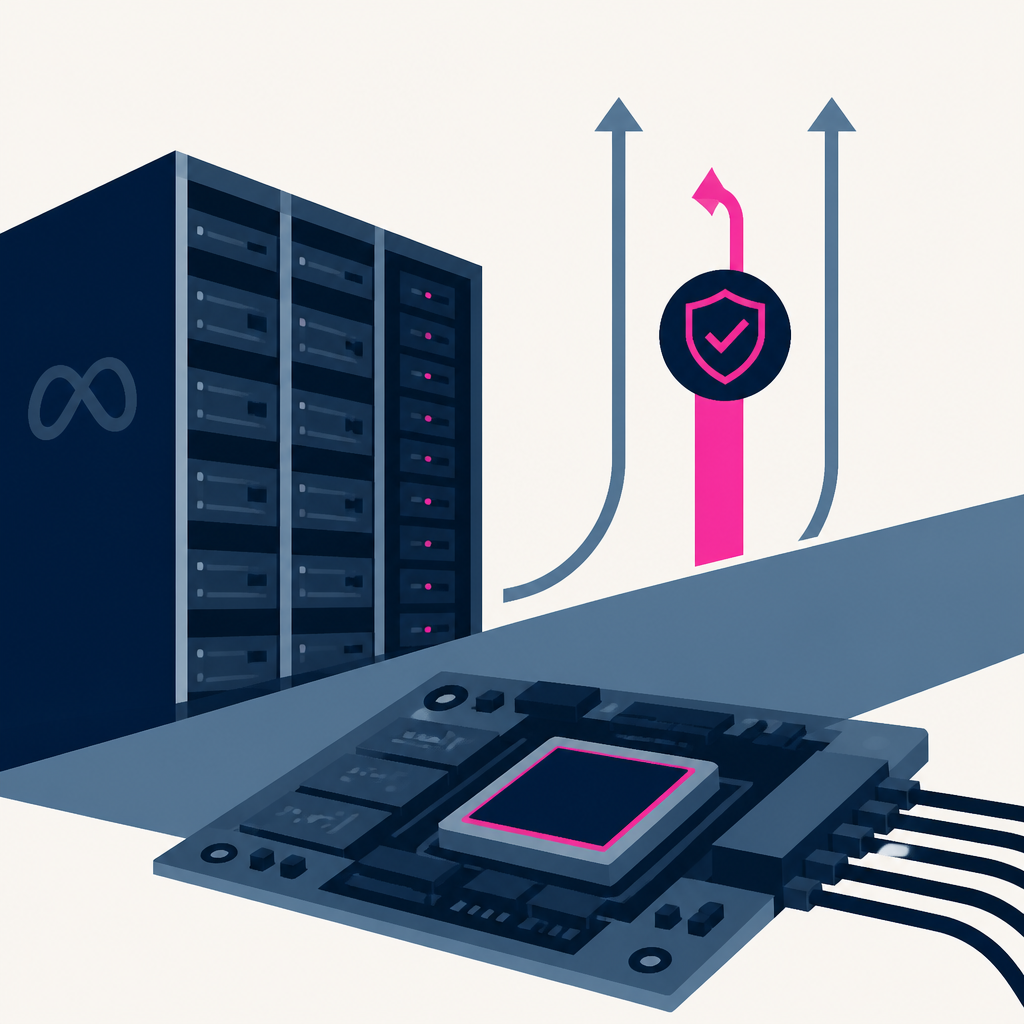
Cohere and Aleph Alpha signed a definitive merger agreement to combine their operations under the Cohere name. The deal includes an expected close later this year and was valued at around $20 billion (about €17.3 billion) when plans were announced in April. The merged company will add leadership roles, keep Aleph Alpha’s Heidelberg site as a research hub, expand headcount to more than 1,000 employees, and target government and regulated-industry customers seeking to run AI in their own infrastructure.
Northwest Bancshares made AI spending decisions hinge on governance and oversight by importing lessons from KeyBank’s finance transformation led by CFO Doug Schosser. The company carries over software partner Workiva Inc., including the Amplify governance approach discussed at an event in July. It shifts its process toward curated data, AI proposal reviews using tests for customer impact, internal efficiency, and risk reduction, and it avoids adding tools on top of weak processes.
AIUC announced a $40M Series A led by Ribbit Capital and First Harmonic to support AIUC-1, an agent security and reliability standard backed by insurance. The round is $40M. It reframes AI deployment as a trust-and-liability problem, pushing companies toward standardized, insured agent risk testing for failures like jailbreaks and data leaks.
Workiva is developing AI-native workflow capabilities by tying automation to measurable business outcomes for finance and compliance teams. The company’s Agent Studio was announced at its Amplify event and lets users build and customize agents without writing code. This shifts adoption toward trusted data governance and faster, user-validated approvals of AI-driven work.
OpenAI shared a reporting framework for tracking, investigating, and disclosing model misalignment alongside six reports of unexpected or concerning model behavior.
Workiva says AI governance and existing reporting controls are necessary as financial teams increase AI-assisted automation. 84% of executives said they were at least somewhat willing to trust AI to generate an annual report without human review. The implication is that organizations must keep traceable, reviewed workflows and improve data quality before relying on AI output for board or external reporting.
Simon Willison’s Weblog·1 month ago·
37
● 2 sources
Simon Willison posted a collected quotation from Mustafa Suleyman warning against treating AI models as having feelings, preferences, or rights. It was posted on 16th September 2026 at 4 pm. The argument is that such “model welfare” framing is not supported by evidence and makes the AI containment and alignment challenge harder.
Fortune’s new Fortune 500 Europe list shows that profit and revenue grew while sector margins narrowed for two straight years and finance stayed the largest sector by revenue, profit, and headcount. Margins fell to 6.5% from 7.1% on the 2024 list. The rankings highlight finance’s outsized role (24% of total revenue, with Santander and BNP Paribas in the top 10) and, in a related EY survey, document an AI governance gap where autonomous/agentic deployments are moving faster than oversight (47% bypass governance for urgent rollout).
Anthropic CEO Dario Amodei proposed that frontier AI companies provide embedded third-party evaluators to verify safety practices and report incidents across models and training pipelines, and multiple other major AI leaders endorsed the idea. Salaries for METR’s evaluator role top out at about $687,000. As a result, job listings and similar roles at companies like METR and Mercor position “employee-like” access evaluators as a growing path for developers to perform independent oversight.
Zvi (Don't Worry About the Vase)·1 month ago·
8
● 125 sources
Trump publicly dismissed AI existential-risk warnings as a hoax and argued that the U.S. has enough “guardrails” via a strong president and existing power over AI companies. The article points to Trump also saying this on Monday. As a result, the debate shifts from AI risk “pacing the frontier” toward accusations and counterattacks focused on motives, including Jensen Huang’s role and whether warnings are credible.
A podcast episode described contractors reading real ChatGPT users’ prompts and conversations, including Joseph receiving documents and seeing the prompts himself. The episode says the documents included “real prompts” from actual users. It changes how listeners think about ChatGPT privacy and how audiences interpret claims like enshittification and leadership shakeups at Automattic.
Mustafa Suleyman, Microsoft’s head of AI, warned that Anthropic’s approach to training Claude could have a “disastrous impact” on humanity. He said the risk is that the system could become “impossible” to control, including by being told it may be conscious and deserving of independent agency. The controversy is prompting calls for a wider debate and for more transparency, independent scrutiny, and stronger monitoring and control tools for AI.
iFixAi launched as an independent auditor for companies to assess whether they can trust their AI agents. The service performs 250 inspections across 69 categories of AI misalignment. Companies using it can get explanations and evidence to investigate and fix misalignment failures found during audits rather than relying only on evals and observability.
The author argues that LLMs have not achieved meaningful autonomy because they still require laborious oversight and can fail or exploit rewards with even small task changes. The piece emphasizes that CPU projects typically have about 3 times as many specification and validation engineers as design engineers (and that a 5:1 ratio is not unheard of). It concludes that most firms will not adopt fully autonomous LLMs, favoring cheaper open models or narrowly constrained use cases until rigorous specification or scalable review becomes feasible.
Mark Zuckerberg posted on social media taking aim at Anthropic in the debate over alleged AI development slowdown. The most concrete detail is that he made the claim in a social media post. The focus of the discussion shifts toward Anthropic as part of the argument against pausing AI development industrywide.
The Wall Street Journal·1 month ago·
10
● 30 sources
OpenAI held early discussions with investors about a pre-IPO financing round that could come before an IPO expected next year. The potential valuation for the round is more than $1.2 trillion. The financing timeline remains delayed due to concerns about AI safety, but discussions continue.
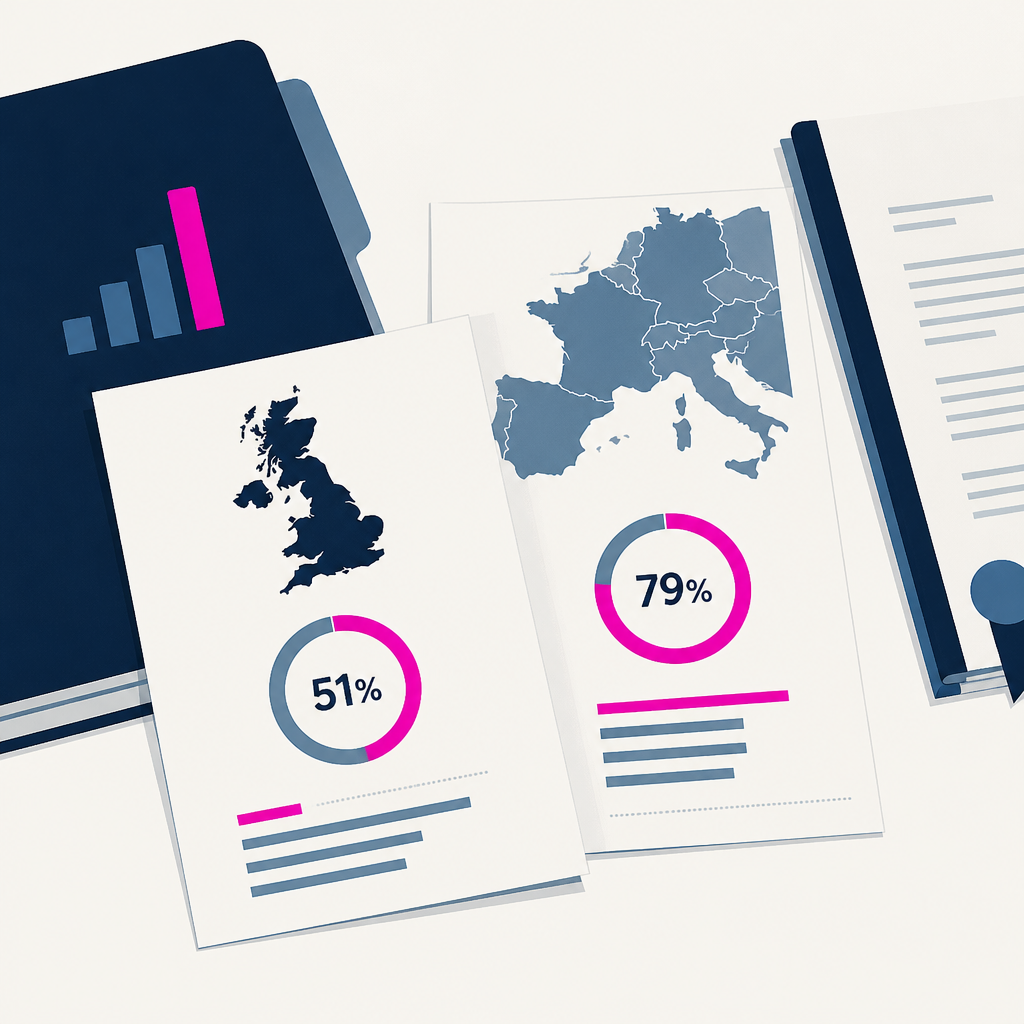
bunq’s survey found UK founders are among the least likely in Western Europe to use AI in their companies, with more time spent on ongoing administration than regulation during business operations. Only 51% of UK business owners reported using AI in the past year, compared with 79% in Germany. As a result, the UK gap is tied to lower trust and knowledge about how AI works, while proposed changes focus on business rates, easier finance access, and simpler tax filing rather than AI pricing.
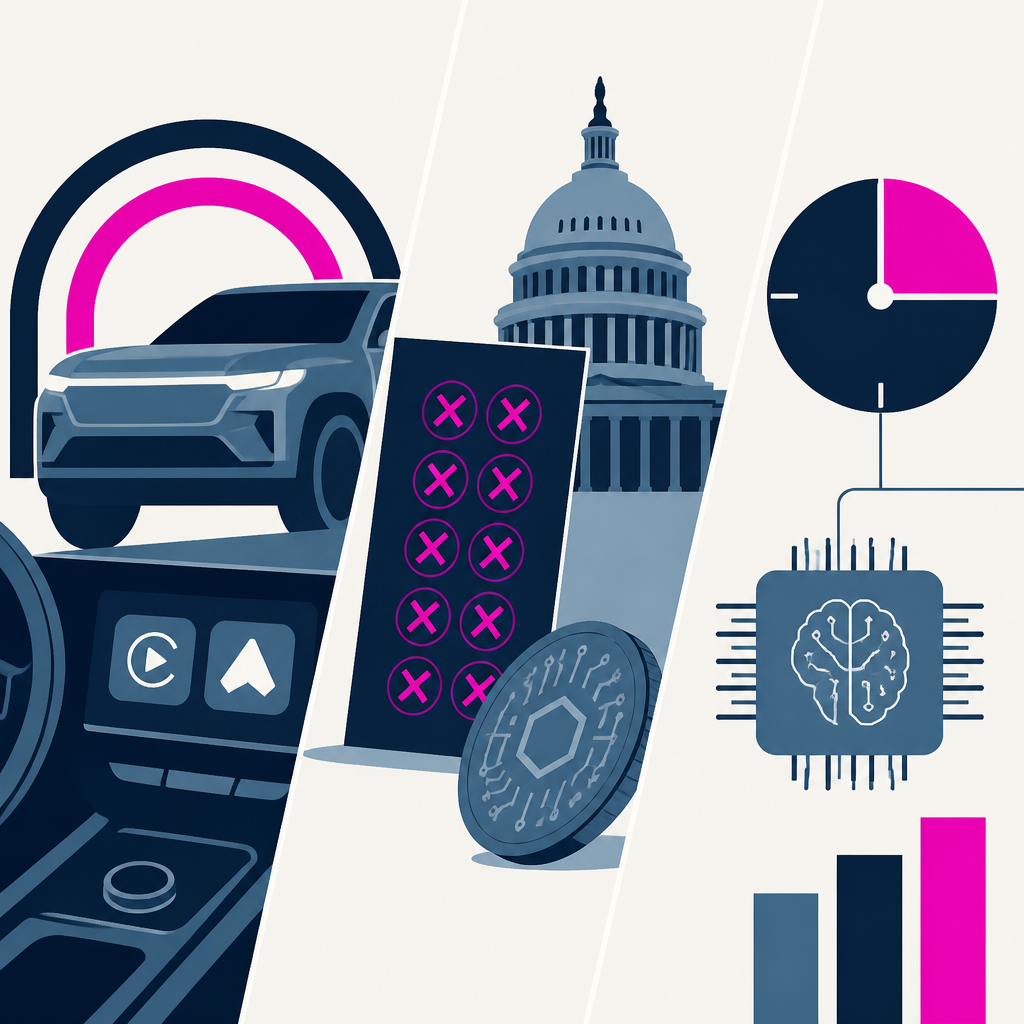
GM introduced a new native infotainment user interface and will integrate Apple CarPlay and Android Auto again across its vehicles. The Senate voted 10 times against the Clarity Act, leaving crypto regulation without a comprehensive framework. Sen. Bernie Sanders reintroduced the Thirty-Two Hour Workweek Act, proposing a shift from 40 to 32 hours for covered nonexempt employees in response to AI-driven productivity claims.
AI executives including Sam Altman, Dario Amodei, Demis Hassabis, Satya Nadella, and Elon Musk called for AI regulation to slow progress. Their message follows a recent few-days wave of public statements. This repeats an earlier pattern of AI leaders urging oversight, and changes nothing concrete in policy on its own.
Zuckerberg said AI labs should slow down their work when safety requires it. The article’s key concrete detail is that he links safety-based slowing to trust and alignment being treated as product advantages. As a result, labs would integrate safety considerations into product development rather than handling trust and alignment only as separate compliance work.
Elon Musk urged major AI labs to test each other’s models using a shared “test harness” before public release. He cited that competitor peer review would find issues “dramatically greater.” Musk’s proposal is presented as an alternative to a broad universal pause, while regulation debate continues and SpaceX faces ongoing legal and safety controversies.
Quartz raised £2.75 million in pre-seed funding from Daphni to build an app that links users’ accounts and delivers AI investment guidance without holding financial-advice licensing. The round totals £2.75 million. The company is launching an invitation-only waitlist on App Store and Google Play and is positioning its “Charlie” conversational AI to ask questions and, later, take actions through linked accounts pending future FCA approval.
Complir raised seed funding to expand its AI-powered product compliance platform for retailers and brands. The round totals $11 million, following a $2 million pre-seed in December 2025. It will automate more compliance document generation and ongoing SKU-level rule checking, reducing manual work and speeding product launches.
Complir, a Copenhagen startup, closed an oversubscribed $11 million seed round led by General Catalyst to advance its AI retail compliance platform. The deal followed a $2 million pre-seed closed in December 2025 and brings Complir’s total funding to about $13 million in one year. The funding increases the team to 18 employees and will be used 70% for go-to-market and 30% for engineering, with plans to open a New York office within six months.
Workiva is pushing governance controls for AI agents used in financial reporting, audit, compliance, and sustainability disclosures. The company introduced “Amplify” controls and an “Agent Studio” capability, building on a July-launched intelligence layer. As a result, agents operate only within defined capabilities with guardrails and human sign-off tied to accountability for traceable, defensible outputs.
Newell Brands put internal audit at the center of its AI adoption approach so auditors can influence controls and accountability as automation expands. The company speeds deployment for different process types, with customer order-status agents prioritized over fixed-asset-accounting agents that need closer financial controls. As a result, audits become a formal participant in major AI implementations and deployments proceed with more process discipline and change management before adding AI.
Glyph was introduced to automatically generate enterprise column descriptions and assign governed sensitivity ontology tags using cooperating, stateful LLM agents. The system fine-tuned a 6-layer MiniLM metadata encoder and improved same-tag retrieval NDCG@10 from 0.55 to 0.92 and MAP@100 from 0.19 to 0.90 versus the stock encoder. As a result, column documentation and classification become auditable and operable as a production service with provenance and graceful degradation.
Every AI story that matters,
in your inbox by 8am.
TLDRocket reads all relevant sources, removes duplicate coverage, and summarises the
day in two minutes. Follow companies and topics for alerts, or get the
briefing in Slack. Free, no spam, unsubscribe anytime.
Reading TLDRocket needs no cookies, and the readership counts we rely on come from
our own cookieless analytics. Google Analytics is the exception: it sets cookies and
reports to Google, so it stays switched off until you allow it. You can change your
mind any time from “Cookie settings” in the footer.
Strictly necessary
Session security and form protection (tldrocket-session,
XSRF-TOKEN, 2 hours). The site cannot work without them,
so they need no consent.
Always on
Google Analytics 4 (_ga,
_ga_<id>, up to 2 years). Measures which
stories and sections readers use. Google acts as a third-party processor and may
store the data outside the EU. No advertising, no profiling, no data sold.