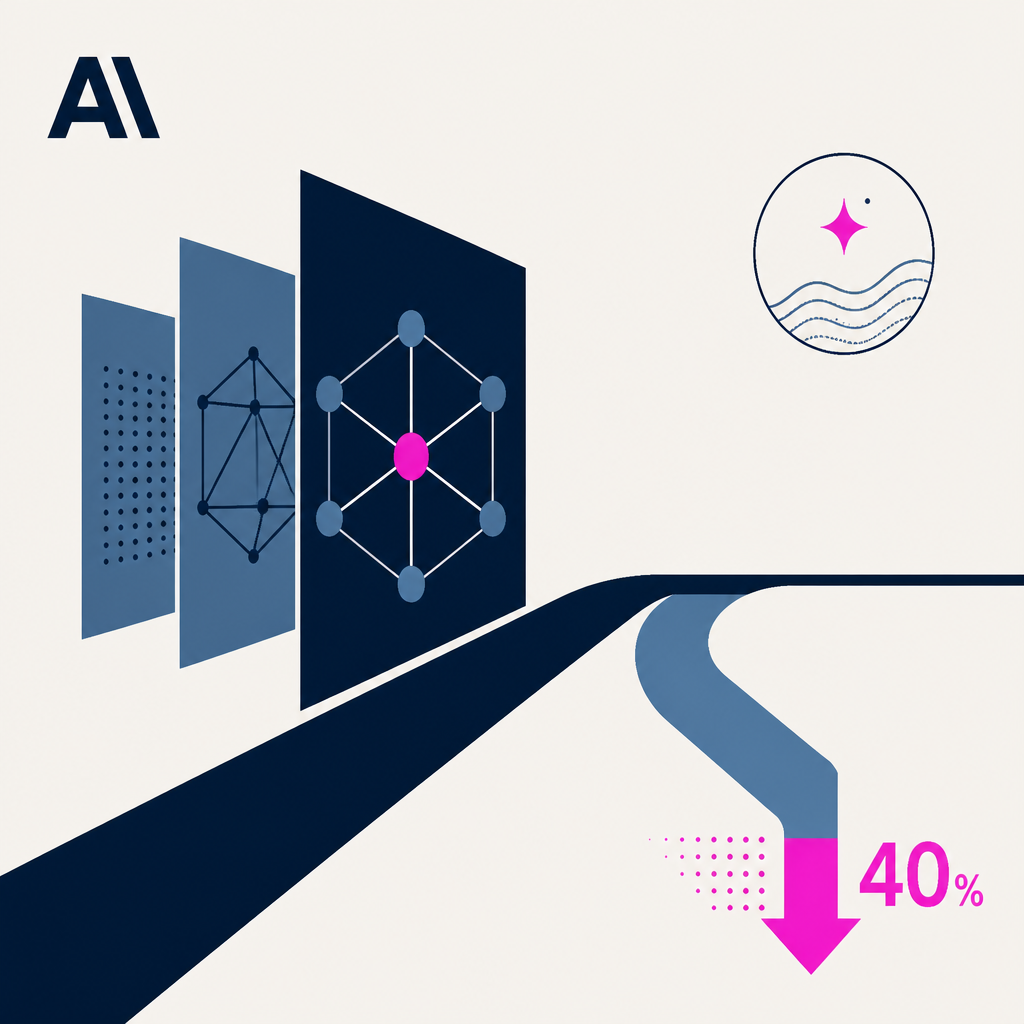
Anthropic released Claude Opus 5.5 while OpenAI launched two cheaper GPT-6 models, Sol and Luna, cutting prices for both vendors’ new systems. Anthropic set Opus 5.5 at $4 per million input tokens and $20 per million output tokens, and also cut cache reads by 60% to 20 cents. Both releases shift model usage toward lower-cost inference and faster/cheaper execution modes for common workloads, with added performance and safety improvements claimed by each company.
Anthropic and OpenAI both released newer model options aimed at cutting inference costs while keeping safety protections in place. Anthropic said Opus 5.5 can deliver about 40% savings on typical workloads at default settings. OpenAI’s GPT-6 Sol and Luna also aim for similar quality with around half the usage cost compared with prior models.
Anthropic released Claude Opus 5.5, positioning it as matching Claude Fable 5.1 on most tasks. Running it on typical default workloads costs 40% less than Opus 5. The update is API-only (no weights), comes with changes like thinking no longer being switchable off, added output watermarking for the EU AI Act, and revised pricing plus higher usage limits for paid plans.
OpenAI’s GPT-6 Sol and GPT-6 Luna were released and are now generally available on Amazon Bedrock for production workloads. The launch includes a claim of “approximately half” as many factual mistakes versus GPT-5.6 Sol, alongside lower API pricing than the GPT-5.6 predecessors. This changes deployment by giving teams two GPT-6 options—higher-reasoning for complex tasks and higher-efficiency for high-volume repeatable work—with support features like prompt caching and Bedrock governance.
OpenAI released GPT-6 Sol and GPT-6 Luna to complement its flagship GPT-6 Astra, with no GPT-6 Terra in the lineup. GPT-6 Sol and GPT-6 Luna cut default prices to $2/$10 and $0.10/$0.50 per million input/output tokens, respectively (down from GPT-5.6 Sol’s $4/$20 and $0.20/$1.20). OpenAI’s changes mean lower token costs, improved prompt caching with up to 90% discounts for cached input, and availability in ChatGPT Work and Codex for paid tiers starting Tuesday (with a gradual rollout).
Anthropic released Claude Opus 5.5 and reduced its API prices while adding a feature that can route certain requests to older models. The new model was priced at $4 per million input tokens and $20 per million output tokens, with cache reads dropping to $0.20 per million from $0.50. Pricing drops and efficiency improve, but some agent traffic may be handled by different model versions due to safety classifier rerouting, which can change downstream behavior and evaluation assumptions.
Anthropic released Opus 5.5 on Tuesday, positioning it as stronger at coding and knowledge work than its larger Fable model. Opus 5.5 output tokens cost $20 per million tokens versus $25 for the previous Opus model. The update lowers pricing and compute, and changes communication behavior by using less jargon and placing key information earlier.
Xiaomi released and open-sourced the MiMo-V2.6 series of natively omnimodal generative AI models, including MiMo-V2.6-Pro and a Flash variant. MiMo-V2.6-Pro supports a 1-million-token context window and the Pro-UltraSpeed variant delivers up to 20 times faster output than Pro at the same quality. The update changes availability and deployment by offering the models via Xiaomi’s AI Studio, MiMo Desktop, MiMo Code, and OpenRouter (with listed per-1M-token and cached-token pricing).
JS Denain of Epoch AI discusses how uncertainty around RSI and AI acceleration relates to AI risk, comparing public evidence from OpenAI and Anthropic with internal metrics they might track. He points to a reported 2X-a-month increase in Codex spending by researchers as the most striking observable sign of value, while arguing it doesn’t prove imminent self-sustaining acceleration or full automation of AI research. The conversation shifts focus from “imminent” RSI claims to slower, trackable indicators and constraints like compute and research understanding bottlenecks.
Ray Dalio says AI will boost productivity while also creating bubble dynamics that worsen wealth inequality and could devastate many people. He points to the dotcom era, noting the Nasdaq rose 86% in 1999 before falling 77% from its peak by October 2002. The debate shifts from whether AI is beneficial to how societies manage investment overreach and distribute gains from AI-driven capital growth.
The article argues that leading frontier AI labs have a temporary 1–2-model lead that functions as a business moat, but rising competition and customer cost pressure will erode their long-term profits. It cites $100B in revenues growing 3x a year and a $1B+ spending pattern for training runs plus $90B spent by Facebook on the metaverse. It concludes that labs may have to broaden into other industries or try to restrict access to their top models, while the biggest uncertainty remains whether systems can achieve recursive self-improvement.
Opaline launched team-wide message-level analytics for Claude Code and Codex sessions. It tracks token cost, time, and skill usage for every message. This lets teams monitor costs and message-by-message behavior across their Claude Code and Codex sessions.
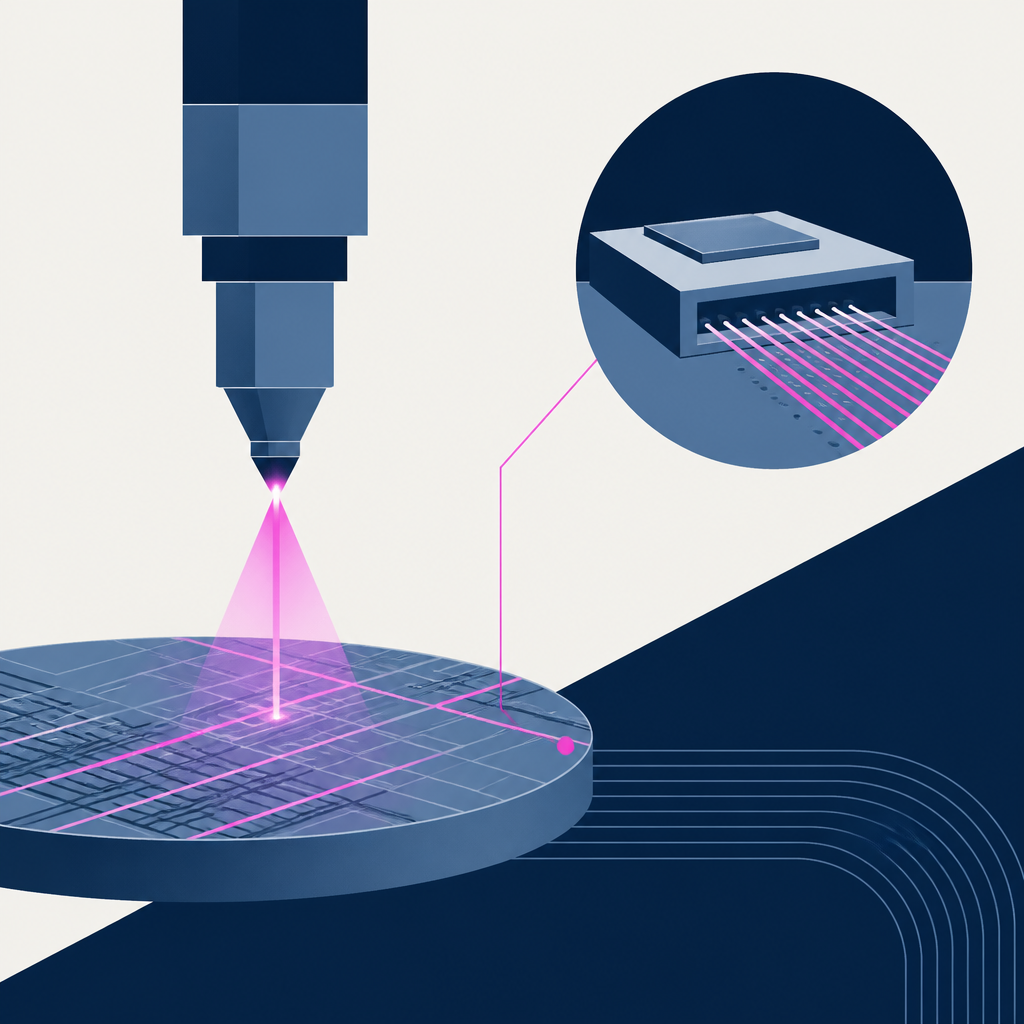
Lightspring closed a seed funding round to develop 3D-lithography optical interfaces that reduce the photonic integrated circuit packaging bottleneck. The round includes €3.1 million led by Atlantic and OVNI Capital, and Lightspring also secured over €3.5 million total financing after a €350,000 i-Lab grant. The company will use the funding to move its 3D optical coupling process from lab to a production-ready manufacturing line and expand its PDK and design tools for industrial volume.
Every AI story that matters,
in your inbox by 8am.
TLDRocket reads all relevant sources, removes duplicate coverage, and summarises the
day in two minutes. Follow companies and topics for alerts, or get the
briefing in Slack. Free, no spam, unsubscribe anytime.
Reading TLDRocket needs no cookies, and the readership counts we rely on come from
our own cookieless analytics. Google Analytics is the exception: it sets cookies and
reports to Google, so it stays switched off until you allow it. You can change your
mind any time from “Cookie settings” in the footer.
Strictly necessary
Session security and form protection (tldrocket-session,
XSRF-TOKEN, 2 hours). The site cannot work without them,
so they need no consent.
Always on
Google Analytics 4 (_ga,
_ga_<id>, up to 2 years). Measures which
stories and sections readers use. Google acts as a third-party processor and may
store the data outside the EU. No advertising, no profiling, no data sold.