AWS’s Strands Agents team released Strands Harness, an open-source agent harness library that runs locally or on cloud providers and can be installed with a single command. It reported 28% lower per-task token cost than other harnesses across 6 benchmarks while keeping near-equal accuracy. The result is that developers can prototype and deploy a general-purpose agent from one create_harness call with shared defaults and customizable components across model backends.
Alberto published Part 2 of a newsletter compiling 11 charts arguing that the financial/economic side of the AI boom could be a bubble rather than immediate real-world success. Hyperscaler capital expenditures are projected to surpass $1 trillion by 2027. The piece shifts readers to interpret AI performance through economic indicators like cancellations, leverage, and cash flow instead of benchmarks alone.
California Gov. Gavin Newsom signed seven bills tightening rules for AI data centers on energy and water use. The package requires data centers to pay for upgrades to local power grids and water systems. The California Public Utilities Commission must create a new data-center rate classification and data centers must disclose estimated water use plus energy efficiency and drought planning.
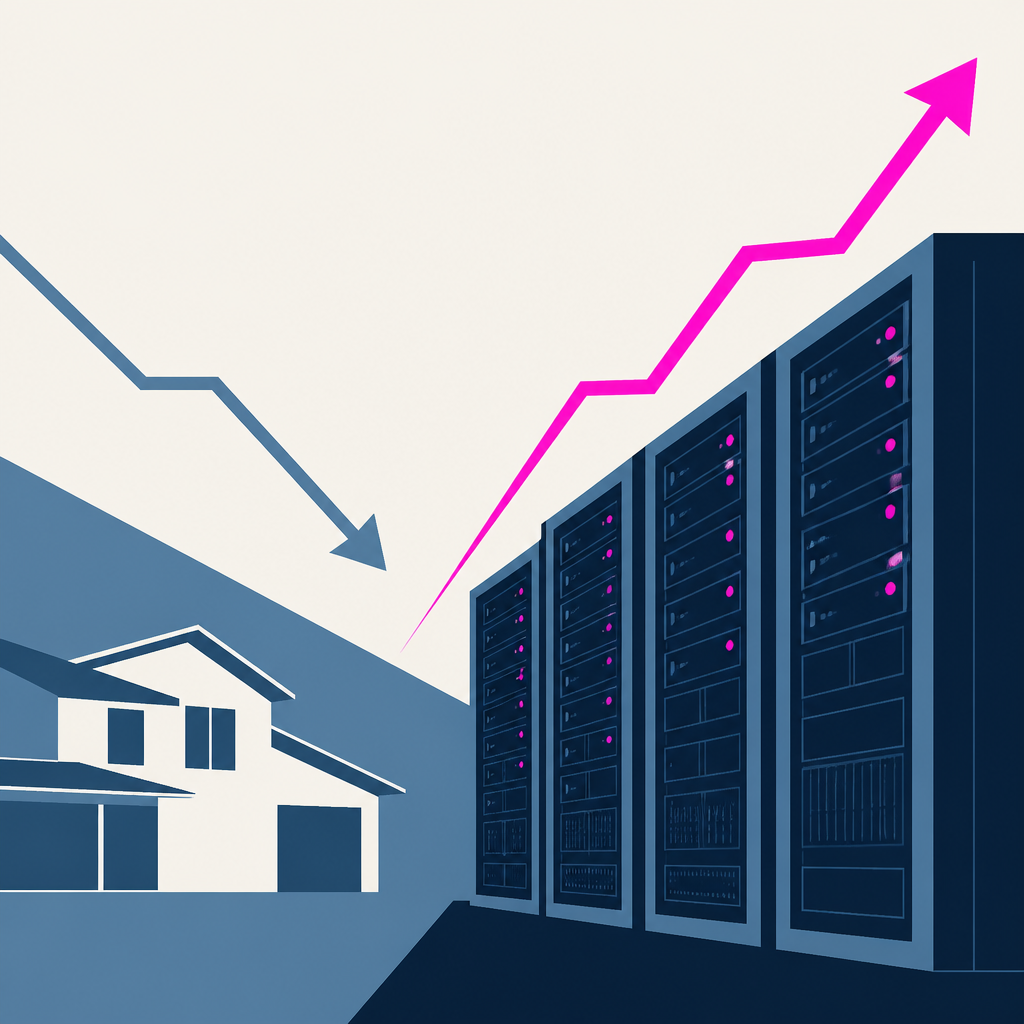
The U.S. economy’s investment focus shifted from residential construction to data-center and computer spending as AI infrastructure build-outs accelerated. Spending on information processing equipment rose 51% to $752 billion while real private residential fixed investment fell 18% to $748 billion. Hyperscalers’ capital expenditures are projected to exceed $1.3 trillion in 2027, with S&P warning this capex growth could lead to overcapacity before revenue catches up and capex flattens by 2028.
Beijing’s economists are alarmed by China’s AI spending, according to The New York Times. The concern is tied to China’s economy being in its worst shape in decades. The issue is raised in the lead-up to Xi Jinping’s US visit.
Every AI story that matters,
in your inbox by 8am.
TLDRocket reads all relevant sources, removes duplicate coverage, and summarises the
day in two minutes. Follow companies and topics for alerts, or get the
briefing in Slack. Free, no spam, unsubscribe anytime.
Reading TLDRocket needs no cookies, and the readership counts we rely on come from
our own cookieless analytics. Google Analytics is the exception: it sets cookies and
reports to Google, so it stays switched off until you allow it. You can change your
mind any time from “Cookie settings” in the footer.
Strictly necessary
Session security and form protection (tldrocket-session,
XSRF-TOKEN, 2 hours). The site cannot work without them,
so they need no consent.
Always on
Google Analytics 4 (_ga,
_ga_<id>, up to 2 years). Measures which
stories and sections readers use. Google acts as a third-party processor and may
store the data outside the EU. No advertising, no profiling, no data sold.