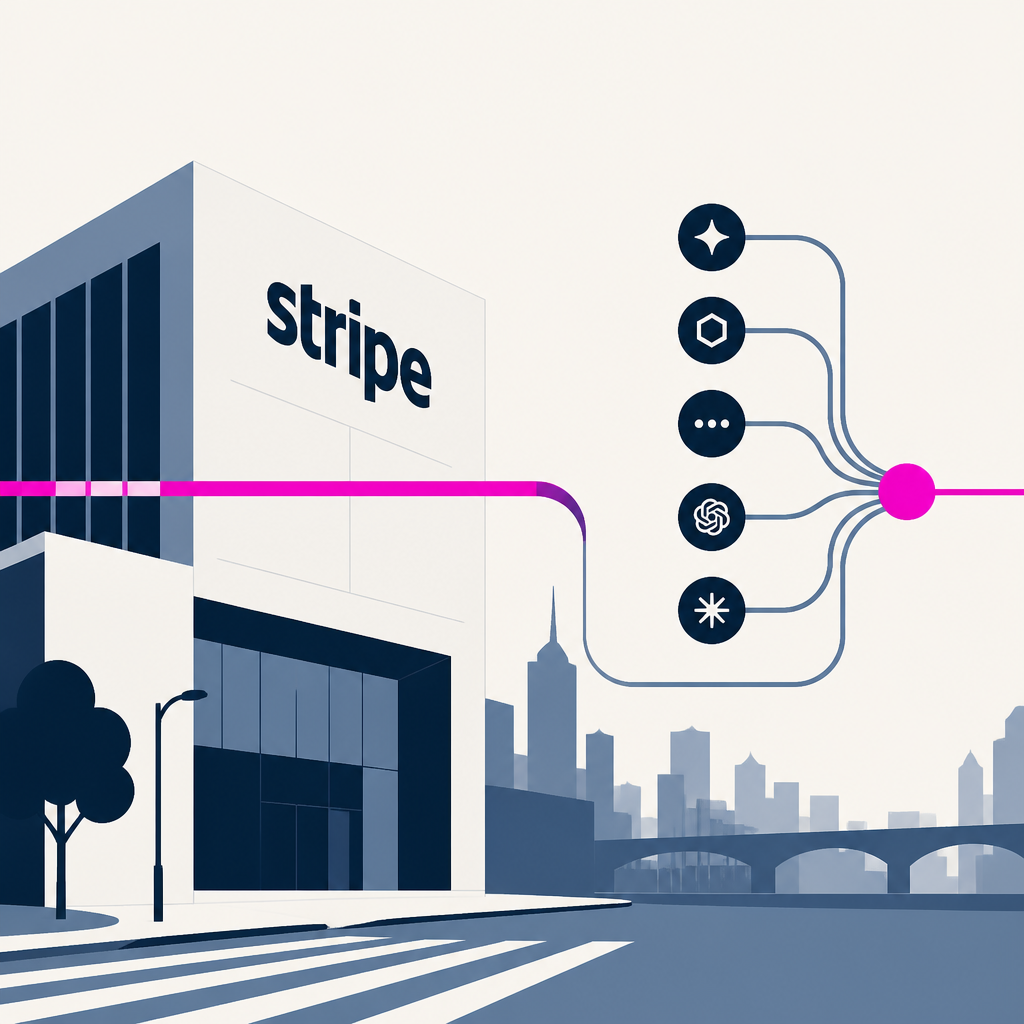
Stripe acquired OpenRouter in a deal reported as essentially closed after months of negotiations. The acquisition price was reported at $7B. OpenRouter’s model-routing layer is now part of Stripe, shifting attention to how that API aggregation layer monetizes within AI infrastructure as competitors push markup toward zero.
ElevenLabs launched a hosted MCP connector that lets Claude inspect and modify ElevenAgents in a chat window, including voice changes, prompt edits, transcript lookup, and agent deletion. The connector was introduced on Monday. This shifts agent configuration from dashboard-only workflows to chat-driven control with added approval, tool-access limits, and optional testing/versioning steps to reduce destructive changes.
Agent Plugins 1.0.0 standardized only the package-level discovery locations for skills and MCP servers, while Anthropic’s separately published Agent Skills and MCP standards are governed by different stewards. The article points to a 9 December 2025 release of MCP donation followed by Agent Skills nine days later, leaving Anthropic out of the plugin governance structure and resulting in limited interoperability guarantees. As a result, clients can claim “conformance” while supporting different component types and transports, and developers still face gaps like unclear schema tooling and client-specific behavior for loading, credentials, and environment resolution.
Speko, a YC S26 startup, launched an API-based router that benchmarks and selects speech-to-text, LLM, and text-to-speech models for voice AI stacks under user constraints.
It charges for the hosted router and managed keys and said that since starting its batch in late June, external usage grew about 25% per week on average.
Teams can switch voice models via a dashboard/API instead of re-integrating, and Speko publishes benchmark results while opening its MIT-licensed gateway for BYOK deployments.
Stripe is set to acquire AI multi-provider OpenRouter for more than $7 billion. OpenRouter’s valuation in its most recent funding round in May was around $1.3 billion. As a result, Stripe is likely to move deeper into AI infrastructure by offering a way to route between models to manage AI costs, latency, and quality without locking into a single provider.
Imejis.io launched a marketing design studio for AI agents via MCP that automates creating production-ready graphics. It’s available to use starting today and is described as free to start. The setup lets agents generate and render assets like OG images, social cards, charts, certificates, and QR codes with deterministic, repeatable output.
Every AI story that matters,
in your inbox by 8am.
TLDRocket reads all relevant sources, removes duplicate coverage, and summarises the
day in two minutes. Follow companies and topics for alerts, or get the
briefing in Slack. Free, no spam, unsubscribe anytime.
Reading TLDRocket needs no cookies, and the readership counts we rely on come from
our own cookieless analytics. Google Analytics is the exception: it sets cookies and
reports to Google, so it stays switched off until you allow it. You can change your
mind any time from “Cookie settings” in the footer.
Strictly necessary
Session security and form protection (tldrocket-session,
XSRF-TOKEN, 2 hours). The site cannot work without them,
so they need no consent.
Always on
Google Analytics 4 (_ga,
_ga_<id>, up to 2 years). Measures which
stories and sections readers use. Google acts as a third-party processor and may
store the data outside the EU. No advertising, no profiling, no data sold.