Anthropic defined the standards inside Agent Plugins. So why isn’t it helping govern the format?
The New Stack Janakiram MSV
Agent Plugins 1.0.0 is out, but Anthropic isn’t on the committee. That leaves the format built on Anthropic’s standards with weaker shared control than you’d expect.
Based on reporting by The New Stack, Janakiram MSV — read the original for the full story.
Summary, retelling and take written by AI under human oversight; images are AI-generated illustrations. How we work · Report an error
Vercel’s Agent Plugins 1.0.0 landed with core maintainers from AWS, Cursor, Microsoft, and OpenAI, and Google said the same day it was joining too. The pitch is simple enough: stop forking the same skill or MCP server every time you want to ship to another client. The catch is that the spec mainly standardizes where things live, not what they do.
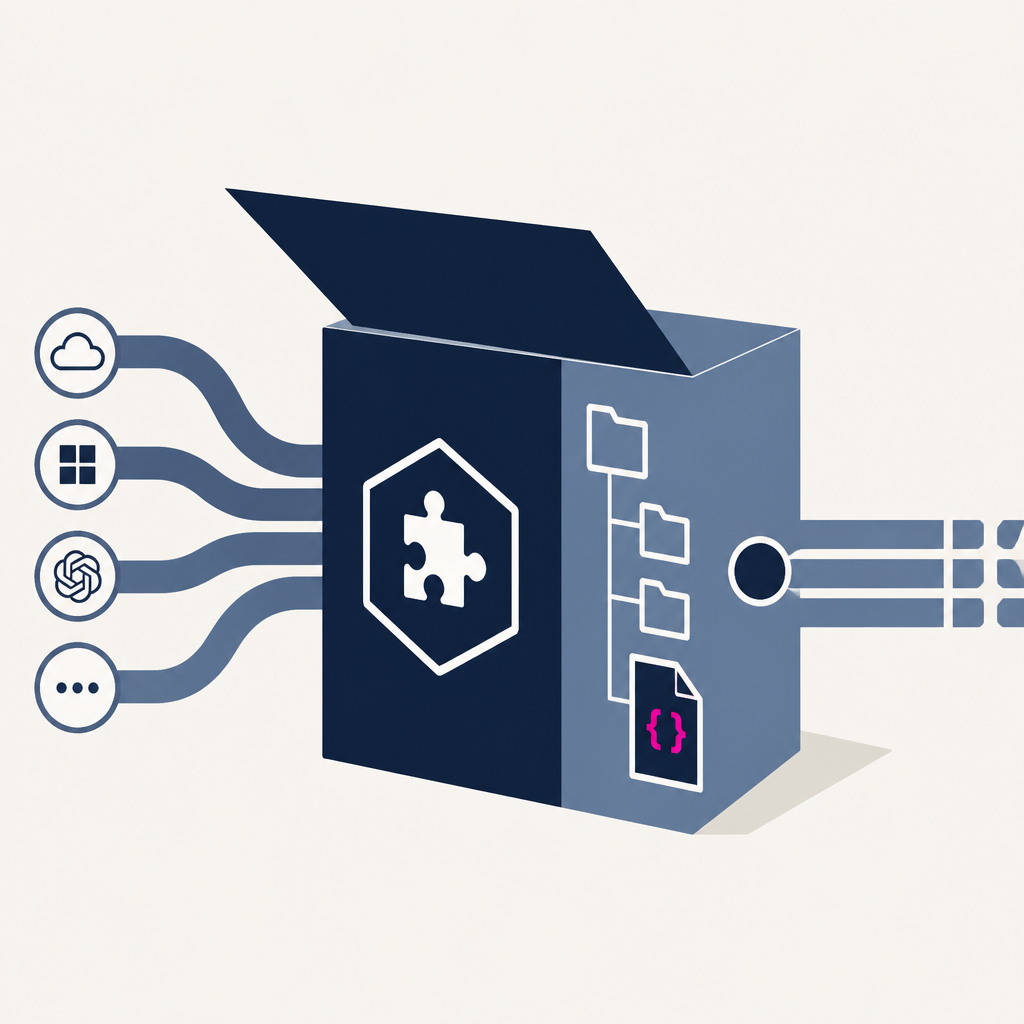
That split matters. The plugin root has a plugin.json file, skills sit under skills/, and MCP servers live in mcp.json. But the actual skill format comes from Agent Skills, and the wire behavior plus lifecycle rules come from MCP. Both standards were released by Anthropic, yet Anthropic does not sit on the steering committee for Agent Plugins.
The governance story is unusually messy for something sold as an interoperability layer. MCP belongs to the Agentic AI Foundation, while Agent Skills is developed in the open without a comparable legal steward. The Technical Steering Committee is made up of people from Amazon, Cursor, Microsoft, OpenAI, and Vercel, and the charter says seats belong to individuals, not companies. Google says it is joining as a core maintainer through Kevin Hou, but the MAINTAINERS file still lists five people. That file, not the press post, is the roster to watch.
And the compatibility story is looser than most people will assume. A conformant client only needs to support at least one component type, skills or MCP servers, and MCP transport support can stop at one of stdio or Streamable HTTP. A client can even skip server entries it does not implement and keep loading the rest. The project’s own compatibility page already lists VS Code, Cursor, GitHub Copilot, ChatGPT, Codex, Kiro, Hermes Agent, OpenClaw, and Grok Bot, but that is a capability matrix, not a promise that every client can run every plugin end to end.
The spec gets even more interesting when you read the fine print. Unknown top-level fields in plugin.json are supposed to be ignored, even though the published schema marks them as invalid. That means the text wins over the machine-readable schema, which is a lovely way to make tooling grumpy. And then there are client namespaces, where vendors can stash whatever they want under extensions or their own directory and the standard deliberately refuses to define behavior. Portable, apparently, until the useful part turns into someone else’s private folder.
Secrets and execution are still client-specific too. The spec says there is no portable OAuth setup, no portable credential reference field, and no secrets mechanism in v1. For stdio servers, even PATH handling is up to the client. So yes, the package format is portable. The setup, the auth, and the runtime environment are where the fork sneaks back in.
My take — AI-written commentary, not fact-checked reporting
This is what happens when a standard is built to avoid offending everyone: it standardizes the wrapper and punts the hard parts. Very efficient, very modern, very likely to produce three different ways to break the same plugin. The real tell is that Anthropic’s own standards power the thing, but the governance is elsewhere; open source with a side of organizational amnesia is a familiar recipe by now.
Read more about this at: The New Stack