Meta launched Muse Wonder and Muse Wonder Full as its most capable models for long-running personal and professional AI agent work, available via its API and Muse Code.
Simon Willison’s Weblog·4 days ago·
41
● 20 sources
The Gemini API and a $100/month subscription plan added support for the Gemini 4 Argon model via llm-gemini 0.35. The article says Argon costs $2/million input and $10/million output at launch, doubling on December 1st. Token-based benchmarking and overall running cost comparisons are expected to matter more as the price changes.
WriterzRoom was listed as a “Launching today” writing assistant product on Product Hunt. It describes an AI workflow automation multi-agent pipeline that runs fully serverless on Google Cloud Run. As a result, users can generate structured, validated, review-ready content that follows vertical controls, template schema, and brand voice.
Anchor Browser, integrated with Amazon Bedrock AgentCore payments, enables AI agents to automatically complete HTTP 402 Payment Required transactions for x402-protected APIs and web pages. The workflow uses an x402 payment exchange where the service enforces spending limits and authorizes payments inside a dedicated PaymentSession created for each browser session. As a result, agents no longer need to build or manage cryptographic payment signing, wallet/key handling, and retry logic in their runtime, and payment attempts become observable via CloudWatch.
Fish Audio launched Drama 3, its latest text-to-speech model for directing expressive voice performances. The model supports multi-character content across 83 languages. It adds natural-language control over emotion and delivery (like pacing, whispers, laughter, and pauses) and is available on the web, mobile, and via API with open weights for self-hosting.
Google released Gemini 4 Argon for developers and enterprises via the API and Google’s apps/platforms. The introductory pricing is $2 per million input tokens and $10 per million output tokens. The availability expands to more users and partnerships, and teams across engineering, cybersecurity, and science describe faster results using the new model.
Google debuted Gemini 4 Argon, making its new flagship model available in the Gemini API (paid tier) and across Google’s developer and consumer tools, with an initial rollout limited to selected Fairwind partners and testers. The model includes a unified 1M token limit that combines input and output in the same budget, and it costs $2 per million input tokens and $10 per million output tokens through November 30. After this shared limit, long prompts reduce the remaining tokens available for responses, and Google’s later description shifts from an output cap to a single input/output budget.
ShipStation Global built Deckhand, an AI-powered IT help desk agent for Slack, using Amazon Bedrock AgentCore to answer routine questions and create or update Jira Service Management tickets. 97.5% of incoming channel queries were resolved and employees gave Deckhand a 96% positive feedback rating. IT support shifts from repetitive Slack threads to on-the-spot self-service responses and fewer ticket-filing workflows that Deckhand can generate in context.
Apple opened preorders for its first smart display, the 7-inch HomeView smart home hub with a display, speaker, and camera tied to the Apple ecosystem and Siri. The HomeView starts at $299 and can show up to nine video feeds at once. HomeView is positioned to act as a family central hub for controlling smart home devices and accessing Apple apps, including Siri generative AI features and Apple Intelligence on supported iPhone or iPad.
Workday connected its Sana AI assistant to TypeSafe’s Jev decision model to assemble HR, finance, and IT user interfaces dynamically instead of generating whole screens. Jev is described as returning answers in 70 to 500 milliseconds. The default UI becomes a Sana home screen where components like hidden-amount cards and date pickers are selected in real time, with uncertain cases routed elsewhere and some functionality reduced when Sana runs inside Claude.
Workday made its Trusted Agent Platform headless, turning its MCP server, live SQL access, and shared agent runtime for HR and finance into generally available components that third-party agents can use. The platform’s MCP server includes 275 read tools and 54 tools that write or delete data. Agents now operate under Workday permissions, approvals, and an audit trail using the customer’s account identity, rather than bypassing controls via external data copies.
American Express introduced the Intent Intelligence Framework to capture and authenticate a customer’s purchase intent before an AI agent completes a transaction. The framework is built into Amex’s ACE Developer Toolkit and uses a Create Intent API as the first step to collect instructions and constraints. This adds Intent IDs and Proof of Intent Tokens so checkout uses a secure credential tied to what the customer authorized, reducing unauthorized or mismatched purchases.
SpaceXAI launched “The X Subscription” that bundles X Premium, Grok, Grok Bot, and Cursor under one set of five tiers. The plan ranges from free to $200 per month, with the entry paid tier starting at $8 and third-party model usage on Cursor no longer included. Developers using non-Grok models such as Claude or GPT now pay standard API rates via prepaid credits starting from their first request, while existing Cursor plans can stay in place temporarily.
Open Intelligent UI released a launch demo where a chat agent renders explanations, comparisons, tools, and maps directly inside the conversation. The launch film runs for 54 seconds. As a result, user requests can trigger either text answers, native components, or sandboxed interactive UIs, with visualization routing handled by Jev and tables/charts produced by A2UI and Open Generative UI.
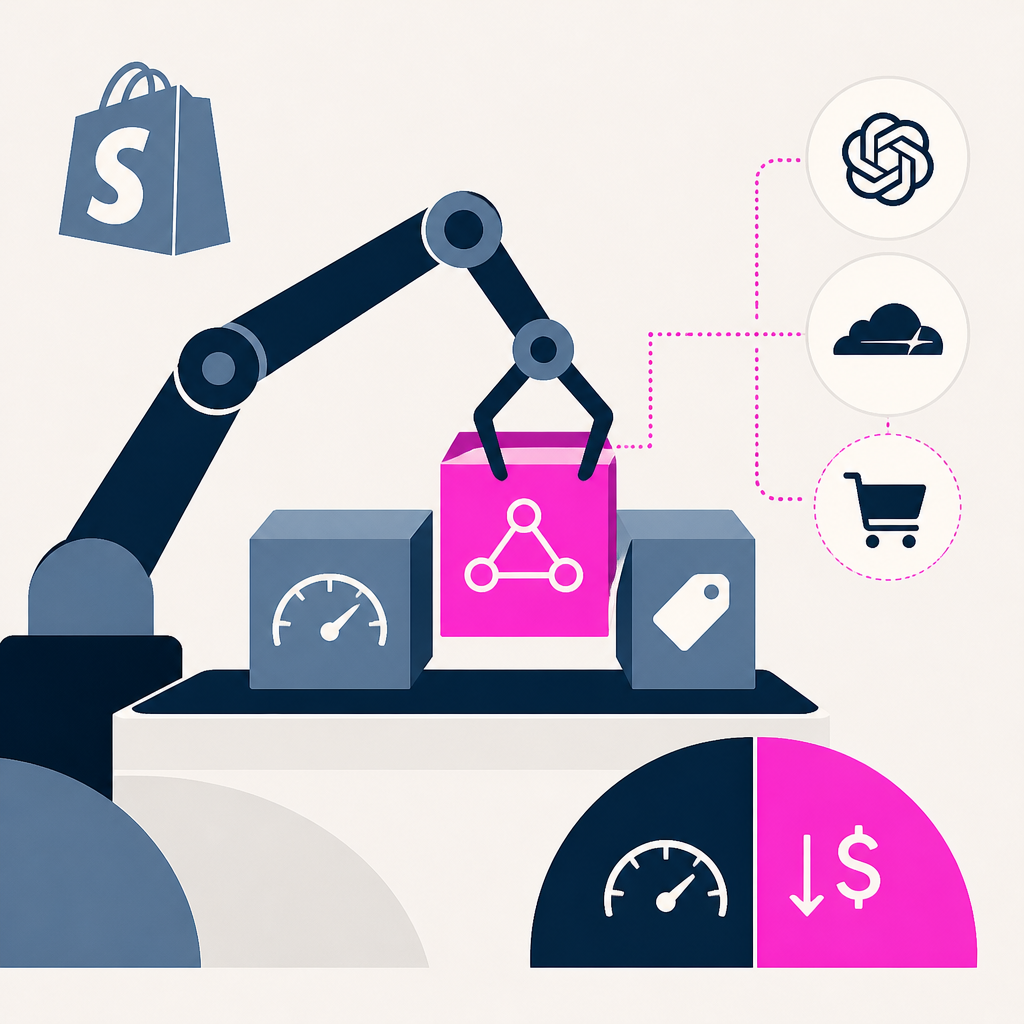
Shopify shipped WebMCP storefront tools to production and the post says additional support (including Checkout) is now arriving alongside growing third-party interest such as OpenAI and Cloudflare support. In the cited experiments, WebMCP was reported as 2.7x faster and 58% cheaper than other approaches, with 60 out of 60 successful Checkout attempts versus 56 out of 60 with browser automation. The change is that sites can register JavaScript tools with schemas for agents to call directly, improving co-browsing speed/UX and shifting agent–web interaction toward “direct tool calls” while driving ongoing work on permissions, monitoring, testing, and safety signals.
Meta launched Muse Wonder and Muse Wonder Full as AI agent models in its product lineup.
Muse Wonder Full is available only to Muse Code subscribers.
Meta’s offerings add Active Memory to carry personal context and Active Focus to stay on task by trying alternatives, handling blockers, and requesting clarification.
Google launched Gemini 4 Argon as its frontier model for long-horizon software engineering, enterprise knowledge work, and cybersecurity defense. As of Oct 13, it is available globally in the Gemini API paid tier, AI Studio, the Gemini app, and AI Mode in Search with a 1M unified input and output token limit. It moves the model into multiple Google products and paid developer access with a specified token cap for longer tasks.
Lleverage launched an AI workflow automation product that uses agents to process manufacturer, wholesaler, and distributor paperwork by reading orders and invoices from email and PDF and posting verified entries to existing ERP systems. It launched today. The back-office workflow shifts so staff handle only exceptions while approvals and an audit trail are kept, and the ERP remains the system of record with no data migration.
Razorpay launched SlashDocs as a self-hosted, open-source collaboration hub for AI agents that let them publish and update interactive HTML documents with team feedback. It is Razorpay’s 17th launch. This shifts agent workflows from plain text and scattered Slack/email feedback to commenting directly on the live document with in-place updates.
Every AI story that matters,
in your inbox by 8am.
TLDRocket reads all relevant sources, removes duplicate coverage, and summarises the
day in two minutes. Follow companies and topics for alerts, or get the
briefing in Slack. Free, no spam, unsubscribe anytime.
Reading TLDRocket needs no cookies, and the readership counts we rely on come from
our own cookieless analytics. Google Analytics is the exception: it sets cookies and
reports to Google, so it stays switched off until you allow it. You can change your
mind any time from “Cookie settings” in the footer.
Strictly necessary
Session security and form protection (tldrocket-session,
XSRF-TOKEN, 2 hours). The site cannot work without them,
so they need no consent.
Always on
Google Analytics 4 (_ga,
_ga_<id>, up to 2 years). Measures which
stories and sections readers use. Google acts as a third-party processor and may
store the data outside the EU. No advertising, no profiling, no data sold.