Amazon Bedrock now integrates computer vision, AI agents, and the Model Context Protocol to create a unified system where visual information can be captured, understood, and acted upon through a single interface. The solution combines Amazon Rekognition for object detection, Amazon Nova for video analysis, and Claude models for image interpretation, with support for images up to 200 MB and video formats including MP4, AVI, and MOV. This architecture eliminates the need to manage separate integrations between perception, decision-making, and action systems, making visual AI capabilities more accessible to developers building applications on AWS.
The Linux Foundation formally launched the X402 Foundation in April 2026 to standardize internet-native payments for transactions between AI agents, APIs, and applications, joining two earlier governance bodies focused on token costs and safety verification. Over the past 30 days, X402 has processed more than 75 million transactions worth $24.24 million across 94,060 buyers and 22,000 sellers, with major companies including AWS, Cloudflare, Google, and Stripe already implementing the protocol. The standardized payment framework enables AI agents to access services and APIs without pre-registration or account setup, addressing a critical need for autonomous agents operating across the web at scale.
Shippy, an AI agent for maritime domain awareness, was built with a three-part architecture—system prompt ("soul"), task-specific instructions ("skills"), and configuration settings—designed to prioritize reliability over raw model capability in high-stakes operational decisions. The system includes a purpose-built CLI layer that standardizes API calls to prevent subtle bugs, isolated user sandboxes running on Kubernetes for data privacy, and a custom evaluation framework that scores the entire agent against weighted criteria on live data rather than static benchmarks. This approach enables Shippy to serve 70+ countries while maintaining data isolation between users and prevents deployment of versions that regress on guardrails or accuracy thresholds.
A team building model routing for AI agents found that selecting which model to use for each task is not simply a classification problem but requires optimizing across multiple system constraints simultaneously. On the AppWorld Test Challenge with 417 tasks, Claude Sonnet cost $79 total while GPT-4.1 cost $155 despite lower per-token pricing, because Sonnet's cache-read pricing was more efficient for agent workloads that reuse context. Effective routing must balance cost, latency, accuracy, and compliance requirements together rather than treating task difficulty or model speed as isolated variables.
OpenAI released its first branded hardware product, the $230 Codex Micro, a custom mini-keyboard with color-coded keys for monitoring AI agents. The device features six frosted keys that display status updates—white for idle, blue for processing, green for completion, amber for requiring feedback, and red for errors—across up to six concurrent Codex threads. Users can tap the illuminated keys to quickly switch between different AI agent tasks without manually searching for windows on-screen.
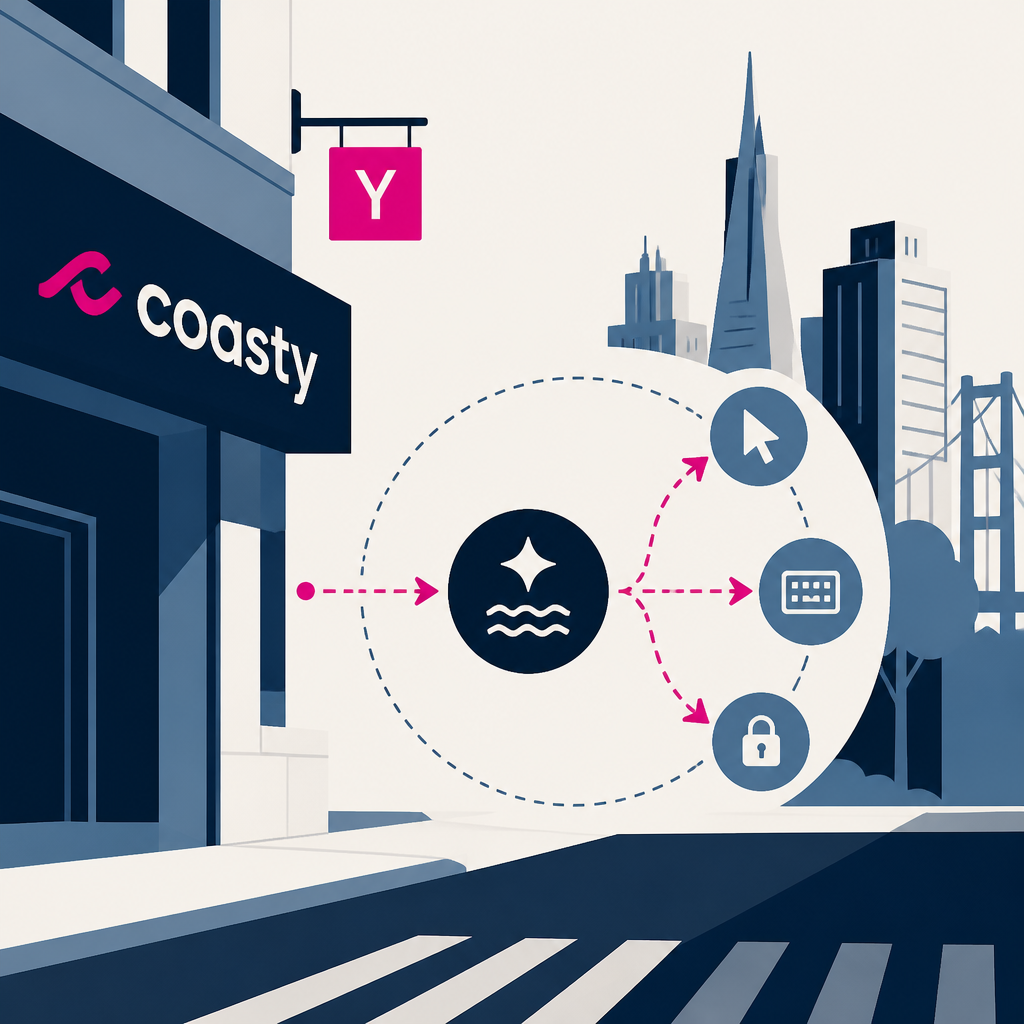
Coasty, a Y Combinator startup, launched an API for computer-use agents that automate workflows in legacy software by observing screenshots and controlling mouse and keyboard input without requiring APIs or DOM access. The system operates in isolated virtual machines and includes features like state tracking, invariant checking, human approval gates, and full audit trails; it currently charges based on agent runtime and workflow volume. This enables automation of tasks like healthcare prior authorizations and accounting data entry where traditional RPA breaks due to interface changes or unexpected states.
Reelful, an iOS app founded by former Snapchat engineer Kate Deyneka, automatically generates short-form social media videos by converting photos and video clips into polished TikTok- and Instagram Reels-style content. The app costs $15 for five videos as a one-time purchase, or ranges from $25 to $100 monthly for subscription plans offering 10 to 60 videos. Users can now create social content without manually selecting clips, recording voiceovers, or editing, though the app is currently iOS-only with Android and web versions planned for the future.
Vint Cerf, who left Google after 20 years, is now advising Innovation Labs to develop open standards for identifying and auditing AI agents operating across the internet. The organization proposes DNSid, a system using domain names and cryptographic proofs to establish agent identities and track their registration over time, and is currently testing it with unnamed hyperscalers. Widespread adoption of agent identification standards will depend on whether they can interoperate across different systems, similar to how TCP/IP became the internet standard through user pressure.
A researcher proposes 'Guardian Angels'—personalized LLMs that emulate individual users' values and preferences to amplify productivity and provide security against AI-powered attacks, arguing current chatbots are fundamentally misaligned with users and designed for replacement rather than augmentation. The approach combines dynamic evaluation, active learning, and continuous user feedback to create AI agents that remain under human control and learn user-specific patterns, addressing the principal-agent problem by unifying principal and agent goals. This shifts work from 'what and how to do things' to 'what is worth doing,' enabling users to deploy multiple specialized agents for productivity and security while maintaining strategic oversight.
Venezuelan programmers and diaspora developers used AI tools like Claude and facial recognition software to rapidly build websites for missing-person reports, aid coordination, and damage assessment after earthquakes killed over 3,800 people, filling gaps left by slow government response. Key sites included Desaparecidos Terremoto Venezuela which received 30,000 reports in two days, Ayuda en Camino built in four hours, and Somos Acompañamiento with over 84,000 registrations. The civilian-led AI platforms became the primary source of disaster information, though experts warn they cannot replace government responsibility and must include stronger data privacy protections for sensitive biometric information.
ClawTeams is a platform that orchestrates multiple AI specialists through messaging apps like Slack and Teams to break down tasks, execute work in parallel, and deliver finished outputs after quality checks. The platform serves 12,000+ teams that have completed 1.2 million tasks, with users reporting an average of 68% time savings compared to doing work by hand. Users assign work by mentioning the AI lead in chat, which coordinates specialists across content, data analysis, compliance, and other domains without requiring users to switch tools or write detailed prompts.
Framer released AI agents that operate directly on its web design canvas, allowing designers to generate and refine layouts, manage content management systems, and write code while maintaining full control over changes. The CMS agent can import and organize content (demonstrated with 47 WordPress blog entries mapped automatically) and connect to external tools including Slack, GitHub, and Claude Code for publishing and content updates from any platform. This enables designers and developers to manage site design, content, and code through a unified interface rather than switching between separate applications.
Every AI story that matters,
in your inbox by 8am.
TLDRocket reads all relevant sources, removes duplicate coverage, and summarises the
day in two minutes. Follow companies and topics for alerts, or get the
briefing in Slack. Free, no spam, unsubscribe anytime.
Reading TLDRocket needs no cookies, and the readership counts we rely on come from
our own cookieless analytics. Google Analytics is the exception: it sets cookies and
reports to Google, so it stays switched off until you allow it. You can change your
mind any time from “Cookie settings” in the footer.
Strictly necessary
Session security and form protection (tldrocket-session,
XSRF-TOKEN, 2 hours). The site cannot work without them,
so they need no consent.
Always on
Google Analytics 4 (_ga,
_ga_<id>, up to 2 years). Measures which
stories and sections readers use. Google acts as a third-party processor and may
store the data outside the EU. No advertising, no profiling, no data sold.