Andrew Ng released OpenWorker, an open-source desktop application that functions as an AI agent producing finished work deliverables rather than chat responses. The system runs locally on a user's machine with a four-layer architecture comprising a Tauri 2 desktop shell, Python FastAPI server, tool connectors, and a model router supporting 30 curated language models including OpenAI, Anthropic, Google, and local options via Ollama. Users gain control through a typed permission system that classifies actions into four risk levels and offers five permission modes, with all conversations and credentials stored locally rather than in the cloud.
AegisAI, a startup founded by former Google security executives, raised $36 million in Series A funding to deploy AI agents that detect spear phishing and other email-based attacks that evade traditional rule-based systems. The company has already secured dozens of customers including LangChain and Mash, bringing total funding to $49 million. The startup's AI-driven approach aims to replace legacy email security vendors by catching sophisticated, personalized attacks that existing tools miss at scale.
Motorway and AWS built an evaluation pipeline for an AI agent that helps car dealers search vehicle inventory using natural language queries, reducing incorrect results from 1 in 8 to 1 in 50. The pipeline combines the Strands Agents SDK with Amazon Bedrock AgentCore and uses a three-layer framework assessing tool usage (>95% pass threshold), reasoning (>85%), and output quality (>90%), plus a five-stage deployment process with quality gates. Organizations can now catch agent failures before production and during runtime, with test case management and multi-trial evaluation metrics ensuring consistent behavior across repeated interactions.
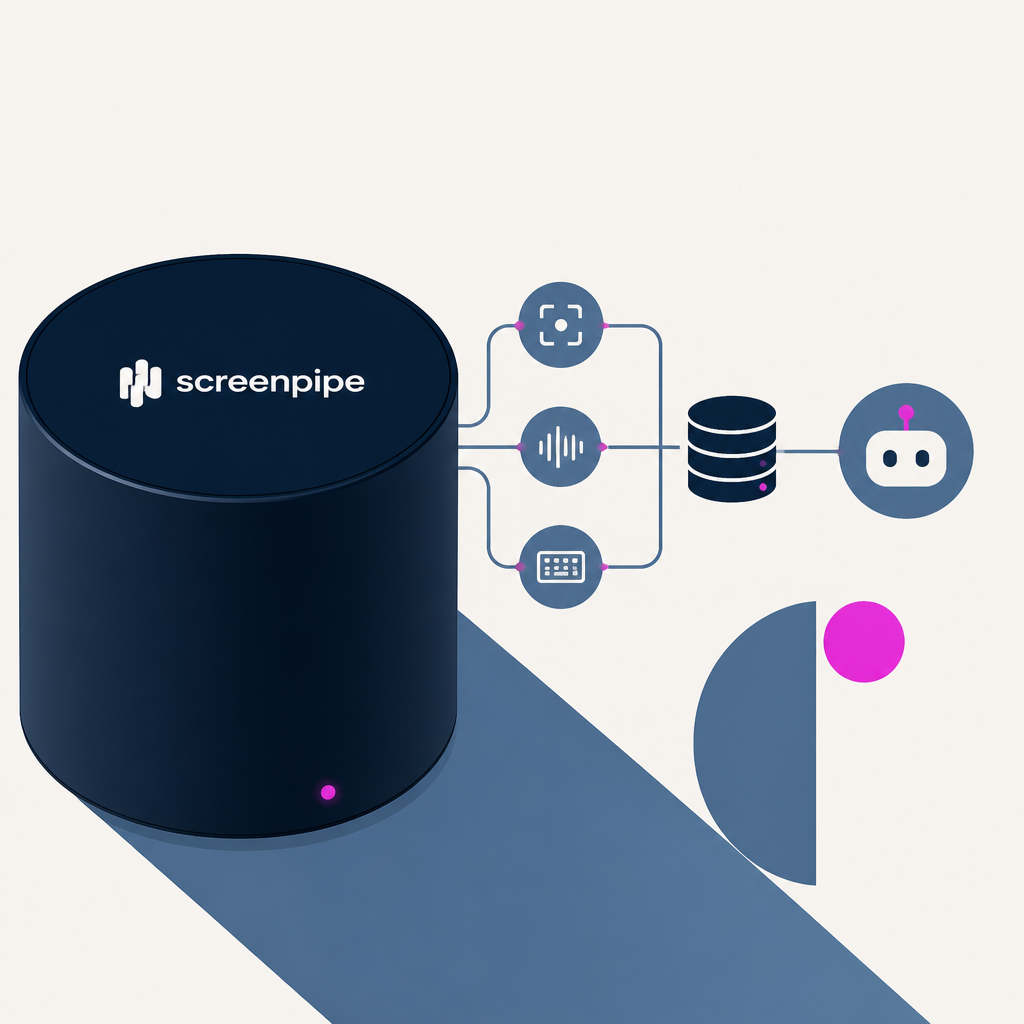
Screenpipe records screen and audio locally to create a searchable memory for AI agents, enabling automation of repetitive tasks and building persistent knowledge bases. The app captures OS events paired with screenshots and transcribed audio into a local SQLite database, with an API on port 3030 for agents to query and act on the data. Users can now retrieve work history, auto-update CRMs, maintain personal wikis, and identify automation opportunities without sending raw video or audio to the cloud.
Amazon Bedrock AgentCore optimization provides observability tools to detect behavioral failures in deployed AI agents, including silent failures that don't generate error signals—such as skipped steps or incorrect outputs that pass system health checks. The system analyzes session traces against 11 behavioral failure categories, clusters failures by root cause, and ranks them by proportion of affected traffic, helping developers distinguish systematic issues from edge cases. This shifts agent monitoring from reactive trace inspection to proactive pattern detection, enabling teams to prioritize and fix the failures that affect the most users.
Amazon Bedrock Managed Knowledge Bases now offers agentic retrieval through the AgenticRetrieveStream API, which decomposes multi-part questions into sub-queries and iterates over retrieval rather than returning results from a single similarity search. The API costs $4 per 1,000 agentic retrieval calls plus $1 per 1,000 underlying Retrieve API calls when using the managed model. This approach improves performance on comparative, exploratory, and multi-knowledge-base queries by letting a foundation model plan retrieval steps and judge when sufficient evidence has been gathered, replacing custom agent frameworks previously needed for such questions.
OpenAI launched Presence, an enterprise platform for deploying AI agents with built-in governance controls across business workflows. The product includes configurable policies and guardrails to enable supervised AI deployment. Companies can now integrate AI agents into operations while maintaining oversight and safety boundaries.
Cloudflare Durable Objects combine serverless V8 isolates with paired SQLite storage and automatic request routing by ID, making them well-suited for building agents and stateful applications. The author has built multi-agent workloads for roughly $10 per month on Durable Objects compared to $100–500 monthly on AWS, and highlights benefits including native WebSocket support, single-threaded concurrency, minimal local development setup, and token efficiency for AI coding agents. However, Durable Objects present tradeoffs including complexity around blocking concurrent requests, limited language support beyond TypeScript, missing Node.js APIs like HTTP/2, schema migration challenges, and inability to run on customer clouds, pushing some developers toward alternatives like Restate or Rivet.
WebMCP is a web standard that lets pages register JavaScript functions for AI agents to call instead of scraping the DOM, with Chrome running an origin trial and Lighthouse audits, but adoption remains near zero and no mainstream AI agent yet consumes the tools. Chrome's origin trial runs from version 149 through 156, with Google planning Gemini in Chrome to be the first mainstream consumer in late 2026. Once agents arrive, websites adopting WebMCP will have cleaner integration points and better visibility into agent interactions, while Lighthouse's eventual enforcement of form-coverage audits will likely drive broader adoption in 2027.
Google's Gemini Task Automation feature is officially launching on Samsung's new foldable phones after a beta period. The feature now supports integration with more than 40 apps on these devices. Users of Samsung's latest foldables gain access to automated task capabilities powered by Gemini AI.
Anthropic released Claude Mythos 5 and Claude Fable 5, with Mythos designed for unrestricted use by select partners and Fable implementing safety restrictions that degrade performance on cybersecurity, biology, chemistry, and AI-building prompts. Claude Fable 5 achieved top rankings on Artificial Analysis Intelligence Index benchmarks including software engineering and knowledge work tasks. The restricted capabilities sparked criticism from developers but Anthropic modified the approach to notify users when performance is degraded, balancing capability with safety concerns.
telli, a Berlin-based AI startup founded in 2024, raised $15 million in seed funding led by redalpine to expand its platform that deploys AI agents handling customer interactions across voice, chat, SMS, WhatsApp and email. The company's AI agents currently process millions of customer conversations for businesses ranging from SMEs to enterprises, handling tasks like support inquiries, lead qualification, appointment booking and service requests. The funding will support expansion of engineering and go-to-market teams while further developing Charlie, telli's core AI coworker that helps customer operations teams build and optimise AI agents across multiple channels.
Every AI story that matters,
in your inbox by 8am.
TLDRocket reads all relevant sources, removes duplicate coverage, and summarises the
day in two minutes. Follow companies and topics for alerts, or get the
briefing in Slack. Free, no spam, unsubscribe anytime.
Reading TLDRocket needs no cookies, and the readership counts we rely on come from
our own cookieless analytics. Google Analytics is the exception: it sets cookies and
reports to Google, so it stays switched off until you allow it. You can change your
mind any time from “Cookie settings” in the footer.
Strictly necessary
Session security and form protection (tldrocket-session,
XSRF-TOKEN, 2 hours). The site cannot work without them,
so they need no consent.
Always on
Google Analytics 4 (_ga,
_ga_<id>, up to 2 years). Measures which
stories and sections readers use. Google acts as a third-party processor and may
store the data outside the EU. No advertising, no profiling, no data sold.