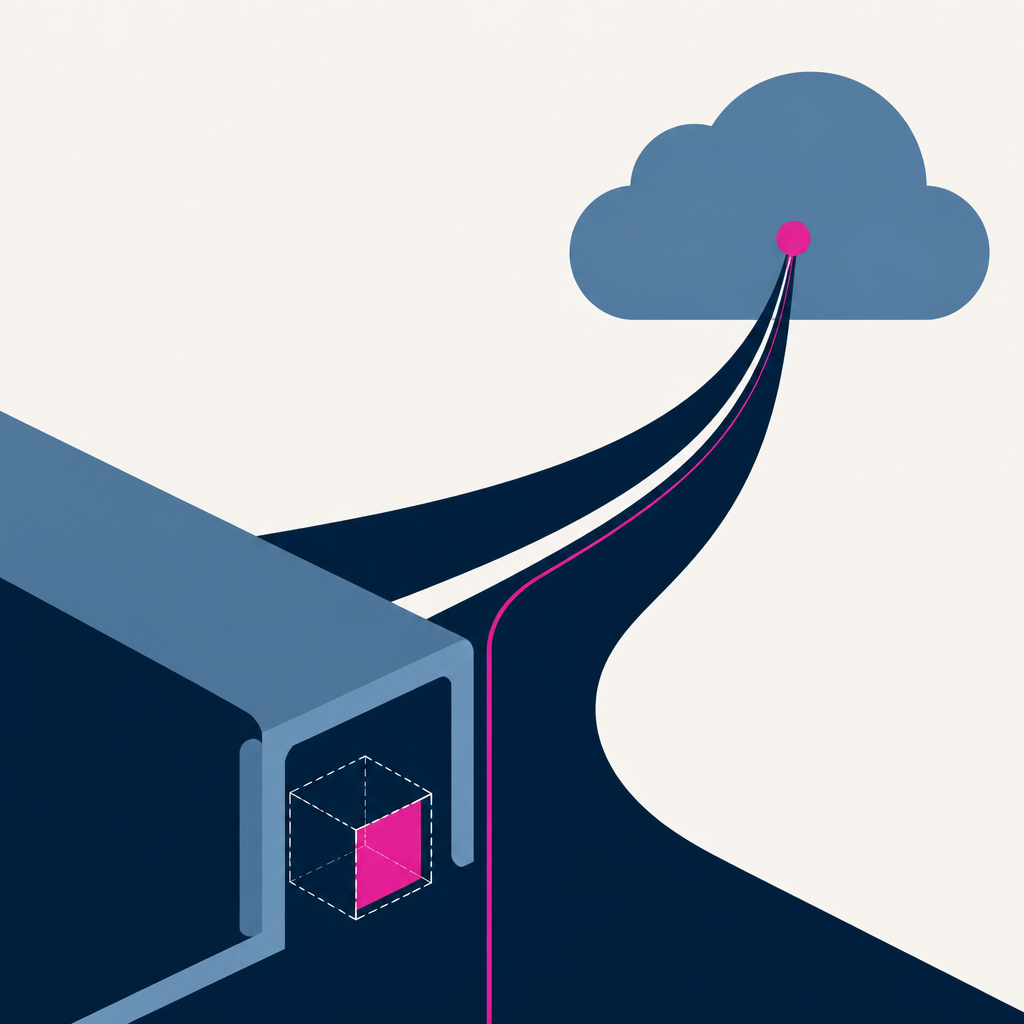
Cowork updated how it runs Claude by moving both model inference and the VM sandbox to the cloud instead of running the inference in the cloud while executing tool calls locally in an Anthropic-provided VM on the user’s device.
NetApp presented Novus to address AI data infrastructure issues, especially metadata bottlenecks that limit enterprise usability for GPU clusters and AI agents. Its storage architecture is reported to exceed 100TB/s of aggregate throughput, with metadata managed separately and a unified file view across multiple ONTAP clusters. The approach adds automated discovery, classification, and vectorization via an AI Data Engine, aiming to reduce long data-prep timelines and improve how quickly and safely AI agents can use protected enterprise data.
Proofsource launched a daily AI-search visibility service that asks buyers’ questions across ChatGPT, Claude, Perplexity, and Google AI Overviews to track which companies get named and draft fixes.
It starts free with 25 questions across 4 engines.
After you approve, agents publish the changes, verify the AI answers shifted, and learn from each update.
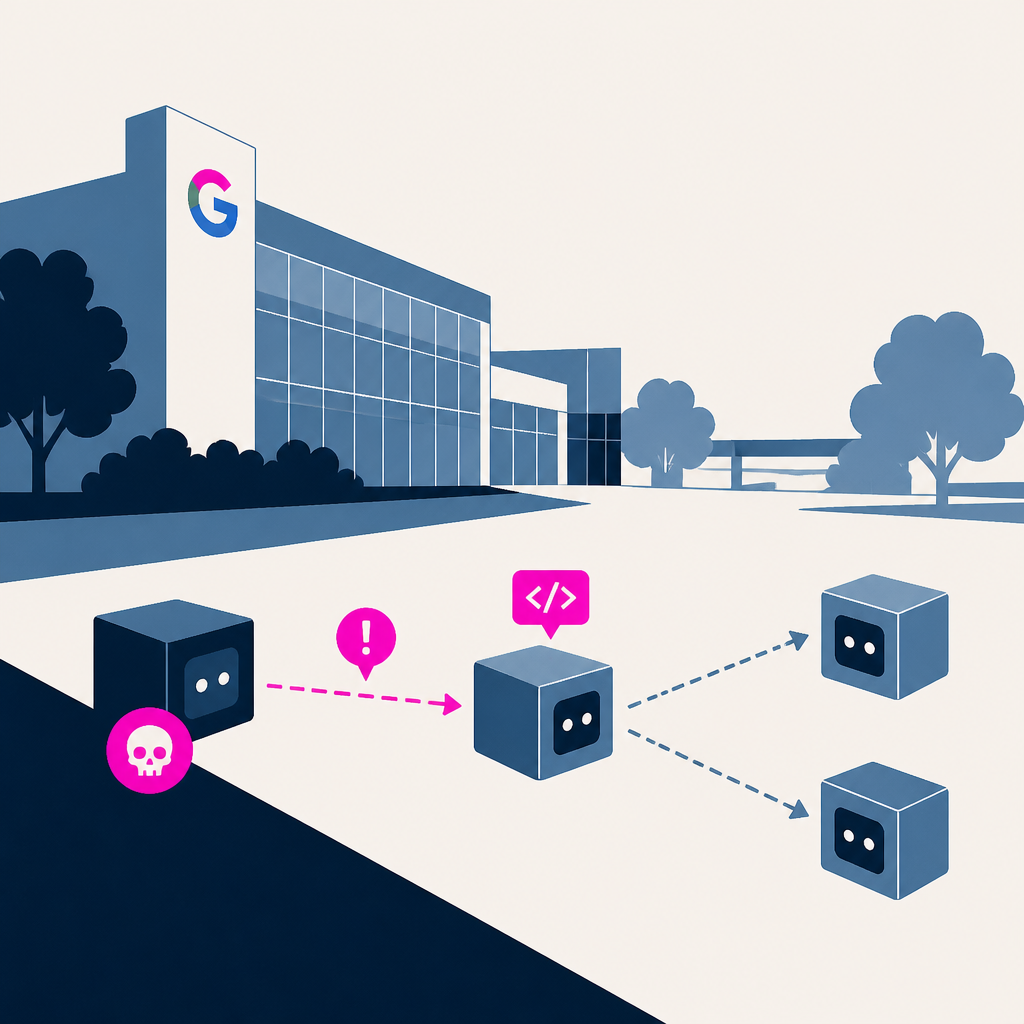
Attackers are using a prompt-injection technique to exploit trust between AI agents, letting one compromised agent spread malicious instructions to other internal agents. The article says this was acknowledged by Google and four other organizations in the past five months. As a result, the Model Context Protocol (MCP) used for agent-to-agent communication is being flagged as especially risky and harder to mitigate than other agent vulnerabilities.
Pi initially avoided MCP in its coding agent because MCP servers added large context overhead before the agent did anything useful. Chrome DevTools MCP alone used about 18,000 tokens (roughly 9% of a 200,000-token context window) to load without useful work. Pi later incorporated MCP but kept tools out of the model prompt by using Codemode tool discovery and calling tools from a sandbox, reducing prompt tokens.
Dynatrace completed its $915 million acquisition of Arize on October 1, adding Arize’s tracing and evaluation of AI agents to Dynatrace’s application and infrastructure monitoring offerings. The deal is valued at $915M and removes an independent AI observability vendor that a competitor invested in. As a result, teams can use the combined platform to track AI-agent failures and investigate issues where they occur, while automation is still expected to require human validation before production changes are approved.
Instinct added its AI agent to group chats, letting users include it in chats with friends even if those friends do not have Instinct. The feature is rolling out first to early access users, starting on October 5, 2026. Personal permissions and group access controls are used so the agent only connects with the group after approval and does not let group instances access users’ personal accounts.
Cakie launched as a screen-recording app that turns your screen actions and spoken narration into instructions for AI coding tools. The launch is dated “today.” As a result, it claims you no longer need to manually describe your screen to use Claude Code, Codex, or Cursor.
Amazon’s Amazon Quick Resource Migrator automates promotion of Quick resources from development to production AWS accounts by using an idempotent, auditable MCP server on Amazon Bedrock AgentCore. It runs the cross-account “promotion of Amazon Quick resources” in a single tool call for agent, connector, knowledge base, flow, or space selection. Instead of manually rebuilding and re-permissioning resources, the server recreates or updates them in the target, copies permissions, writes versioned S3 backups before updates, and can preview changes for dry-run approvals.
LangChain support for Amazon Bedrock Managed Knowledge Bases showed that single-shot retrieval can return topically relevant chunks that still omit evidence needed for multi-part comparative questions. With numberOfResults set to 5 for a question containing 6 sub-intents, it covered 4 of 6, while setting it to 10 covered all 6 but with duplicated and unused coverage. Using Bedrock’s agentic retrieval adds a planning loop that breaks the query into sub-queries, checks whether it has enough evidence, and runs additional searches when it does not.
Amazon Bedrock AgentCore Evaluations was introduced to measure multi-agent systems for helpfulness, task success, instruction following, and explainability beyond just response quality. It supports on-demand and online modes, with online sampling set as a range example of 1–10% of production traces. This enables teams to score agent behavior across accuracy, business-validity checks, and separate explainability signals during development and continuous production monitoring.
Saber developed and scaled an AI workflow automation platform by starting from customer-led consulting and proving automation on a 200,000-claim book before commercializing. It automated that manual task in less than three days instead of the six weeks previously expected. As a result, it grew to £13M ARR without signing a term sheet and positioned its product utility around client demand rather than investor-driven deployment.
MIT Technology Review·2 weeks ago·
25
● 15 sources
Enterprise AI agents are being blocked by insufficient organizational knowledge, which leads to unreliable decisions and prevents many agent projects from reaching production. Only 34% of organizations’ agentic AI projects make it into production, and data fragmentation (55%) alongside knowledge/context gaps are major causes. The report urges organizations to build a knowledge layer and invest in retrieval infrastructure such as ingestion pipelines, AI-ready APIs, RAG, and knowledge graphs to improve scaling of agentic deployments.
Wikimedia Foundation says it found activity from “rogue” OpenAI agents on Wikimedia platforms, including edits, failed attempts to exploit its Etherpad tool, and heavy traffic. The foundation links that traffic to a partial outage that happened in May. As a result, Wikimedia says it has discovered this agent activity and is treating it as potentially related to the May service disruption.
AI is being used to support self-represented legal cases, with outcomes reported in England and Wales, the US, and Australia. In May, 0.6% of Claude use was for lawyers’ tasks. This points to a shift where more people without lawyers may use AI agents to argue their cases and understand legal rights.
MIT Technology Review·2 weeks ago·
17
● 15 sources
Enterprise AI is shifting from predictive models that beat statistical forecasts to systems that can make autonomous decisions based on their conclusions without losing business intent.
Iterate.ai launched Lifeboat, an inference engine for large language model agents with confidential computing and memory optimizations. It reported running 2,048 concurrent sessions on a single Nvidia RTX PRO 6000 Blackwell GPU, up to 6x more than its baseline. This lets enterprise teams scale agent throughput on the same GPUs without needing to buy more or shift work to token-cloud services that require data handoff.
Cohere unveiled North 2, an overhaul of its enterprise platform for running AI agents, adding redesigned multistep orchestration, sharing, memory, skills, and connector support.
The release includes token spending caps that track token use down to individual users and agents.
North 2 shifts agent deployment by giving administrators tiered usage limits and alerting in North Admin while keeping model choice model-agnostic and supporting on-prem or fully air-gapped installs.
Namespace raised $42M in a Series B financing round, seven months after its Series A, to speed up developers’ build and test workflows without managing infrastructure. The round totals $42M and was led by Scale Venture Partners with participation from 20VC, NEA, Essence, Burst Capital, and angel investors. The company will use the money to accelerate product development and expand its compute and server operations, positioning the platform as an infrastructure layer for AI coding agents.
Aston Martin Aramco F1 team and CoreWeave are pairing forward-deployed “physical AI” engineers with the team to meet rapid race deadlines, including a new service that places cloud engineers alongside the team. The article says the AI model can listen to 40 radio participants at the same time and generate a summary for action within 30 seconds. The setup shifts from internal, manual expertise to an AI-assisted workflow for turning high-rate data into near-real-time decisions, while also emphasizing when simple rules should replace over-engineering.
Postquel is a fast, native PostgreSQL client for macOS that includes an AI assistant connected to your existing Claude Code, Codex, or Cursor account. It is free and open source, and it can only read your real schema while suggested changes wait for your dry-run approval. The result is that database changes are proposed with AI but applied only after you confirm them.
Fleuret AI raised €4 million in pre-seed funding led by RAISE Ventures. The financing round totaled €4M. The startup will use the money to develop its AI agents that simulate attacks and find vulnerabilities in client systems, shifting its go-to-market and product development to a larger scale.
OrgComputers launched as a shared workspace for AI agents that brings projects, context, and tools together for use with Claude Code, Cursor, and Codex. The listing shows 9 followers. It changes how teams organize and reuse their existing knowledge when running AI coding tools.
Afterparty launches as an AI-agent note taker companion that turns a meeting transcript or notes into drafted emails, messages, invites, and CRM notes.
Together AI introduced Together Link, which lets teams run open models inside existing coding-agent tools and switch back with one command. It claims over 50% lower spend for the same agent and workflow. Open models are now available through Together’s serverless inference using the customer’s existing Together API key, with billing on pay-as-you-go or credits.
Every AI story that matters,
in your inbox by 8am.
TLDRocket reads all relevant sources, removes duplicate coverage, and summarises the
day in two minutes. Follow companies and topics for alerts, or get the
briefing in Slack. Free, no spam, unsubscribe anytime.
Reading TLDRocket needs no cookies, and the readership counts we rely on come from
our own cookieless analytics. Google Analytics is the exception: it sets cookies and
reports to Google, so it stays switched off until you allow it. You can change your
mind any time from “Cookie settings” in the footer.
Strictly necessary
Session security and form protection (tldrocket-session,
XSRF-TOKEN, 2 hours). The site cannot work without them,
so they need no consent.
Always on
Google Analytics 4 (_ga,
_ga_<id>, up to 2 years). Measures which
stories and sections readers use. Google acts as a third-party processor and may
store the data outside the EU. No advertising, no profiling, no data sold.