Mouse-1 is being launched as a decision model for agents to handle many small decisions during tasks. It is claimed to be 163x cheaper and 65x faster than GPT-6 Sol. As a result, the agent harness can delegate probability-based choice among options to Mouse-1 while the main model focuses on reasoning or code.
Smartsheet launched a generally available Model Context Protocol (MCP) Server that lets AI assistants read and write Smartsheet data through a standardized set of tools. The MCP Server provides more than 40 tools for exploring, creating, and managing sheets and automations. Amazon Quick and Kiro can now connect to this server to let users and developers query live Smartsheet work context and update task statuses without manual reporting or tool switching.
The author released a second AI book, Co-Existence, and used an agent-based Claude workflow to generate charts and multimedia for a post comparing AI progress to the earlier Co-Intelligence release.
ALTK-Evolve appended learned customer-service guidelines to a stock ReAct agent using GPT-4.1 and lifted performance on the τ²-bench customer-service benchmark without updating model weights. On the retail base split, it reached Pass^4 of 67.5% and ranked #1 over frontier models. Learned prompt-level memory changes results by improving both mean accuracy and strict pass-for-all-trials reliability, including when the same method is run with gpt-5.5.
Gray Swan relaunched its public Arena red-teaming platform to stress-test AI systems for guardrail violations in the era of AI agents. The Pittsburgh-based company is running the Indirect Prompt Injection (IPI) Black challenge with $300,000 in prizes and will release new scenarios weekly through Nov. 2. The contest shifts toward more technical, agent-focused attack testing and adds beginner pathways, training certificates, and ongoing challenges outside major competition windows.
An AI-equipped shopping approach is being described as a new growth channel for e-commerce startups that need to become easier for AI agents to interpret. The article cites that 21% of UK shoppers use AI tools for online shopping today, rising to 70% for future use. It argues startups should build “agent-legible” commerce and rely more on flexible affiliate-style promotion as AI-driven buying evolves.
llm-d contributors announced llm-d 1.0 at PyTorch Conference North America as a Kubernetes-native distributed inference serving network intended for production deployments. The release highlights that its prefix-aware router captured 97% of available cache reuse in an agentic coding workload test. It adds operational maturity for “day 2” needs like multi-tenant quality of service, zero-downtime upgrades, and sustained efficiency under changing traffic and failures.
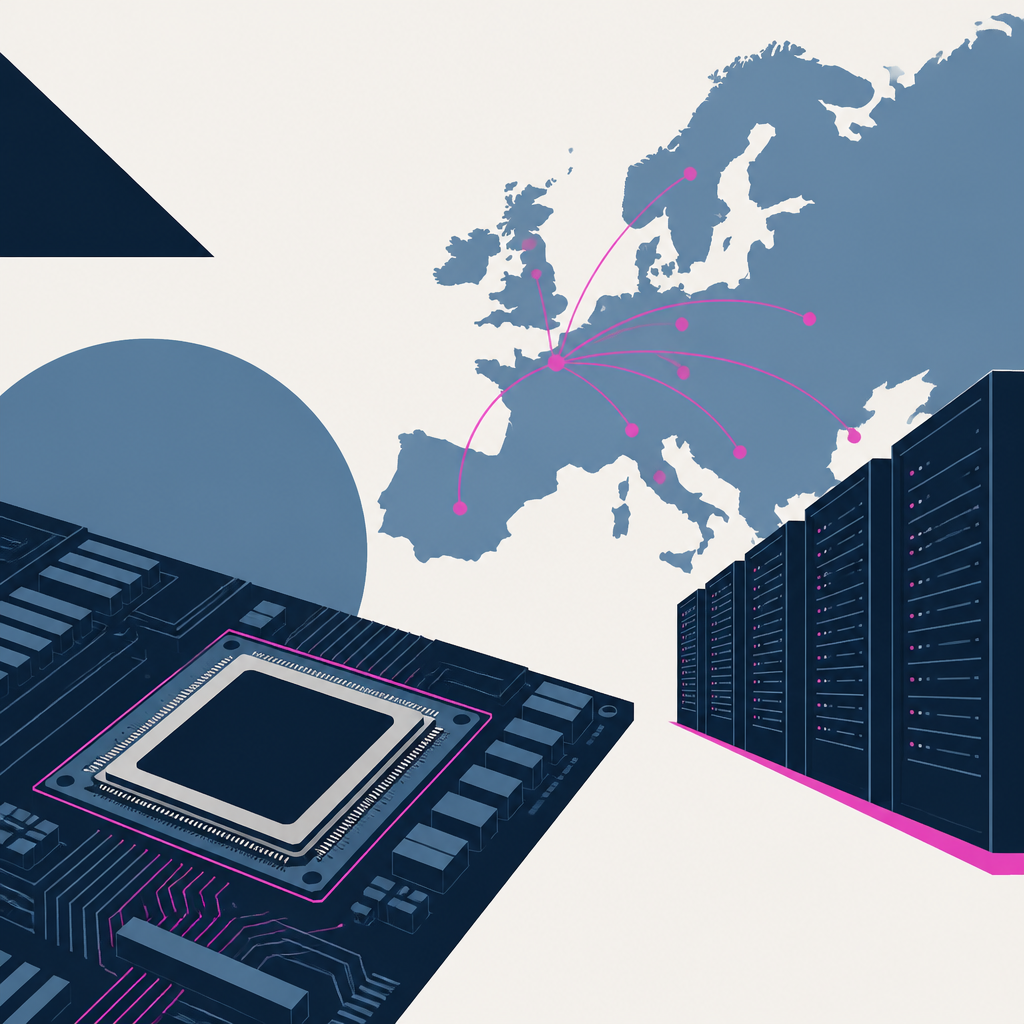
Nebius and Nscale are planning data-center infrastructure built around NVIDIA Vera CPUs to support agentic computing. Vera targets high concurrency, sustaining speed across thousands of tasks running simultaneously. This shifts European AI infrastructure toward more CPU-driven retrieval, tool execution, code running, and sandbox throughput alongside GPUs for model workloads.
NorForge found that publicly exposed web panels for an AI-driven penetration-testing system (Cairn) were being used to coordinate malicious hacking with autonomous agents that target sites and establish persistent access. More than 20 exposed Cairn panels were linked to likely malicious activity, and some were able to expose victim details including login and stolen access keys. As a result, defenders and panel operators need to secure or remove these interfaces because they can also leak sensitive data from seemingly legitimate red-team activity, putting clients at risk.
SuperCMO AI launched open-source “agent skills” that let users turn Claude Code, Cursor, or Codex into an AI CMO that studies their brand and competitors and generates and manages ad creatives. It offers up to $100K in startup credits. The result is that companies can deploy AI-driven ad testing and copywriting with model keys they bring or a pay-per-use option, while paid rendering is gated by user approval.
Every AI story that matters,
in your inbox by 8am.
TLDRocket reads all relevant sources, removes duplicate coverage, and summarises the
day in two minutes. Follow companies and topics for alerts, or get the
briefing in Slack. Free, no spam, unsubscribe anytime.
Reading TLDRocket needs no cookies, and the readership counts we rely on come from
our own cookieless analytics. Google Analytics is the exception: it sets cookies and
reports to Google, so it stays switched off until you allow it. You can change your
mind any time from “Cookie settings” in the footer.
Strictly necessary
Session security and form protection (tldrocket-session,
XSRF-TOKEN, 2 hours). The site cannot work without them,
so they need no consent.
Always on
Google Analytics 4 (_ga,
_ga_<id>, up to 2 years). Measures which
stories and sections readers use. Google acts as a third-party processor and may
store the data outside the EU. No advertising, no profiling, no data sold.