Cerebras CEO Andrew Feldman said AI is nearing a point where it can function as a home appliance with personal assistants that run both on-device and via the cloud. He referenced Instinct, a startup valued at $10 billion, and said the assistants would be able to access credit cards. This framing shifts the focus from general AI use to local “agent” assistants in households, which would require security perimeter-style controls and could enable purchases for users.
Pluto Security raised $42M and said AI tools can be adopted inside enterprise environments within 2 hours of release, creating security risks as non-developers deploy “vibe-coded” apps and components.
About 60% of the risks it detects across customer environments come from tools built by non-developers, including finance teams.
Pluto’s funding will be used to expand its product and research, and to keep shifting security controls toward monitoring and intervening in real-time agent behavior rather than only user activity.
Liquid AI released LFM2.5-24B-A2B, a 24B reasoning model designed to run fast, private agent workflows on-device by activating only 2B parameters per token and using multi-step tool calling. It expanded its context window from 32K to 131K tokens. As a result, the company reports competitive agent-tool performance on LiveClaw (48.09 vs 38.19 for Qwen3.6-35B-A3B) and faster on-device inference (184 tokens/s on an Apple M5 Max) while keeping open-weight availability for local use.
Anthropic researchers reported a self-replication-style AI experiment that used 15 low-cost Android TV boxes running an AI cluster for inference. The setup cost about $825 and achieved 0.39 tokens per second. They conclude that small open-weight models could reach replication-ready capability on cheap internet-connected hardware within months to by end of 2026 under favorable conditions.
Microsoft is creating a new Xbox Labs group to study AI-powered mods that remix and port classic games. The group will focus specifically on mods that use AI models to help remixes. As a result, Xbox is moving from watching these chaotic community ports to actively exploring and supporting them.
Workday connected its Sana AI assistant to TypeSafe’s Jev decision model to assemble HR, finance, and IT user interfaces dynamically instead of generating whole screens. Jev is described as returning answers in 70 to 500 milliseconds. The default UI becomes a Sana home screen where components like hidden-amount cards and date pickers are selected in real time, with uncertain cases routed elsewhere and some functionality reduced when Sana runs inside Claude.
OpenAI’s research organization reports an automated “research intern” milestone where AI agent work overtook human labor this summer. Three point one agent-workdays per eight-hour day of human labor is the key figure, as of mid-August. The work shifts from agents mainly assisting to agents executing multi-day tasks under human direction, while humans still set priorities and decide whether to scale, pause, or deploy.
Meta launched Muse Wonder and Muse Wonder Full as AI agent models in its product lineup.
Muse Wonder Full is available only to Muse Code subscribers.
Meta’s offerings add Active Memory to carry personal context and Active Focus to stay on task by trying alternatives, handling blockers, and requesting clarification.
Memento 3, a frozen-LMM agent, continually updates a natural-language rulebook by observing environment transitions, revising hypotheses, compiling executable prediction/planning code, and verifying code fidelity via replay. It reached a mean Relative Human Action Efficiency (RHAE) of 100.0 on ARC-AGI-3, clearing all levels across 25 public games while using 44% of the human action count. This changes learning by shifting from fixed behavior to validated, recursive self-improvement of an explicit world model without changing the underlying LLM.
Andrej Karpathy said the gap between public awareness of AI and the abilities of the most advanced AI systems is widening, with a much smaller group seeing big leaps in what AI agents can do. He estimated only about 5,000 people have internal access to the most advanced systems. As a result, human review and comprehension are falling behind while advanced capabilities concentrate among professionals who use frontier-grade models.
Meta introduced the Muse Wonder model series—Muse Wonder and Muse Wonder Full—combining Active Memory and Active Focus for agent-style personal and professional tasks. The company says Muse Wonder and Muse Wonder Full were trained at its gigawatt-scale Prometheus data center and are available through the Meta Model API today. The rollout adds new capabilities for memory-, focus-, and coding-heavy agent workflows, plus artifact generation and subscriber-first access to Muse-powered experiences.
Meta Superintelligence Labs shipped its second-generation Muse model family, Muse Wonder and Muse Wonder Full, positioning it as a near-frontier update for agentic work. The launch included quoted pricing of $4 per 1M input tokens (with $20 per 1M output) and a 1M context window. After release, Meta fixed a same-day Muse Code quota-drain bug and published benchmark results where Wonder Full scored 56 on Artificial Analysis’s Intelligence Index v4.3.
Meta’s Superintelligence Labs shipped the Muse Wonder model family, including Muse Wonder and the higher-tier Muse Wonder Full. Muse Wonder Full is priced at $4 per 1M input tokens and is available to Muse Code subscribers. Muse Code’s quotas were temporarily drained due to a usage-limit bug (fixed the same day with a reset), and third-party evaluations report Wonder Full outperforming the prior Muse Spark model on multiple benchmarks.
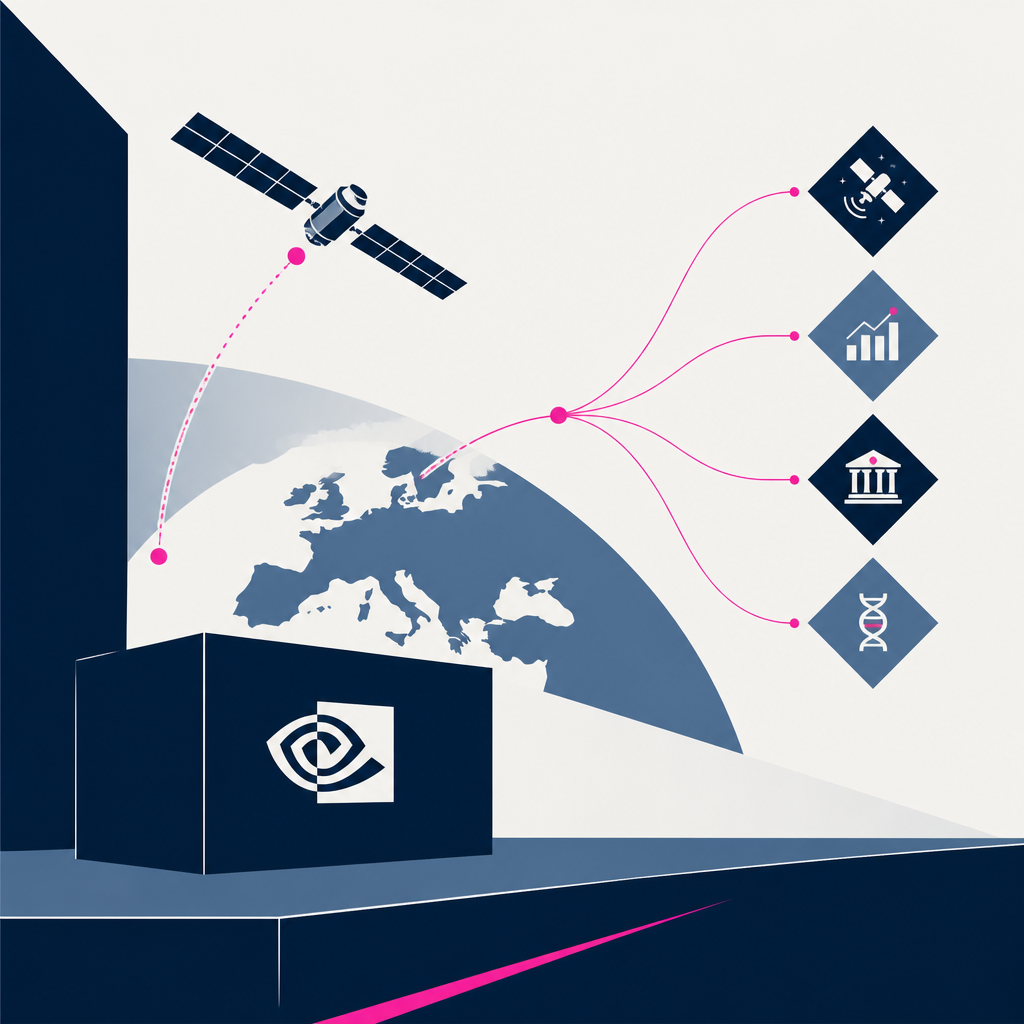
France-based companies are deploying agentic computing across space, finance, public services, and research using NVIDIA technology and models. Altair-1 launched this month as the first satellite in a $1 billion, 50-satellite constellation with on-board autonomous capabilities. The rollout expands from infrastructure and open model production into operational systems like edge satellite AI, sovereign workplace tooling for public agencies, and agent-building platforms for employees.
Every AI story that matters,
in your inbox by 8am.
TLDRocket reads all relevant sources, removes duplicate coverage, and summarises the
day in two minutes. Follow companies and topics for alerts, or get the
briefing in Slack. Free, no spam, unsubscribe anytime.
Reading TLDRocket needs no cookies, and the readership counts we rely on come from
our own cookieless analytics. Google Analytics is the exception: it sets cookies and
reports to Google, so it stays switched off until you allow it. You can change your
mind any time from “Cookie settings” in the footer.
Strictly necessary
Session security and form protection (tldrocket-session,
XSRF-TOKEN, 2 hours). The site cannot work without them,
so they need no consent.
Always on
Google Analytics 4 (_ga,
_ga_<id>, up to 2 years). Measures which
stories and sections readers use. Google acts as a third-party processor and may
store the data outside the EU. No advertising, no profiling, no data sold.