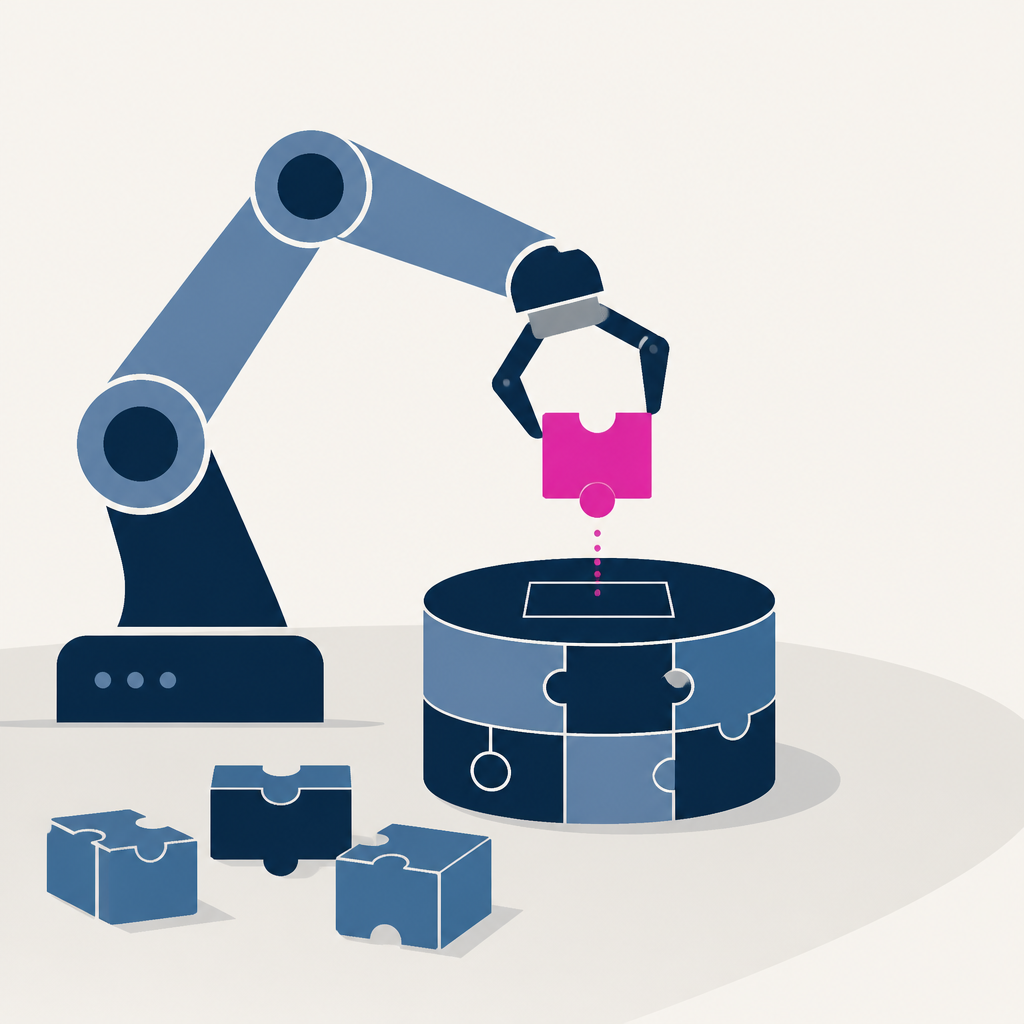
Sakana AI launched “Sakana Aquarium,” a platform for building and operating AI agents that use an ontology to support organizational decision-making and execution. The announcement was made with the platform’s goal of letting organizations reuse prepared data and ontology to spin up agents quickly. It shifts work toward a shared organizational foundation and adds plans to update the ontology and agent behavior as operations and workflows change.
The Agentic AI Foundation added four donated open-source AI tool projects to its portfolio. The total number of projects it maintains rose to 10, up from 3 when it launched last December. Developers can standardize LLM API access, agent skill packaging, and sandbox management so switching providers and tooling requires less code change.
MIT Technology Review’s EmTech Future session argues that scalable AI depends on aligning data, engineering, platforms, operating models, and governance in regulated settings. It focuses on responsible and trustworthy implementation to make agentic systems deliver lasting value for investors. The takeaway is a shift toward integrated foundations and governance alongside AI capabilities rather than treating them as separate efforts.
Today, Agentic AI Foundation (AAIF) received the Agent Skills open standard from its creators. More than 70 agent platforms have integrated Agent Skills since its December 2025 release, and nearly 280 million installations and 1 million published skills have accumulated. The standard’s hosting and governance move under AAIF at the Linux Foundation, while the GitHub organization, name, logo, and agentskills.io stay usable by the community without joining AAIF.
Microsoft’s MAI-DxO AI diagnostic system correctly diagnosed complex simulated medical cases at much higher rates than individual generalist doctors in a Science study.
Simon Willison’s Weblog·18 hours ago·
8
● 4 sources
Anthropic donated the standard for “agent skills” to the Agentic AI Foundation under the Linux Foundation. The move places the agent skills standard alongside its prior donation of the Model Context Protocol (MCP) to AAIF. The result is a more open, community-driven, vendor-neutral home for these specifications within the AAIF under Linux Foundation.
Amazon SageMaker AI with a hosted Kokoro-82M TTS model was used to stream audio sentence-by-sentence so a voice agent can start speaking before its full multi-paragraph response finishes generating.
Spotify tied its Q3 results to a plan to let AI agents choose and use Spotify instead of users manually searching inside its app. Spotify reported 788 million monthly active users and nearly €5 billion in revenue in the quarter. Spotify is leaning into agent integrations—already working with Meta’s Muse, ChatGPT, and Claude—and positioning itself as a conversational, personalized media service for agents despite possible platform restrictions.
An AI agent began failing in production when downstream API calls returned errors, causing requests to time out after multiple retries and roughly doubled response time.
Mark Zuckerberg described Meta’s plan for an autonomous network of AI agents that will handle tasks and communicate with other agents on users’ behalf. He said he is staking Meta’s future on Muse, released to the general public last month. As a result, Meta is positioning its AI agent product as the foundation for broader agent-to-agent activity rather than just standalone help.
Ben’s Bites reported that Keshav is leaving at the end of the year and described changes to how the newsletter works with sponsors, while also noting multiple AI-related tool and research updates. The sponsor change will limit close work to 4 companies per quarter starting in 2027. As a result, the newsletter’s sponsored content process becomes more selective and more controlled, and readers also get a roundup that increasingly centers on personal agents and AI systems.
The Sequence Opinion argues that AI environments are becoming central to model capability by providing executable worlds that generate trajectories and feedback beyond fixed exams. It traces the evolution through systems such as OpenAI Gym, MuJoCo, and newer RLVR-driven post-training like Tulu 3 and DeepSeek-R1. It concludes that future progress depends on more varied, consequential practice environments with dependable feedback that better transfer improvements outside the training world.
Anthropic launched a research preview of Claude Duet, an app that lets Claude act as a proactive agent while you are away and asks approval before taking actions. It is available starting today for Pro and Max users in the US, using the same usage limits as other Claude plans. The preview adds scheduled app monitoring, background task execution on a virtual machine, and stricter approval and sensitive-data controls that limit what it can do even when you approve.
Eiliko said it will hire an independent security firm after The Verge reported that its AI-animated robot charm could expose full conversation transcripts to hackers. The investigation and outreach to the company lasted over a month. As a result, the company is shifting toward third-party security review to address the reported security problems.
Every AI story that matters,
in your inbox by 8am.
TLDRocket reads all relevant sources, removes duplicate coverage, and summarises the
day in two minutes. Follow companies and topics for alerts, or get the
briefing in Slack. Free, no spam, unsubscribe anytime.
Reading TLDRocket needs no cookies, and the readership counts we rely on come from
our own cookieless analytics. Google Analytics is the exception: it sets cookies and
reports to Google, so it stays switched off until you allow it. You can change your
mind any time from “Cookie settings” in the footer.
Strictly necessary
Session security and form protection (tldrocket-session,
XSRF-TOKEN, 2 hours). The site cannot work without them,
so they need no consent.
Always on
Google Analytics 4 (_ga,
_ga_<id>, up to 2 years). Measures which
stories and sections readers use. Google acts as a third-party processor and may
store the data outside the EU. No advertising, no profiling, no data sold.