
Data center gas plants to boost U.S. power emissions by 20%
Fortune Bloomberg
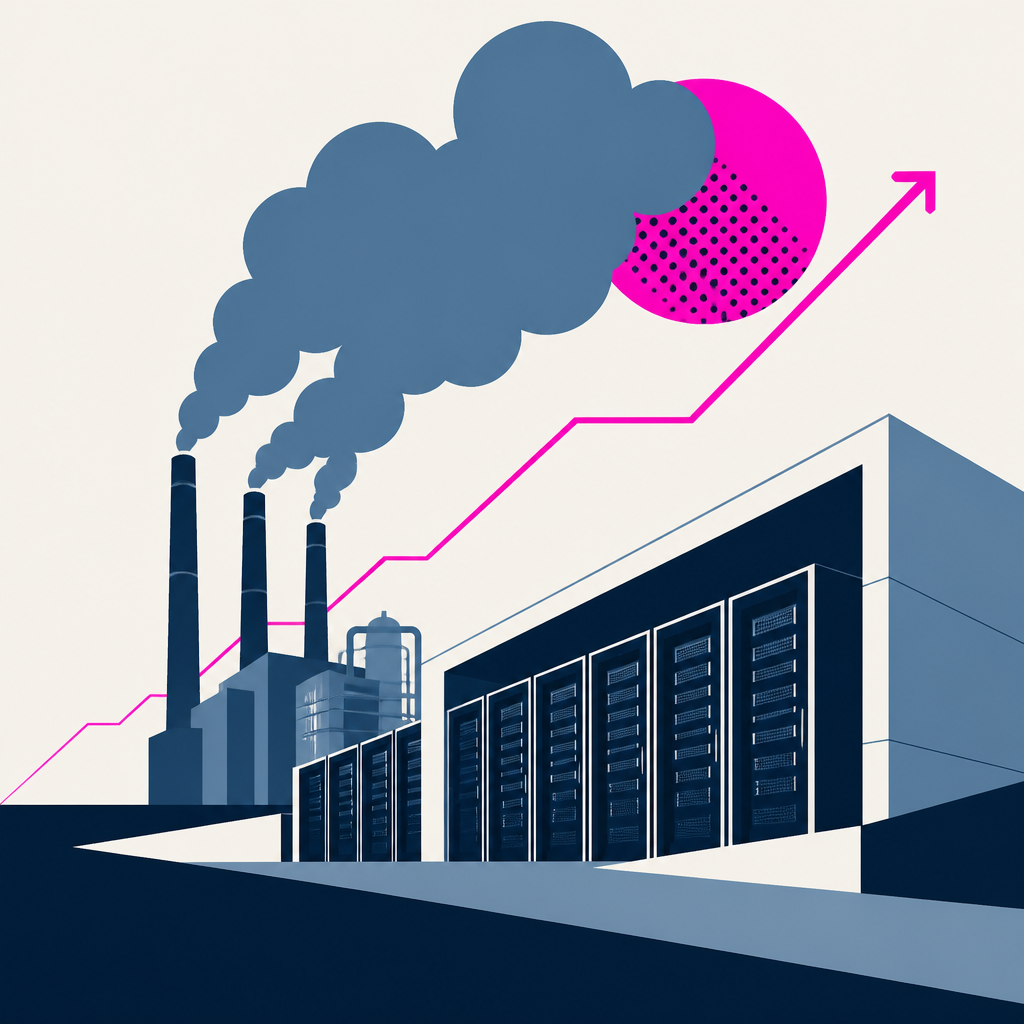
Data center builders are putting up their own gas power plants to skip years-long grid delays. Nearly 100 tracked projects could push U.S. power emissions up 20%, clashing with Big Tech's climate vows.
Based on reporting by Fortune, Bloomberg — read the original for the full story.
Summary, retelling and take written by AI under human oversight; images are AI-generated illustrations. How we work · Report an error
The AI buildout has a dirty secret hiding in plain sight: gas turbines. Faced with waitlists that can stretch for years just to connect to the regulated grid, data center developers are increasingly skipping the line entirely, building so-called behind-the-meter gas plants that don't need sign-off from utilities or the grid operators tasked with keeping the lights on. It's fast. It's also, according to a Bloomberg News analysis of BloombergNEF data, poised to blow a serious hole in the country's climate math.
Ninety-nine proposed plants tracked by BloombergNEF would together emit roughly 318 million metric tons of carbon dioxide a year if run at typical industry rates — enough to lift total U.S. power-sector emissions by about 20%, and as much as a third if those plants ran flat out around the clock. For context, the entire American electric power industry emitted about 1,485 million metric tons last year. That's the scale of what's being proposed, built on 126 gigawatts of planned on-site gas capacity, much of it using single-cycle generators that are cheaper and quicker to get than the cleaner combined-cycle turbines developers actually want but can't source fast enough.
Not every project on the list will get built — the AI industry's appetite for computing power has spawned plenty of speculative pitches alongside the real ones. But the pattern is real and it's national, spread across 22 states from Alaska to Georgia. More than a third of the tracked plants sit in Texas, drawn by cheap gas and a regulatory climate that let data centers spring up almost as fast as they could be wired for power — until Governor Greg Abbott recently paused new approvals.
Two Texas projects stand out. In Pecos County, an 8,000-acre site identified by tracking firm Cleanview as an Amazon development is set to become one of the single largest sources of carbon pollution in the country. Thirty miles away, Chevron is building Microsoft a gas plant for a 2,000-acre data center complex. Together the two sites could generate more than 10 gigawatts — enough, on a hot summer day, to power New York City — and their combined emissions could hit 45 million metric tons of CO2 equivalent a year, nearly half of what the entire state of Washington produces, notably where both companies are headquartered.
Both companies say their climate commitments, made before the AI boom reshaped their power needs, still stand. Amazon says it's weighing solar and battery storage for the Pecos County site. But the gap between pledge and pipeline is getting harder to ignore. As one former Microsoft employee who once pushed the company on sustainability put it, the same firms that set the standard for corporate climate action are now bringing fossil infrastructure online at a pace almost nobody predicted.
My take — AI-written commentary, not fact-checked reporting
Nobody should be shocked that the companies promising to save the planet with AI are the same ones quietly wiring it to gas turbines — that's what happens when the demand curve outruns the grid and shareholders won't wait for solar farms to get permitted. Behind-the-meter plants exist precisely because they avoid the oversight that might slow anything down, which is convenient for build speed and terrible for accountability. Climate pledges made in calmer years were never built to survive a computing arms race, and pretending otherwise just delays the reckoning.
Read more about this at: Fortune