How AI Data Centers Are Driving Up Electricity Prices for US Consumers
Trending Topics Jakob Steinschaden
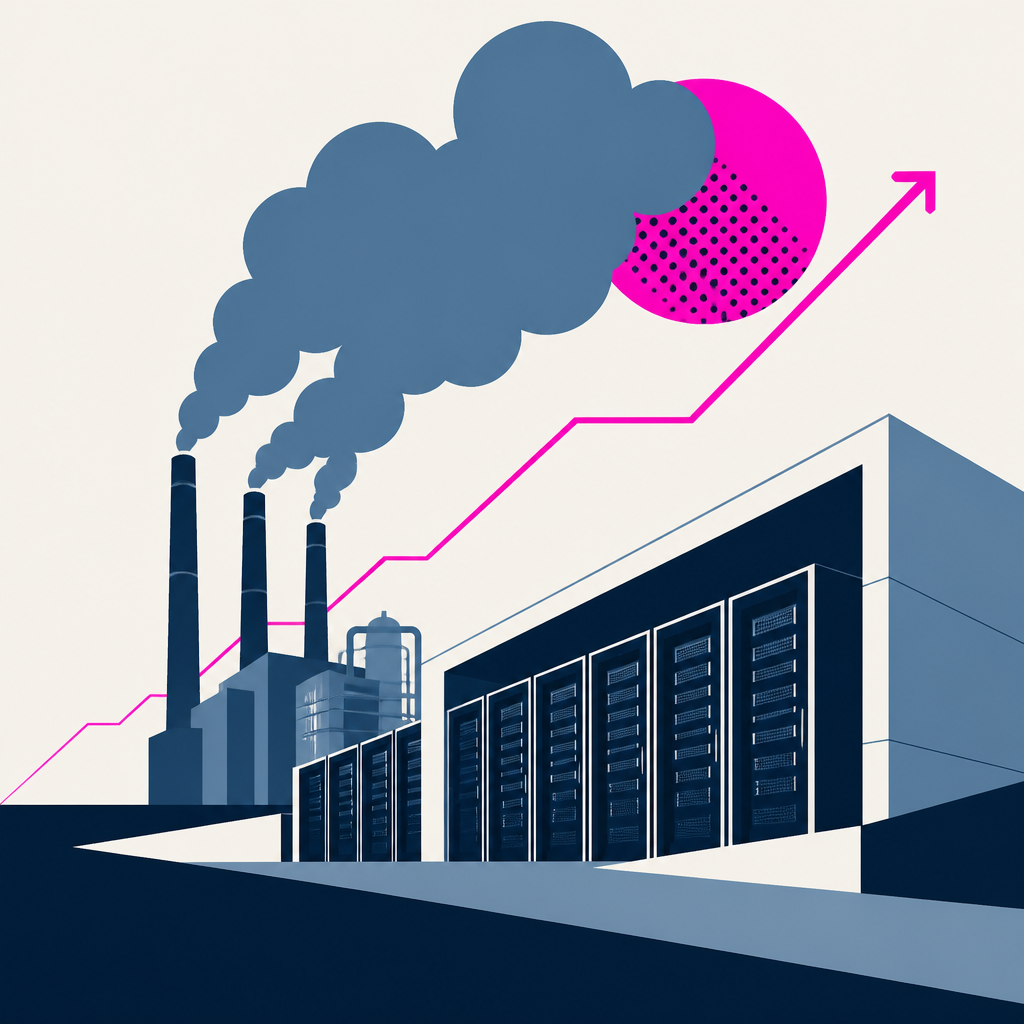
AI data centers are quietly jacking up power bills across a huge swath of the US grid. They use just 4% of the nation's electricity but caused nearly half the recent rate hikes.
Based on reporting by Trending Topics, Jakob Steinschaden — read the original for the full story.
Summary, retelling and take written by AI under human oversight; images are AI-generated illustrations. How we work · Report an error
PJM Interconnection, the grid operator covering 13 states and D.C. and roughly 67 million people, just ran its latest capacity auction for 2028-2029, and the numbers tell an uncomfortable story. Of the $16.4 billion in total charges, $6.3 billion traces directly back to data center demand, according to PJM's own market monitor, Monitoring Analytics. Stack that against the last four auctions combined and data centers have added $29.4 billion to the bill — 46 percent of all capacity charges — despite representing only about 4 percent of total US electricity use.
The pain isn't spread evenly. Illinois residents are paying around 23.85 cents per kilowatt-hour, up 28 percent from a year ago. Virginia, home to the famously dense 'Data Center Alley,' sits at 17.61 cents, up 15.4 percent. Georgia's 5.7 percent increase was enough to get two utility regulators voted out in 2025. Texas, where ERCOT has already flagged strain from AI-driven load, climbed 5.9 percent. Hawaii's rates are technically higher than all of these, but that's fuel and island-grid economics, not servers.
Monitoring Analytics president Joseph Bowring has a blunt fix: stop lumping data center demand into the general capacity market and make tech companies bid for their own dedicated capacity. Right now, he argues, the cost of powering AI infrastructure gets socialized across everyone's bill while the profits stay with the companies running the racks. Voluntary commitments like Trump's 'Ratepayer Protection Pledge,' plus similar promises from Microsoft and Anthropic, sound reassuring but carry zero legal teeth — no penalties, no enforcement, nothing binding.
Some states aren't waiting around. Twenty-seven are advancing legislation to force data centers to pay for their own grid upgrades, and California, Ohio, and Utah have already passed laws with real enforcement mechanisms attached. But local pushback against individual projects, however loud, rarely touches the actual rate-setting proceedings where prices get locked in.
Meanwhile PJM couldn't even procure enough capacity to hit its own reliability target in this latest auction — the second straight shortfall — and is now asking federal regulators for permission to run an emergency 'Backstop Procurement.' CEO David Mills says demand is outpacing supply, though his statement conveniently skipped the words 'data center,' even after PJM itself named them the fastest-growing source of new demand. Analysts expect households in PJM territory to keep eating $15 to $20 more per month for years, with no real fix likely before the 2030s.
My take — AI-written commentary, not fact-checked reporting
This is the AI boom's dirty little secret: the compute gets built, the profits get privatized, and the electricity bill gets mailed to grandma in Illinois. Voluntary pledges from Microsoft and Anthropic are marketing, not policy — nobody signs a binding contract when a press release will do. If regulators actually want accountability, dedicated capacity auctions for data centers aren't radical, they're the bare minimum, and states dragging their feet on this are just letting hyperscalers freeload off public infrastructure while calling it innovation.
Read more about this at: Trending Topics