AWS Machine Learning
·
1 week ago
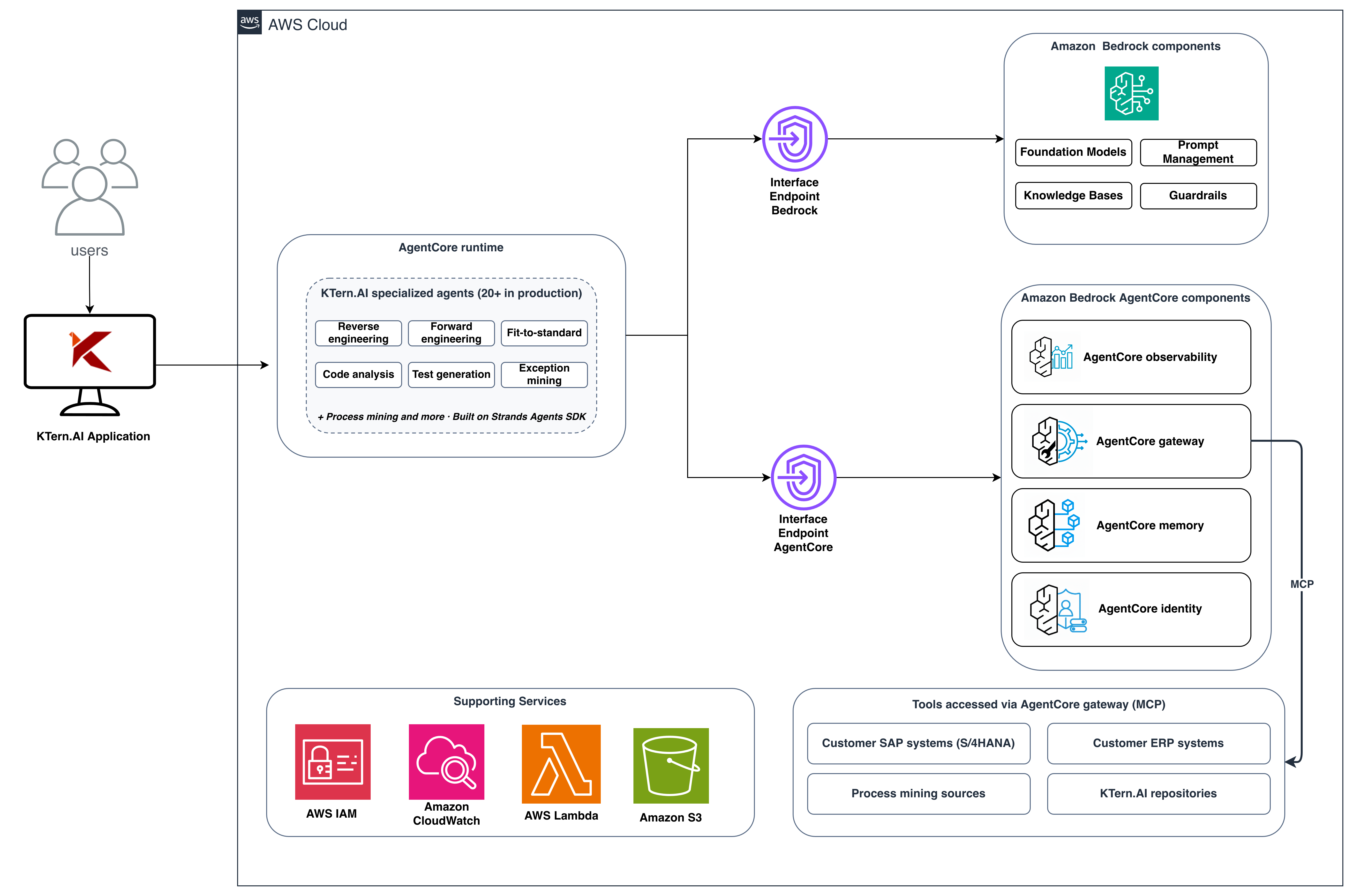
KTern.AI built agentic AI agents on Amazon Bedrock AgentCore to automate SAP digital transformation workflows including reverse engineering, process analysis, and exception mining. The platform achieved 45 percent reduction in SAP project timelines, 60–70 percent faster discovery and assessment phases, and new agents deploy to production in 4–6 hours versus the previous 2–3 week development cycle. The shift eliminated custom infrastructure overhead and freed 480 engineering hours per month that the company reinvested into agent capabilities.
TLDR Dev
·
1 week ago
● 2 sources
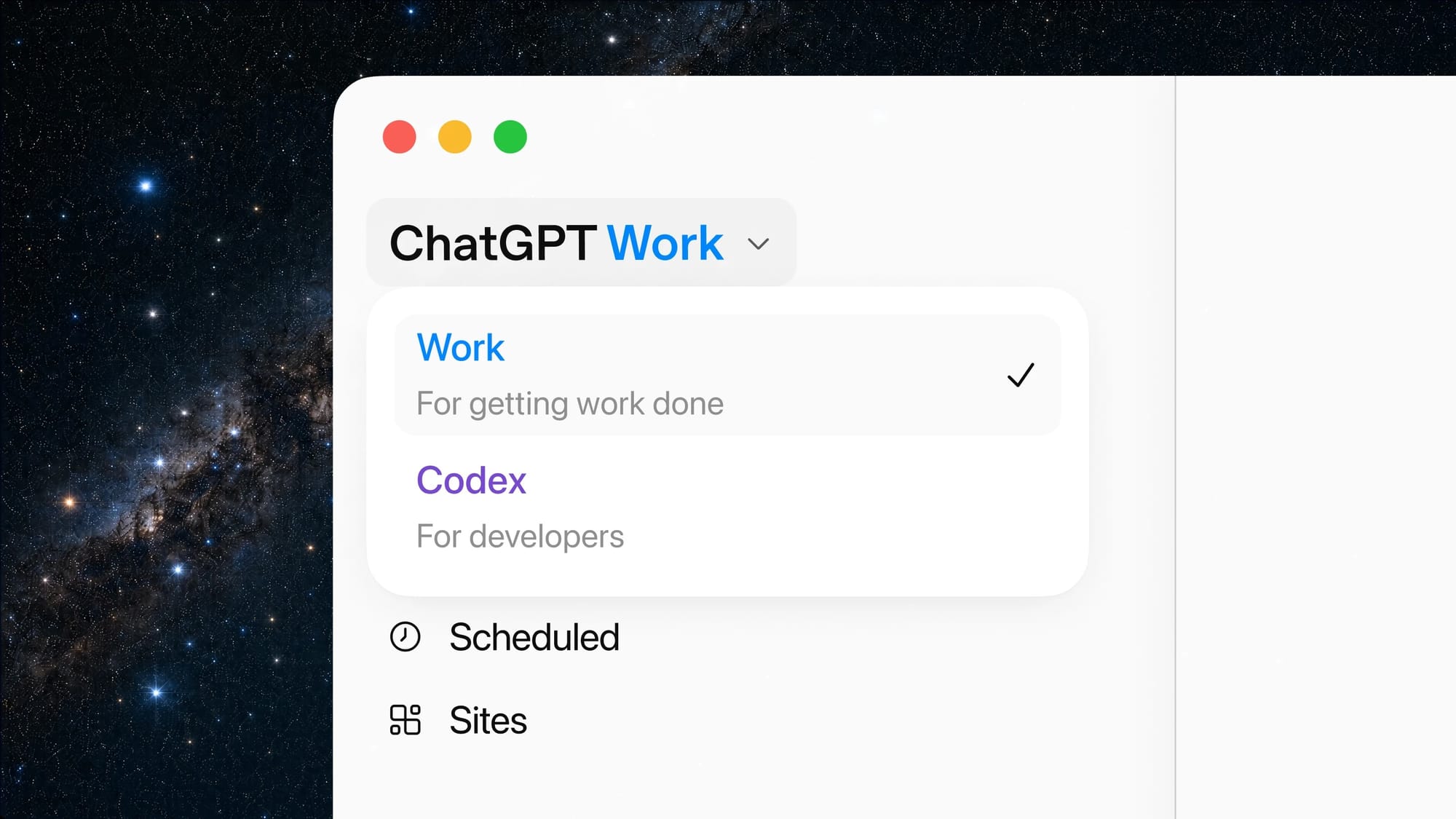
OpenAI introduced ChatGPT Work, a feature designed to help users automate tasks and manage complex projects while integrating with external applications. The feature enables users to generate finished documents and analyses through app integrations, though no specific pricing, availability date, or performance metrics were disclosed. Organizations can now use ChatGPT for enterprise-level project management and document generation workflows.

TLDR
·
1 week ago
● 2 sources
Meta launched a paid API for its Muse Spark 1.1 AI model, marking its first serious commercial offering for non-open-source AI technology. The company priced access at roughly 25% of what OpenAI and Anthropic charge, leveraging its advertising revenue to undercut competitors and capture market share. This move signals Meta's attempt to diversify beyond its advertising-dependent business while maintaining control over AI technology after years of relying on other platforms.

TLDR
·
1 week ago
Apple is in discussions with PrismML about deploying larger language models directly on iPhones instead of relying on cloud servers. PrismML has compressed Alibaba's Qwen model to 27 billion parameters to run on iPhone 17 Pro, compared to Apple's current on-device AFM 3 model which has 20 billion parameters but only activates 1 to 4 billion at a time. Running larger fully-active models locally would reduce Apple's cloud computing costs and expand which AI features can process data on-device rather than on Private Cloud Compute servers.
TLDR
·
1 week ago
● 2 sources
Meta's Muse Spark 1.1 model now offers a paid tier for developers at pricing approximately 25% of the cost of competing models. Zuckerberg characterized the model as having state-of-the-art agentic reasoning and tool use capabilities. The pricing strategy aims to undercut competitors while establishing a commercial revenue stream for Meta's AI division.
TLDR
·
1 week ago
● 6 sources
OpenAI released GPT-5.6, a new model family with three tiers—Sol, Terra, and Luna—across ChatGPT, Codex, and its API, rolling out globally starting today. Sol costs $5 input and $30 output per million tokens, Terra costs $2.50 input and $15 output, and Luna costs $1 input and $6 output per million tokens. The release adds multi-agent coordination through an ultra setting, stronger artifact generation for presentations and documents, and improved performance on coding, cybersecurity, and scientific tasks.
The Neuron
·
1 week ago
● 2 sources
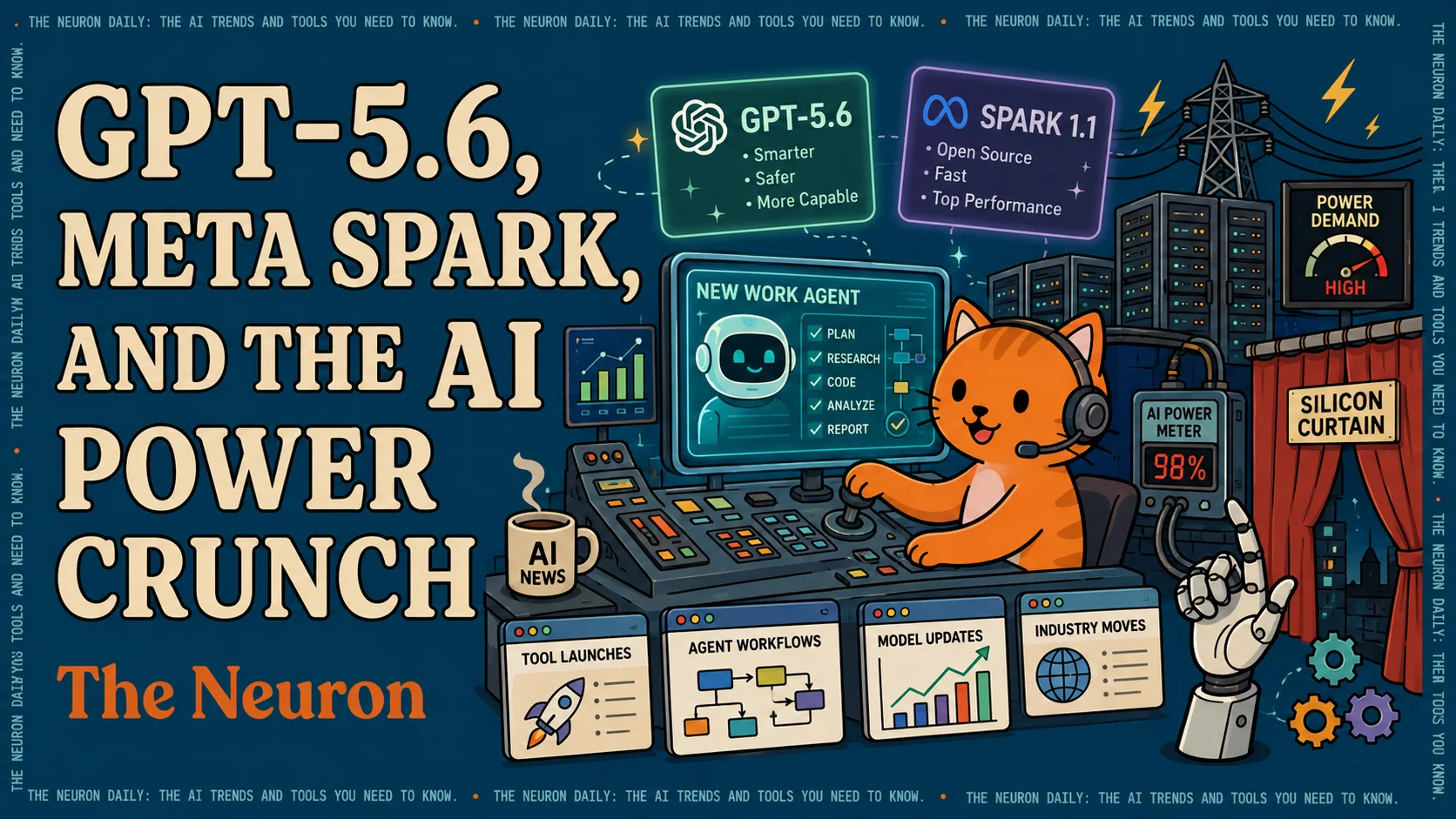
Meta released Muse Spark 1.1 through its public Model API with 1M-token context, tool use, and computer capabilities positioned as a direct challenge to OpenAI and Anthropic in coding agents. The model offers lower pricing than many competing frontier models while supporting multimodal reasoning and improved coding performance. Meta now competes directly for workflow automation, pushing other companies to defend their pricing and model positioning in the coding-agent market.

The Neuron
·
1 week ago
● 6 sources
OpenAI is discontinuing ChatGPT Atlas, its standalone desktop browser, in favor of a new unified ChatGPT desktop app that includes a Work agent and browser capabilities. The deprecation date is set for August 9, 2026. Users will migrate to the new desktop app, which also offers a Chrome plugin for those preferring to stay in their existing browser.
Latent Space
·
1 week ago
● 6 sources
OpenAI released GPT-5.6 in three sizes (Sol, Terra, Luna) with a new "ultra" reasoning mode that coordinates multiple agents in parallel to handle complex tasks. Terra matches Claude Fable 5's performance in one-third the time at one-quarter the cost, while Luna outperforms Opus 4.8 at roughly one-sixth the cost per task. OpenAI integrated these models into ChatGPT Work, a new desktop app merging Codex and ChatGPT, along with multi-agent capabilities and programmatic tool calling to support automated workflows.
Simon Willison
·
2 weeks ago
OpenAI published clarification language explaining how ChatGPT Work handles data across cloud and desktop environments, with cloud conversations remaining separate from desktop threads. The company specified that desktop Work can access local files and apps with permission, while cloud Work conversations do not sync to the desktop application. The clarification addresses confusion about data storage and separation in ChatGPT's work-focused features.
Platformer
·
2 weeks ago
● 7 sources
OpenAI released GPT-5.6 in three versions (Luna, Terra, and Sol) alongside other product updates, with Sol demonstrating superior performance to Anthropic's Claude Fable on several benchmarks. The Sol model showed measurable improvements on reasoning tasks and coding evaluations, with early users noting gains in speed and complex work capabilities. OpenAI simultaneously announced that Fidji Simo, its No. 2 executive, would step down due to chronic illness, joining multiple other high-profile departures from the company this year.
